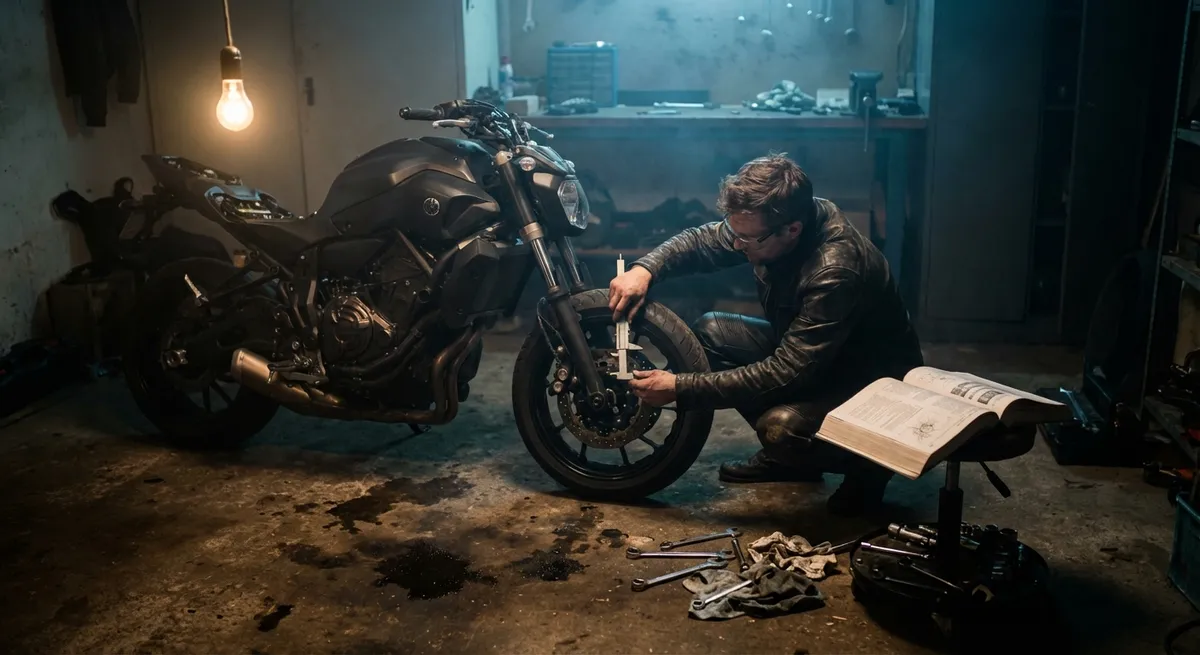
Most bike reviews read like spec-sheet karaoke: displacement, horsepower, seat height, done. That’s marketing, not decision-making. If you actually ride, wrench, and pay attention to how a chassis talks back at 8/10ths, you need a different review vocabulary—one built around feel, repeatability, and engineering realities, not just numbers and adjectives.
This is a blueprint for reading (and writing) motorcycle reviews like a technically minded rider. We’ll dissect five core technical dimensions that separate a flashy test-ride impression from a meaningful, long-term evaluation you can actually trust.
1. Chassis Behavior: How the Frame, Geometry, and Mass Distribution Really Ride
Most reviews throw around “nimble” and “stable” without ever explaining why. A serious review translates the hard points of the chassis into predictable, on-road behavior you can visualize before you ever throw a leg over.
At minimum, you want to see steering geometry and wheelbase discussed in context of handling: rake, trail, wheelbase, and weight distribution. For example, a relatively steep rake and short trail might give quick turn-in but demand more rider input to stay settled over mid-corner bumps. A longer wheelbase can enhance straight-line stability but may slow transitions in linked corners. Credible reviews connect those parameters to what the bike does at real speeds on imperfect roads—not just in a showroom.
Look for discussion of torsional rigidity and feedback: how the frame and swingarm flex (or don’t) under load. Too stiff and the bike can feel harsh and nervous over patchy pavement; too compliant and it can feel vague when loaded up in a fast corner. Testers should describe how the bike reacts when you go from neutral throttle to light acceleration mid-corner, or when you correct your line at lean. That’s frame behavior, not just “handling feel.”
Mass centralization deserves more than a buzzword mention. A good review notes where fuel sits (underseat vs high in the tank), how high the engine mass is carried, and whether luggage or accessories meaningfully shift that center of mass. This matters for low-speed balance, U‑turn confidence, and how a loaded bike responds when you pitch it into a corner. If a review never addresses how the chassis responds with a passenger or luggage, it’s incomplete for real-world riders.
2. Suspension as a System: Damping, Support, and Adjustability That Actually Works
Suspension is where “rides nice” becomes meaningless. You need to know how the fork and shock manage energy: compression, rebound, spring rate, and how that package behaves across different scenarios.
Serious reviews talk about initial stroke sensitivity (small-bump compliance) versus mid-stroke support (how it holds you up under braking or cornering). A fork that’s plush at the top but collapses too easily under braking might feel luxurious at 50 mph and terrifying at 90 into a downhill hairpin. Good testers will mention whether the suspension rides too deep in its stroke, topping or bottoming out, or whether it maintains a consistent geometry under load.
Damping discussion must be specific: Does rebound feel underdamped (bike pogos or wallows after bumps) or overdamped (forceful extension, harsh over successive hits)? Does compression damping resist sharp hits too aggressively, transmitting jolts to the rider, or is it soft enough that you blow through travel on big bumps? If the review never mentions how the suspension reacts when you deliberately hit a bump at lean or brake hard over rough pavement, you’re missing key data.
Adjustability is more than a bullet point. A good review states not only “it has preload/rebound/compression,” but how effective those adjusters are. Do a few clicks produce a noticeable difference in behavior? Is stock setup aimed at a 150 lb solo rider, or can a 200 lb rider with gear get into a usable window without replacing springs? The reviewer should note baseline settings, adjustments made, and the resulting changes in feedback and control.
Finally, anxiety-free travel matters. An advanced review evaluates how suspension performance holds up after extended use: does damping fade on a long mountain descent, or does the bike remain composed even after heating the shock and fork oil? If a test includes track or aggressive canyon riding, you should see commentary on fade and consistency, not just “felt good all day.”
3. Power Delivery Dynamics: More Than Peak Horsepower
Spec-sheet horsepower tells you how the bike performs at wide-open throttle near redline; most riders live nowhere near that. A meaningful review translates the shape of the torque curve, throttle response, and gearing into scenarios you understand on the road.
Look for tests that describe where in the rev range the engine wakes up and whether it’s smooth, lumpy, or flat in the low and midrange. A strong torque plateau from mid‑rpm can make a bike feel eager and effortless, even if peak numbers are modest. Conversely, an engine that’s sleepy below 7,000 rpm but explosive above might look great on a dyno graphic but be frustrating in traffic or tight backroads where you can’t always keep it in the powerband.
Throttle mapping and ride-by-wire calibration are critical. Good reviewers report on on/off transition behavior (especially in low gears and urban speeds): is there a lurch when you reapply throttle mid-corner? Is low-speed fueling crisp yet controllable, or jerky and snatchy? For bikes with multiple ride modes, credible evaluation means describing how each map changes response (initial opening, mid-throttle linearity, engine braking), not just that “Sport is aggressive and Rain is softer.”
Gearing analysis separates smart design from lazy spec choices. Reviewers should note whether first gear is tractable for crawling in traffic or off-road, whether sixth is a relaxed overdrive or still busy at highway speed, and how often you need to shift to keep the bike where it feels happiest. Coupling subjective impressions with actual road speeds at given rpm (e.g., “4,000 rpm equals 65 mph in top gear”) allows readers to visualize commuting, touring, or track behavior.
Lastly, vibration and mechanical character matter. Technical riders want to know where buzz appears (footpegs, bars, seat), how intrusive it is over time, and whether it’s a byproduct of engine layout, mounting strategy, or gearing. A review that calls an engine “characterful” without explaining if that means pleasant pulses or numbing high-frequency buzz isn’t giving you enough to decide.
4. Brake System Performance: Heat, Modulation, and Real Stopping Control
Most reviews say “brakes are strong” and move on. Strong doesn’t help if initial bite surprises you mid-corner, or if lever feel goes wooden after three hard stops. Riders who actually push their bikes need structured information about the braking system.
A technical review starts with hardware but doesn’t stop there: caliper type (fixed vs sliding, monoblock or not), disc diameter and thickness, pad compound, master cylinder type, and whether steel-braided lines are stock. But then it translates those ingredients into performance: initial bite, progression, and ultimate stopping power. You want to know if the brakes feel binary (on/off) or if there’s a wide, controllable zone where you can finely meter deceleration.
Heat management is central. Good testers evaluate fade resistance (repeated hard stops, heavy downhill riding, or track sessions). Do you get extended lever travel as fluid boils or as pads overheat, or does the system stay consistent after it’s hot? Real-world riders benefit from this when descending fully loaded with luggage, two-up, or riding aggressively in the mountains.
ABS behavior demands more than “it has cornering ABS.” You want to know when and how ABS intervenes: does it pulse gently, allow a small amount of slip, and maintain line integrity, or does it cut in early and upset the chassis? Cornering ABS should be evaluated under actual lean—does it let you brake deeper into a turn without straightening the bike, or is it too conservative to trust at pace? This is especially important for riders stepping up to modern electronics from older machines.
Don’t forget rear brake usage. A thoughtful review will mention whether the rear brake is strong enough to meaningfully help with low-speed control, trail braking refinement, or line tightening mid-corner without locking prematurely or feeling dead. The relationship between front and rear systems—how they balance and complement each other—is part of the bike’s overall control envelope.
5. Electronics, Ergonomics, and Integration: The System-Level Riding Experience
Modern motorcycles are integrated systems: power, chassis, electronics, and rider interface are deeply interlinked. A mature review treats electronics and ergonomics not as gadgets and comfort notes, but as control-layer engineering.
Look for in-depth evaluation of traction control, wheelie control, and engine-brake management. A serious tester will describe whether traction control intervenes smoothly, with minimal power cuts, allowing you to feel a controlled slip zone—or whether it’s abrupt and destabilizing. On powerful bikes, wheelie control strategy (holding a low, controlled lift vs slamming the front down) says a lot about how confident you can be when accelerating hard over crests or bumps.
Ride modes should be assessed as integrated packages, not isolated features. Changing from “Touring” to “Sport” usually modifies throttle maps, traction control thresholds, and sometimes suspension behavior. A good review states what changes in actual riding: does the bike feel more direct but still predictable? Does a softer mode genuinely help in rain, or just dull everything without improving composure? For semi-active suspension, reviewers should mention how modes impact body control and comfort—e.g., does “Dynamic” mode hold geometry better under hard braking while still absorbing mid-corner bumps?
On the ergonomic side, dimensions (seat height, bar reach, peg position) only matter if they’re related to control and fatigue. Technical riders want to know how body position influences weight on the front contact patch, how easy it is to lock in with the tank under braking, and whether peg location allows a neutral, athletic stance. Comments like “sporty but not cramped” are low value; instead, look for whether tall riders’ knees hit fairing edges, or if shorter riders can get both feet reliably down while still reaching the controls naturally.
Instrument clusters and switchgear are part of the control interface. A high-end TFT with unreadable info at a glance is a failure. Advanced reviews assess clarity under sun and at night, how quickly you can change critical settings (traction, ABS, modes) on the move, and whether the menu system encourages or discourages using the electronics to their full potential. Riders who adjust settings frequently for weather, road type, or load will appreciate reviewers who time and detail these interactions.
Finally, treat luggage, wind protection, and small design choices as part of the riding system, not comfort afterthoughts. Good reviews analyze whether the screen creates helmet buffeting at typical highway speeds, whether mirrors stay clear at rpm where you’ll cruise, and if the bike remains aerodynamically stable when fitted with OEM luggage. All of this influences high-speed confidence and end-of-day fatigue—core performance metrics for real riders.
Conclusion
A motorcycle review that stops at power, comfort, and “fun factor” is leaving half the story untold. Technical riders don’t just want to know if a bike feels good; they want to know why, under what conditions, and with what trade-offs. That requires connecting specs to sensations, scenarios to settings, and systems to outcomes.
When you read your next review—or write your own—interrogate it through these five lenses: chassis behavior, suspension as a system, power delivery dynamics, brake performance, and the integration of electronics and ergonomics. That’s how you turn glossy impressions into actionable engineering insight and choose a bike that won’t just impress you on a test ride, but will still feel right 20,000 miles later.
Sources
- [Motorcycle Consumer News (archived via Rider Magazine) – Technical Reviews and Tests](https://ridermagazine.com/category/motorcycle-reviews/) – Example of in-depth road tests that connect specs to real-world riding behavior.
- [BMW Motorrad – Technology Explained](https://www.bmw-motorrad.com/en/experience/stories/technology.html) – Official explanations of modern motorcycle electronics and chassis systems, useful for understanding terms used in reviews.
- [Kawasaki – KTRC, ABS, and Electronics Overview](https://www.kawasaki.com/en-us/racing/technology) – Manufacturer descriptions of traction control and braking technologies commonly referenced in performance-oriented reviews.
- [U.S. Department of Transportation, NHTSA – Motorcycle Safety and Braking Research](https://www.nhtsa.gov/road-safety/motorcycles) – Background on braking performance, ABS, and safety data that underpins many review evaluations.
- [SAE International – Motorcycle Dynamics and Chassis Papers](https://www.sae.org/works/group/motorcycle) – Technical resources on motorcycle dynamics that inform advanced discussions of handling, suspension, and stability.
Key Takeaway
The most important thing to remember from this article is that this information can change how you think about Motorcycle Reviews.