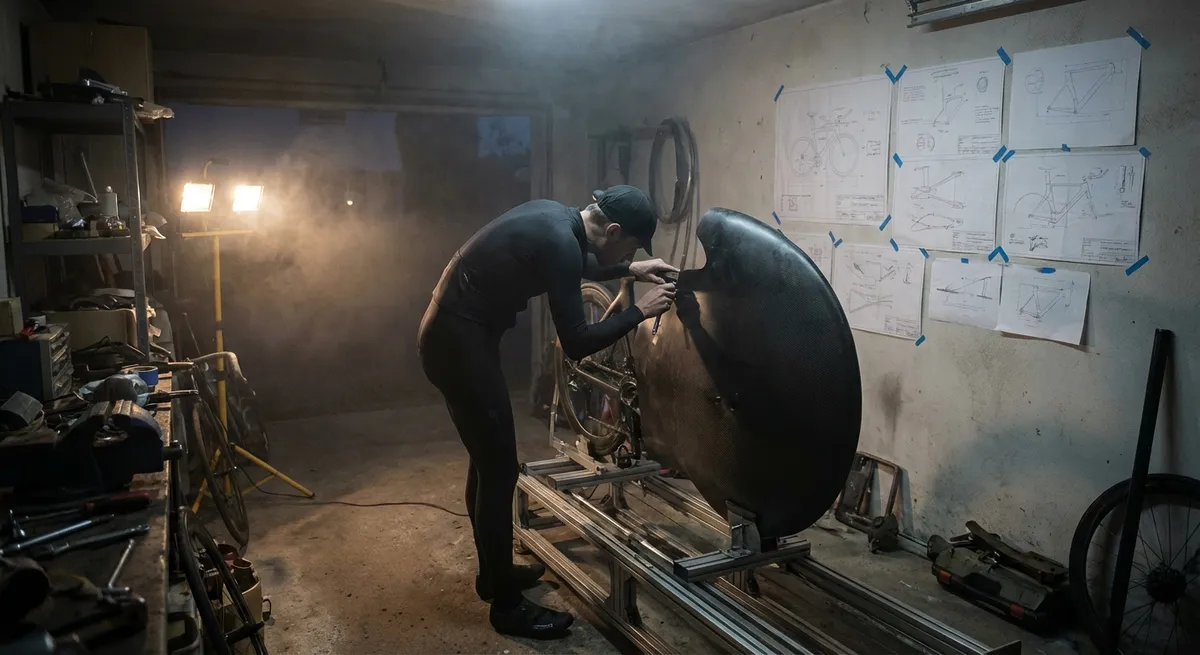
Motorcycle aerodynamics is usually discussed at the bike level—fairings, windscreens, bodywork. But at real-world speeds, your body and your gear are often the dirtiest part of the airflow. If you ride a naked, ADV, or even a sportbike with a short screen, you are the primary drag device. The upside? With the right gear choices and setup, you can engineer a noticeably more stable, quieter, and more fuel-efficient “rider profile” without touching the motorcycle itself.
This is about treating your kit like aero hardware: surfaces, seams, pressure zones, and turbulence generators. The helmet, jacket, gloves, boots, and even your backpack can either slice or smash through the air. Let’s turn your gear into an aerodynamic system, not just a fashion decision.
Understanding the Rider as an Aero Surface
At 60–80 mph, your torso is a bluff body shoving a high-density fluid (air) out of the way. Drag force scales with the square of velocity and depends on:
- Air density (ρ)
- Frontal area (A)
- Drag coefficient (Cd)
- Velocity squared (v²)
The bike’s CdA is only half the story—your posture and gear finish the equation. Big, flapping textiles, wide shoulders, and poorly designed backpacks increase both A and Cd, turning your upper body into a parachute. Conversely, smooth textiles, reduced flapping, and controlled flow separation at the shoulders and helmet can materially reduce turbulence, buffeting, and even neck fatigue.
Instead of thinking “Does this jacket look cool?”, the better question is: “What kind of wake am I dragging behind me?” Your kit should manage flow from the helmet, across the shoulders and torso, and off the lower back with as few interruptions and pressure spikes as possible.
Technical Point #1: Helmet Shell Shape and Controlled Separation
Helmet marketing loves buzzwords—spoilers, wings, vortex generators—but there’s hard fluid dynamics underneath the plastic.
Key design elements that matter
- Shell profile (round vs. sculpted)
- Rounder shells (common in brands like Arai) tend to be more forgiving to crosswinds and turbulence because they encourage smoother, more predictable flow separation.
- Aggressive ridges, sharp edges, and huge spoilers can stabilize in a pure wind-tunnel scenario but may create complex vortices when combined with real-world turbulence from traffic and your own shoulders.
- Vent design vs. aero penalty
Rear shape and base turbulence
The flow detaches at the back of the helmet. Good designs encourage a clean, consistent separation rather than a chaotic one. Too much protrusion at the rear can create alternating vortices that you feel as low-frequency buffeting at speed.
Visor mechanism and side pods
Large side pods or chunky visor mechanisms increase local turbulence and can tug your head in lateral winds. A compact visor mounting system with minimal external surface change is ideal.
High-flow vents inevitably disturb the boundary layer. The best helmets integrate vents along natural pressure zones (top of the forehead, chin bar) and keep vent housings low-profile. Deep, protruding scoops are red flags.
What riders should do
- Test helmets at your actual cruising speed and posture, not just in a parking lot. Aero behavior at 30 mph is meaningless at 80 mph.
- On naked and ADV bikes, prioritize helmets explicitly designed for upright positions; race-optimized helmets are tuned for a tucked posture and often behave worse when you’re vertical.
- Avoid cheap “race” wings that don’t come from a reputable brand—they often add drag and turbulence without any measurable stabilization.
Technical Point #2: Textile vs. Leather — Surface Roughness and Flow Management
Leather vs textile is usually framed as a protection debate, but aero is heavily influenced by surface roughness, pattern layout, and how the garment deals with the boundary layer.
Leather: low roughness, predictable flow
A well-fitted leather jacket or suit presents a relatively smooth surface with:
- Lower effective surface roughness compared to coarse textile weaves
- Reduced panel flapping due to tighter fit
- More controlled shoulder and upper arm geometry, which improves flow consistency at higher speed
In practice, this means less jacket buzz, fewer micro-vibrations, and a quieter ride at highway speeds if the leather is cut for your posture.
Textile: tunable but risky
Technical textiles can be very aero—if they’re tailored well:
- Laminated shells with minimal external pockets approach leather-like smoothness.
- Overly baggy, touring-cut textiles with bellows, cargo pockets, and big storm flaps generate drag and random turbulence.
- Mesh panels are aero nightmares when placed in high-pressure zones; they leak flow in unpredictable ways, especially around the chest and shoulders.
Rider strategy
- For high-speed or track riding, a snug leather or laminated textile with clean external lines gives the best aero behavior.
- On ADV/touring gear, choose suits with internal storage and minimal external “3D” pockets on the chest and shoulders.
- Fit is non-negotiable. Any area that can flap, inflate, or oscillate will raise drag and noise, while amplifying rider fatigue.
Technical Point #3: Shoulder, Collar, and Neck Interfaces as Noise Generators
Most riders blame windscreens for noise, but a huge portion of broadband wind roar is generated where the airflow runs into discontinuities: helmet base, collar edges, and shoulder angles.
Collar design and boundary layer disruption
- High, soft, snug collars help create a gentler transition from helmet to torso by limiting air ingress into the neckline and reducing chaotic recirculation behind the chinbar.
- Low, sharp collars act like little spoilers that kick air upward toward the underside of the helmet, increasing booming and low-frequency noise.
Shoulder width and shape
- Shoulder armor that creates hard “steps” between the neck and deltoid area gives the airflow a place to detach aggressively, forming swirling vortices that can whip around and hit the helmet base.
- Contoured external armor or integrated shoulder sliders can calm separation and encourage a more laminar path off the upper torso.
Neck roll interaction with helmet
When the helmet’s lower profile and the jacket’s collar don’t play well together, the gap acts like a leak path:
- Air rushes in, pressurizes under the helmet, and escapes as turbulent jets, which you hear and feel as noise, helmet lift, and micro-movements.
- Some helmets integrate neck rolls and chin curtains to counteract this, but they only work if your jacket collar is shaped to “meet” them without creating big gaps.
Practical tuning
- Aim for a collar that lightly contacts or almost contacts the helmet base in riding position—especially at the back and sides.
- Use removable storm collars or windstoppers in cold seasons to tune the neck area; you’re not only warming yourself, you’re re-engineering the flow.
- If you change helmets, reevaluate your jackets—what was aero-quiet with one shell can be noisy chaos with another.
Technical Point #4: Glove and Boot Profiles — Small Parts, Real Effects
Gloves and boots seem too small to matter aerodynamically, but they influence drag, turbulence, and stability in ways you can feel, especially on unfaired bikes.
Gloves: cuffs, knuckles, and airflow over the forearms
- Gauntlet gloves that go over the jacket eliminate a step change at the wrist, creating a smoother transition for the airflow moving from forearm to hand.
- Short-cuff gloves or gauntlets worn under a loose sleeve create a mushroom effect as air fills the cuff and vibrates the fabric.
- Bulky, externally stitched hard knuckle protectors can add localized turbulence. High-quality race gloves offset this with streamlined knuckle shells and low-profile seams.
For high-speed riding, a properly sized outer gauntlet that seals to a slim, non-flapping sleeve is the best aero configuration.
Boots: toe shape, shin plates, and turbulence shedding
- A slim, rounded toe box transitions air more cleanly than a big square one, especially on bikes where your feet are more exposed to the oncoming flow.
- Large, raised shin plates can act like tiny air scoops. Good designs integrate these with the boot’s main silhouette to avoid hard steps.
- Wide ankle bulges or loose pant cuffs flapping around the top of the boot add drag and make your lower legs vibrate at speed.
Tips:
- Tuck pants over the boot only if they can remain tensioned and non-flapping at highway speeds; otherwise, tuck into a tall boot to keep everything controlled.
- Choose boots that match your bike’s footpeg position: for rearsets, prioritize aero across the top of the foot; for standards/ADV, focus on shin and ankle areas exposed to forward flow.
Technical Point #5: Luggage, Backpacks, and the Rider Wake
The space behind your helmet and torso—the wake—is where pressure drops and turbulence multiplies. What you put in that wake can either clean up the flow or turn it into a washing machine.
Backpacks: comfort vs. aero disaster
Most casual backpacks are designed for walking, not 80 mph air loads:
- Boxy shapes with flat fronts and trailing edges create a huge pressure drag penalty behind your shoulders.
- Loose, long straps flap and shed vortices, which you literally hear as whistling and buffeting.
- Overloaded packs that bulge outward increase your effective frontal area and destabilize upper body aero.
A good riding-specific pack has:
- A teardrop or tapered rear profile
- Minimal external compression straps and pockets
- Wide, tensioned shoulder straps that stay flush
- Optional chest and waist straps to keep it locked into your torso shape
Tail bags vs. top cases vs. nothing
- A compact tail bag right behind you can partially fill the low-pressure area under your back, sometimes reducing* drag and smoothing the wake.
- Tall top cases act like a secondary bluff body. On some bikes they can re-energize the wake and reduce helmet buffeting; on others they add instability, especially in crosswinds.
- No luggage at all gives you a “pure” wake, which isn’t always ideal. A carefully chosen tail solution can tune the pressure recovery behind you.
Practical experiments
- Start with a controlled route and speed—ride without a backpack or luggage, then repeat with each configuration while paying attention to noise, neck load, and fuel consumption.
- Adjust backpack strap tension until it is effectively an extension of your jacket’s back panel, not a swinging mass.
Conclusion
Every rider accepts that motorcycles are shaped in wind tunnels, CFD, and thousands of engineering hours. But for most real-world scenarios, you are the biggest, messiest aerodynamic object cutting through the air. Helmet shape, jacket surfaces, collar transitions, glove and boot integration, and how you carry your gear all interact with the flow in ways you can design—intentionally or not.
Treat your riding kit like a modular aero package. Choose shell shapes that separate cleanly. Prefer garments that stay tensioned and minimize surface discontinuities. Engineer the neck area, not just for warmth, but for flow control. Shape your luggage and backpack choices around your wake, not just cargo volume. When you dial this in, the bike feels calmer, your helmet gets quieter, your neck and core fatigue less, and your fuel range subtly stretches.
Aerodynamics isn’t just for race teams and wind tunnels. It’s for every rider who wants their gear to work with the air, not fight it all day.
Sources
- Shoei Technical Information – Ventilation & Aerodynamics – Overview of how helmet shell shape, spoilers, and vents are engineered to manage airflow and stability
- Arai Helmet Technology – Detailed discussion of round shell philosophy, impact on stability, and real-world aero considerations
- BMW Motorrad – Rider Equipment – Explains design principles behind modern textile and leather gear, including fit and functional shaping
- NHTSA – Motorcycle Helmets – U.S. government resource with technical information on helmet design and performance (protection-focused, but relevant to shell features)
- SAE Technical Paper: Motorcycle Aerodynamics and Rider Posture – Research paper analyzing the aerodynamic impact of rider posture and configuration on motorcycles
Key Takeaway
The most important thing to remember from this article is that this information can change how you think about Gear & Equipment.