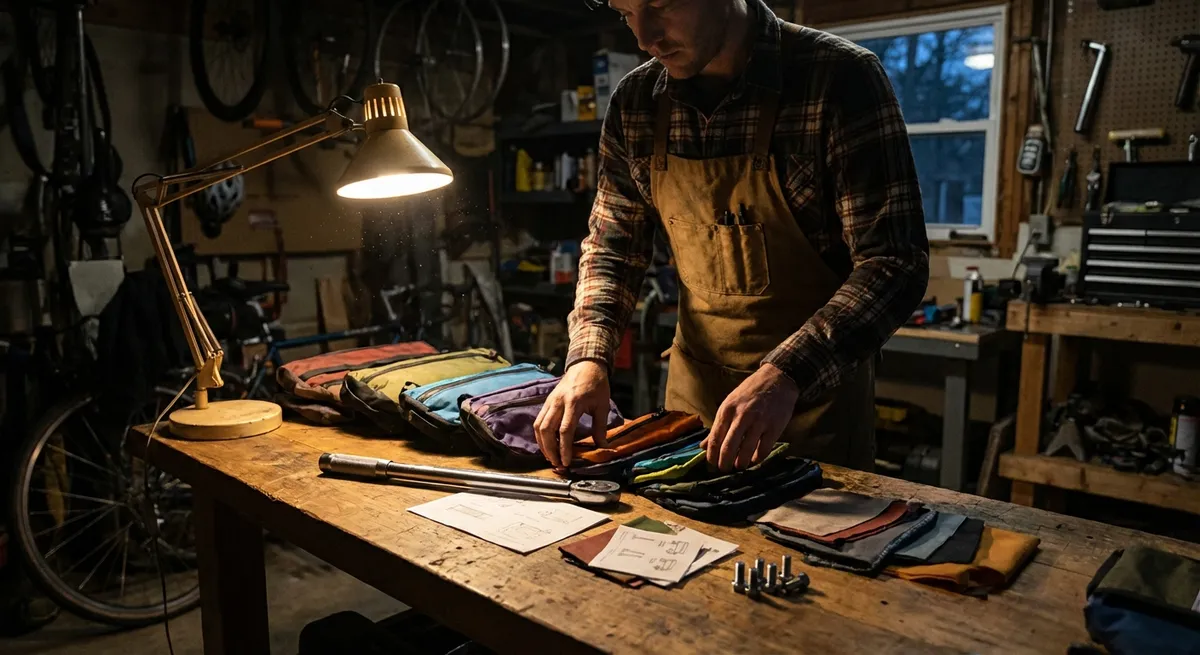
Every piece of motorcycle gear is a component in a larger system. Not a costume, not a style choice—an integrated, load-bearing, impact-dissipating, weather-sealing, information-carrying system that directly affects how hard you can ride and how long you can stay sharp. When you start thinking about your kit like a race engineer spec’ing a bike—materials, interfaces, failure modes, margins—you stop shopping and start designing. That’s where Moto Ready riders live.
This isn’t about “more gear is better.” It’s about tighter tolerances between what you ride, where you ride, and what you wear. Let’s build that system with five technical foundations that actually change the way you ride.
1. Impact Management: Matching Armor to Real-World Energy
Most riders know “CE Level 1 vs Level 2,” but very few think in terms of impact energy and anatomy. That’s a missed opportunity.
A CE Level 1 limb protector must transmit ≤35 kN of force in lab testing; Level 2 must transmit ≤20 kN. That’s a huge difference in residual force into your bones and joints. On the street, where impacts can be oblique, sliding, or multi-point (curbs, vehicles, guardrails), you want to think beyond the spec sheet:
- Energy distribution vs. peak absorption: Viscoelastic foams (e.g., D3O, Sas-Tec) excel at spreading impact over time; hard-shell + foam composites excel at spreading it over area. For urban riding with a lot of unpredictable impact vectors, composite systems on knees and shoulders can outperform pure soft armor.
- Coverage vs. rating: A perfectly rated Level 2 elbow piece that leaves the olecranon or distal humerus exposed is a design failure. Prioritize continuous coverage along the joint’s likely impact arc, not just the “CE” logo.
- Floating vs. fixed pockets: Armor that sits in “floating” textile pockets can rotate or migrate before impact. Look for articulated sleeves and pants with pre-curved patterning and elastic retention around pockets so armor tracks with your joints.
- Back vs. chest synergy: A separate Level 2 back protector and chest protector can work as a pseudo “torso cage,” especially in race-cut suits. The goal is to limit extreme flexion/extension and concentrated loading across ribs and spine, not just tick boxes.
- Track vs. street tuning: Track gear assumes higher speeds but more predictable surfaces and run-offs. Street gear needs better edge protection (curbs, vehicles) and abrasion + armor balance for lower-speed, high-complexity crashes.
If you ride aggressively on the street, design your armor package like a layered crash “circuit”—head (helmet), primary load paths (shoulders, hips, back), and secondary controls (elbows, knees, chest) all tuned to reduce catastrophic single-point overload.
2. Abrasion Layers: Building a Sliding Envelope, Not Just a Jacket
Abrasion resistance isn’t simply “leather vs textile.” It’s a system of fibers, weaves, and layer interfaces that determines whether you get a clean slide or a grab-and-tumble.
Key technical variables that matter more than the marketing gloss:
- Outer shell fiber type
- High-denier polyamide (nylon) or Cordura-type weaves outperform basic polyester in tear and abrasion.
- Aramid blends (Kevlar, Twaron) resist heat and abrasion but can be weak in UV and flex fatigue if not properly integrated.
- Single vs. multi-layer slides
- A durable outer shell (e.g., 600D+ nylon)
- Reinforced zones (seat, shoulders, elbows, knees) with double layers or Aramid panels
- The liner as a low-friction interface that lets your body move slightly inside, reducing skin shear.
- Seams as failure points
- Triple stitching or safety seams in high-risk zones
- Fewer large panels vs. many small decorative pieces (fewer seams = fewer weak points)
- External seams that don’t put stitching directly in the expected slide path.
- Leather spec, not just “genuine leather”
- 1.2–1.4 mm cowhide or kangaroo in track-grade gear gives you real slide time.
- “Fashion” leather can be 0.8–1.0 mm and fail quickly under heat and abrasion.
- Fit and billowing control
In a crash, the outer shell can fail before you run out of kinetic energy. A proper “sliding envelope” uses:
Most gear fails at seams, not in the middle of a panel. Look for:
Excess fabric can grab, twist, and cause rotational injuries. A good jacket or suit controls volume with adjusters, stretch panels, and pre-curved construction so the shell stays aligned for a clean slide instead of turning into a sail.
Think in terms of slide distance. Your gear’s job is to stay intact and manage friction until you’re no longer moving at bone-breaking velocities. Everything about your outer layers should be optimized for that one job.
3. Thermal and Moisture Control: Keeping Your Brain in the Operating Window
Cognitive performance on a motorcycle is directly tied to your core temperature and hydration. You notice bad airflow as “discomfort.” Your brain notices it as reduced reaction time, degraded judgment, and slower visual processing.
To keep your system in the operating window:
- Layering architecture over “winter/summer” labels
Build a 3-layer model:
- Base: Moisture-wicking synthetic or merino, no cotton. Cotton holds water and kills evaporative cooling.
- Mid: Insulation that traps air without bulk (fleece, synthetic puff), sized to not compress armor.
- Shell: Wind- and water-resistant with controllable vents.
- Controlled airflow, not maximum airflow
On a bike, you’re dealing with forced convection. Fully open mesh at 70 mph can overcool you or dehydrate you fast. Better gear uses:
At low urban speeds, perforated leather or mesh + wicking base layers can work brilliantly. At highway speeds, you often want less perforation and more controlled venting to avoid turning your body into a dehydrator.
Cold or overheated hands kill control precision before you consciously notice. Prioritize gloves and boots with:
Treat temperature and moisture like a spec on your ECU map. If your body is running out-of-spec, your inputs degrade. Gear is your thermal management system.
4. Ergonomics and Control Interfaces: When Gear Becomes an Extension of the Bike
Your contact points with the bike are not just bars, pegs, and seat—they include gloves, boots, and even how your jacket and pants articulate under acceleration, braking, and lean.
To turn gear into a performance interface:
- Glove tactility vs. impact protection
- Palm construction should combine high-friction zones (for grip feel) with sliding zones (usually leather or slider pods) that prevent the glove from grabbing and twisting your wrist in a crash.
- Look for externally stitched fingers or advanced patterning to minimize internal pressure points that cause hand fatigue and numbness.
- Boot sole stiffness and feedback
- Moderately stiff shank (resists flex in a crash, still allows ankle articulation)
- Defined pedal contact zone with tactile feedback so you can modulate braking and shifting without overloading your ankle.
- Articulation zones and stretch panels
- Maintain armor alignment when you’re in a tuck or aggressive stance
- Prevent fabric from pulling against your inputs (e.g., jacket tension pulling your shoulders forward under braking).
- Neck and helmet interaction
- Cable and device routing
- No slack that can snag in steering head or levers
- Clear exit paths from pockets to helmet or vest
- Quick-disconnect routing where needed (e.g., airbag tether).
A boot that’s too soft can fold in a crash; too stiff and you lose pedal feel. Street-sport riders often benefit from:
Pre-curved sleeves, accordion stretch over knees and lower back, and gusseted shoulders don’t just improve comfort. They:
Jackets with overly tall, stiff collars can interfere with countersteering and head checks. Test your gear in a full lock-to-lock turn with exaggerated head rotation, as you would during aggressive lane changes or hairpins.
If you run comms, in-helmet speakers, or airbag tethers, treat them like critical control lines:
If your gear ever distracts you from your line, your braking marker, or your mirrors, it’s not just “uncomfortable”—it’s a control-system defect. Fix it like you’d fix a sticky throttle.
5. Integration and Modularity: A System You Can Reconfigure, Not Replace
The most capable riders think in terms of gear platforms, not individual items. You want a modular system where you can reconfigure for conditions, terrain, and mission without reinventing your kit every ride.
Design your personal platform around:
- Common base layers and armor packages
- Choose armor you trust and move it between shells when possible (e.g., a dedicated Level 2 back protector that fits multiple jackets).
- Run a consistent base layer strategy so your next-to-skin environment is predictable across seasons.
- Airbag compatibility as a design constraint
- Outer jackets with enough chest and back volume to allow full inflation
- Minimal redundant bulk in chest/back armor when using an integrated airbag jacket or vest.
- Cargo philosophy: on-body vs on-bike
- Critical items (ID, phone, minimal tools) should live in secure, impact-protected pockets that don’t sit directly on high-risk impact zones like hips.
- Offload bulk (locks, larger tools, heavy spares) to the bike to keep your body’s impact mass down and avoid creating internal blunt-force hazards.
- Weather overlays instead of dedicated one-season pieces
- Standardized attachment points
Whether tethered or electronic, airbag vests add bulk where you already have armor. Plan:
A breathable, armored core jacket plus a high-quality over-shell (waterproof, windproof) can beat owning multiple heavy, single-purpose jackets. This is especially true for touring and mixed-weather commuting.
Use gear with consistent belt loops, jacket-pant zippers, or connection loops. Locking your jacket to your pants dramatically reduces the risk of jacket roll-up and exposed torso in a crash.
Think of your kit like a race team thinks of setup sheets: a small, well-understood library of components that you remix based on conditions, always knowing exactly how the system will behave.
Conclusion
Gear isn’t an accessory to your motorcycle—it’s the other half of the machine. Impact management, abrasion performance, thermal control, ergonomics, and modular integration are not abstract concepts; they are the variables that determine how hard you can push, how clearly you can think, and how well you can walk away.
When you stop buying “a jacket” and start engineering a riding system, every upgrade becomes intentional: fewer compromises, fewer unknowns, more confidence. That’s where riding stops being reactive and starts feeling like controlled, deliberate performance—on every commute, every canyon, every long haul.
Build your kit like you build your bike: purpose-first, detail-obsessed, and unapologetically engineered.
Sources
- European Commission – Protective Equipment for Motorcyclists – Overview of standards, including impact and abrasion requirements for motorcycle PPE in the EU
- Gore-Tex Technical Information – How Waterproof-Breathable Membranes Work – Detailed explanation of membrane construction, laminates, and performance in wet-weather gear
- D3O – Impact Protection Technology – Technical background on viscoelastic armor materials and their impact-management behavior
- Motorcycle Safety Foundation (MSF) – Essential Guide to Gear – Practical and technical overview of protective motorcycle equipment and selection principles
- NHTSA – Motorcycle Safety – U.S. government data and analysis on motorcycle crashes and injury mechanisms, relevant to understanding gear requirements
Key Takeaway
The most important thing to remember from this article is that this information can change how you think about Gear & Equipment.