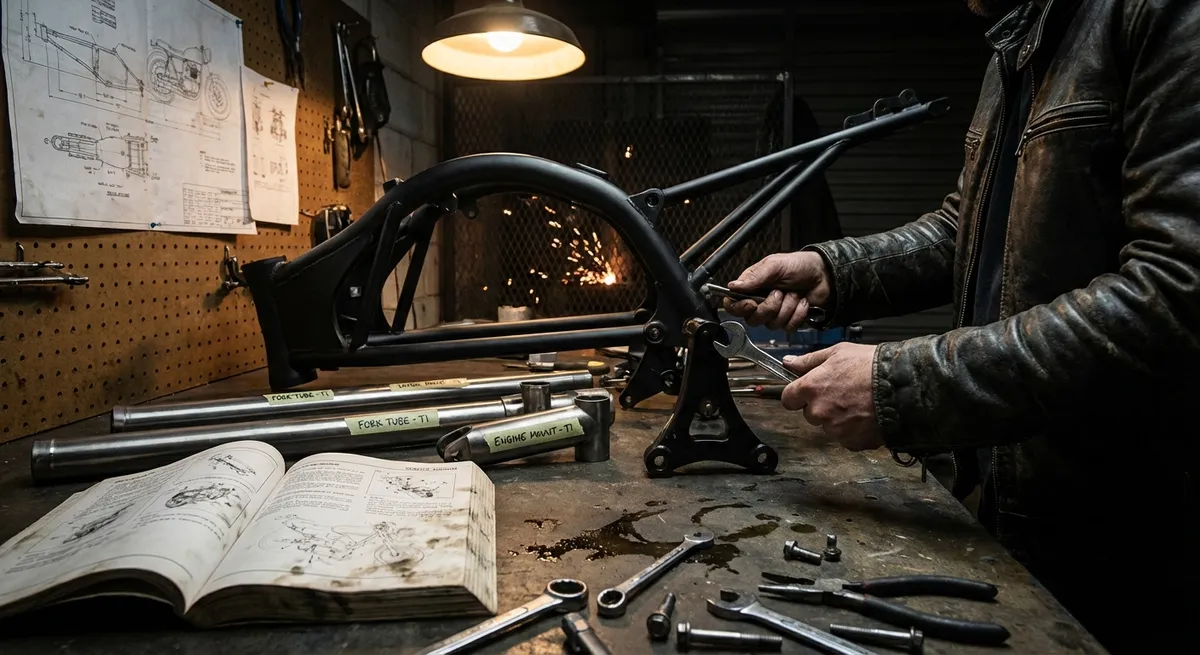
Every piece of gear you wear is part of a system—your personal chassis, your last-resort impact structure, your weatherproof HUD. It’s not “just a jacket” or “just gloves”; it’s a layered, interacting safety platform with real mechanical and thermal performance. If you ride like you mean it, your gear choices should be as deliberate as your line choice in a decreasing-radius corner.
This isn’t a shopping list. This is about understanding why certain gear works, what’s actually happening at impact or at 70 mph in the rain, and how to build a kit that behaves predictably when things go wrong.
Impact Physics in Your Jacket: CE Ratings That Actually Matter
CE labels aren’t decorative—they’re shorthand for how your gear behaves under very specific, violent conditions.
Modern motorcycle armor and garments are tested under EN/CE standards like EN 1621-1 (limbs), EN 1621-2 (back), and EN 17092 (garments). When you see a rating like “EN 1621-1:2012 Level 2,” that means this piece of armor has been hit with a controlled impact and must transmit, on average, no more than 9 kN of force (with a max of 12 kN) through to your body. Level 1 allows up to 18 kN average. Less energy transmitted = more bang absorbed before your bones and soft tissue take the load.
Technical points riders should care about:
- Coverage vs. Concentration – A Level 2 back protector with poor coverage (short length, narrow width, big gaps) can leave critical vertebrae exposed. Think force vectors: the impact doesn’t read the standard; it hits wherever you land. Look for full-length coverage from C7 down to tailbone and enough width to cover the scapula region.
- Multi-Impact Performance – Some viscoelastic foams stiffen under impact and then slowly recover. That’s good for absorbing force, but after a big hit, their structure can be compromised. If you track ride or push hard on the street, inspect armor for permanent deformation and replace if it’s visibly crushed or creased.
- Temperature Sensitivity – Many foams are characterized at ~20 °C, but real-world riding happens from near-freezing to brutal heat. In the cold, some armor stiffens, lowering comfort and potentially increasing peak transmitted force. In extreme heat, softening can reduce shape stability and coverage. Premium armor brands will publish usable temperature ranges—look for that data, not just marketing.
- Garment-Level Abrasion Classes – EN 17092 A/AA/AAA ratings aren’t interchangeable. A-rated gear is aimed at low-speed urban use. AA is a strong sweet spot for spirited street riding. AAA is typically track-level abrasion + burst resistance (but often with more weight and less ventilation). Don’t obsess over AAA if you mostly ride in city traffic; prioritize a rating that matches your real crash-speed envelope and comfort so you actually wear the gear.
- Seam and Burst Strength – Armor does nothing if the stitching detonates on first contact. Garment tests include seam-burst resistance. Look for double or triple stitching in impact zones and bar-tacked stress points. If the brand publishes EN 17092 test class and construction details, that’s a good sign they treat the garment as a system, not a fashion piece.
When you pick a jacket or suit, you’re selecting an energy management system, not just a colorway. Read CE labels like you’d read a torque curve—numbers tell you how it will behave under load.
Abrasion vs. Comfort: Choosing and Combining Shell Materials
Every outer shell fabric represents a compromise between abrasion resistance, tear strength, flexibility, breathability, and cost. The key is understanding which compromises work for your riding.
Technical considerations for shell materials:
- Denier Isn’t the Whole Story – Denier (e.g., “600D polyester”) measures fiber thickness, not inherent strength. A 500D nylon (Cordura-type) can outperform a 600D polyester in tear and abrasion resistance. High-tenacity nylon or aramid blends (Kevlar, Twaron) typically offer better mechanical performance at the same or lower denier.
- Aramid and UHMWPE Panels – Aramid fibers (e.g., Kevlar) and UHMWPE (like Dyneema) offer extremely high abrasion resistance and cut resistance with low stretch. Used in impact zones (shoulders, elbows, hips, knees, seat), they can dramatically improve slide performance. Beware “Kevlar reinforced” phrases with zero detail—serious manufacturers share weave type, coverage zones, and sometimes test data.
- Leather as a Predictable Sliding Surface – Quality 1.2–1.4 mm cowhide or kangaroo leather remains a gold standard for track-level abrasion and tear resistance. Leather provides a smooth, consistent slide surface, which helps avoid tumbling. For aggressive road riding, leather in primary impact zones plus textile flexibility elsewhere is a strong hybrid approach.
- Panel Mapping, Not Just Fabric Type – Where the fabric is located matters as much as what it is. High-abrasion zones: shoulders, outer arms, back of forearms, hips, seat, outer knee and shin. Low-end gear often hides weaker textiles in exactly these sectors. Look for garments with mapped construction—strongest materials where you’re likely to land and slide.
- Liner and Layer Interaction – A slick internal liner (e.g., polyester mesh) reduces skin shear by allowing the garment to move independently of your body under load. That’s not just comfort; it’s a reduction in degloving and soft-tissue damage. In high-heat climates, a base layer that doesn’t grab skin (synthetic, non-cotton) keeps this low-friction interface working.
Treat your outer shell choice like choosing tire compound: you want predictable behavior at your operating conditions, not theoretical maximum grip (or abrasion) at conditions you never see.
Environmental Control: Moisture, Heat, and the Real Job of Membranes
Riding comfort isn’t luxury; it’s a safety feature. When you’re soaked, freezing, or cooking in your gear, your cognitive bandwidth and fine motor control degrade. Environmental control layers (base layers, membranes, vents) are your temperature and moisture management system.
Key technical points:
- Breathability Metrics (RET / MVTR) – Membranes like Gore-Tex and competitors are rated by either RET (resistance to evaporative transfer, lower is better) or MVTR (moisture vapor transmission rate, higher is better). Numbers matter: a low-breathability membrane might keep you dry from rain but soak you in sweat, which then chills rapidly on a cold descent. For active riding, prioritize high breathability plus good vent design over “waterproof at any cost.”
- 2-Layer vs. 3-Layer Construction – In 3-layer laminated gear, the membrane is bonded directly to outer fabric and an inner scrim, giving a more stable structure that won’t sag when soaked and dries quickly. Drop-in liners (separate waterproof layer inside) are cheaper and more versatile but can trap water in the outer shell, adding weight and sucking heat from your body.
- Base Layer as the Primary Climate Tool – Your base layer handles sweat transport. Synthetic or merino wool base layers move moisture away from the skin, reduce evaporative chill, and help your body regulate temperature. Avoid cotton; it holds moisture, increases evaporative cooling at speed, and can drag against skin in a slide.
- Vent Design Over Vent Quantity – Vents should allow real airflow across the body, not just into dead pockets. Intake and exhaust pairing is crucial: chest or bicep intakes plus back or shoulder-blade exhausts create actual flow paths at speed. Zippers positioned in high-pressure zones (chest, shoulders) and outlets in low-pressure zones (upper back) use aerodynamics to your advantage.
- Modular Layer Strategy – Think of your kit as a tunable system: base (moisture), mid (insulation), shell (wind/rain/abrasion). Don’t rely on one bulky jacket to cover all temperature ranges. Instead, build a set of interchangeable layers so your protection and mobility stay consistent, while insulation and windproofing become variables you adjust per ride.
If you’ve ever felt “fatigued” after a long day in inconsistent weather, that’s often poor thermal and moisture management, not just distance. Fix your layering, and your mental sharpness on the last hour of a ride dramatically improves.
Glove and Boot Dynamics: Control Interfaces Under Load
Gloves and boots aren’t just impact gear—they’re precision interfaces between your nervous system and the machine. The way they flex, damp vibration, and transmit sensation affects your braking, throttle modulation, and fatigue.
Technical elements to focus on:
- Palm Thickness and Feedback – Thicker palms protect better in abrasion tests but can degrade fine control of brake and throttle. High-quality gloves use multi-panel palms with extra reinforcement only in critical slide zones (heel of the hand, outer edge), keeping the main contact area thin enough for feel. Look for external seams or cleverly placed internal seams that don’t sit right under your grip.
- Bridged Fingers and Anti-Roll Features – Finger bridges (e.g., between ring and pinky finger) are not just race fashion; they prevent isolated finger roll and dislocation in slides. Similarly, wrist closure systems and scaphoid sliders on the palm help your hand slide instead of digging into the asphalt and rotating violently.
- Boot Axial and Torsional Bracing – Ankle injuries often come from twisting loads, not just pure impact. Good motorcycle boots incorporate lateral bracing systems, hinge points, and hard external structures that allow controlled flex in the sagittal plane (up/down for shifting/braking) while resisting inversion/eversion and torsion that shred ligaments.
- Shank Stiffness and Footpeg Feedback – A properly stiff shank distributes load across the foot on the peg, reducing hot spots and fatigue. Too soft and your arches burn; too stiff and you lose fine pressure control when weighting pegs mid-corner. Adventure and sport-touring boots usually aim for this balance—more flex than full MX boots but much more support than casual footwear.
- Sole Compound and Pattern for Real Use – You don’t need hiking boot grip; you need predictable friction on oily fuel-station concrete and metal footpegs. Look for soles with multidirectional tread and compounds that maintain grip when wet. A flat, low-lug sole often works better on pegs and doesn’t snag if you have to dab a foot mid-corner on gravel.
Think of gloves and boots as your “sensor package.” If they’re too bulky, too soft, or poorly structured, your feedback loop gets noisy—and that shows up in over-braking, sloppy throttle, and delayed reactions.
Smart Systems and Redundancy: Airbags, Reflectivity, and Reducing Single Points of Failure
Mechanical gear is one layer. Modern technology lets you stack additional layers of protection, provided you understand their limits and interactions.
Technical considerations for smart and passive safety systems:
- Airbag Algorithms and Use Cases – Motorcycle airbag vests and suits rely on either tethered mechanical activation or electronic sensors plus algorithms. Electronic systems typically monitor acceleration, rotation, and sometimes GPS. Street-tuned algorithms look for different signatures than track-tuned ones (e.g., low-side vs high-side vs rear-end impacts). Make sure your airbag’s “mission profile” matches your riding—commuting and touring require different detection logic than pure track use.
- Overlap with Existing Armor – Airbags don’t replace the need for proper CE armor. Instead, they work best when layered over or under a well-fitted armor structure. Overly thick, loose armor can fight the airbag’s expansion path. Many manufacturers now specify compatible armor layouts and pressure zones—follow those guidelines to avoid creating mechanical interference inside your jacket.
- Battery and Service Cycles – Electronic systems introduce maintenance: charging, software updates, and periodic servicing after deployments. Treat this like chain maintenance: set a schedule, check status before big rides, and understand what happens after deployment (cost, turnaround time, reset procedures).
- Reflectivity as a System, Not an Afterthought – Passive conspicuity is not just “some reflective strips.” Retroreflective panels placed on moving joints (wrists, ankles, shoulders) catch driver attention better than static blocks because human vision is tuned to notice movement. Add separate reflective bands to your boots or gloves if your main gear has minimal reflective mapping.
- Redundancy and Failure Modes – Don’t rely on any single technology. Airbag fails? You still have high-quality armor. Lights fail? Reflective and hi-vis panels still work. Build your kit assuming one layer could be compromised. That mindset pushes you toward robust, overlapping protection: armor + abrasion + visibility + smart systems, all tuned to your real-world risk envelope.
Your body doesn’t care whether safety came from a foam pad, an airbag, or a reflective patch; it only cares how much force, heat loss, and impact concentration it actually experiences. Gear systems that overlap and back each other up are the ones that save you when multiple things go wrong at once.
Conclusion
Every time you throw a leg over the bike, you’re running an experiment in physics, biology, and engineering. Your gear is the test rig that decides how you and the road interact when control is lost. Specs, materials, and certifications aren’t just catalog noise—they’re direct clues about how your kit will behave in a slide, an impact, or a long, cold rainstorm.
Build your gear setup the way you’d tune a bike: understand the forces at play, choose components that work as a system, and bias everything toward predictable, repeatable behavior under stress. When your gear is engineered, not just purchased, you ride freer, longer, and with a margin of safety that’s earned—not hoped for.
Sources
- [European Commission – Protective equipment for motorcyclists](https://single-market-economy.ec.europa.eu/sectors/toys-personal-protective-equipment/personal-protective-equipment/motorcyclists-protective-clothing_en) – Overview of PPE regulations and standards for motorcyclists in the EU
- [Gore-Tex Professional – Understanding RET and MVTR](https://www.gore-tex.com/professional/technology/breathability) – Technical explanation of breathability metrics used in waterproof/breathable membranes
- [CE EN 1621-1:2012 Impact Protectors – Cambridge University Engineering summary](https://www.ifsttar.fr/fileadmin/user_upload/edito/0-ifsttar/0-en/imi/road_safety/assessment_protective_clothing.pdf) – Research document summarizing impact protector testing and performance (includes EN 1621 references)
- [Dainese Technical – Motorcycle Airbag Systems](https://www.dainese.com/us/en/experience-dainese/d-air/) – Details on motorcycle airbag algorithms, deployment, and use cases
- [NIOSH / CDC – Protective Clothing Performance and Comfort](https://www.cdc.gov/niosh/mining/UserFiles/works/pdfs/pcpna.pdf) – Technical report on protective clothing, thermal stress, and comfort principles applicable to motorcycling gear
Key Takeaway
The most important thing to remember from this article is that this information can change how you think about Gear & Equipment.