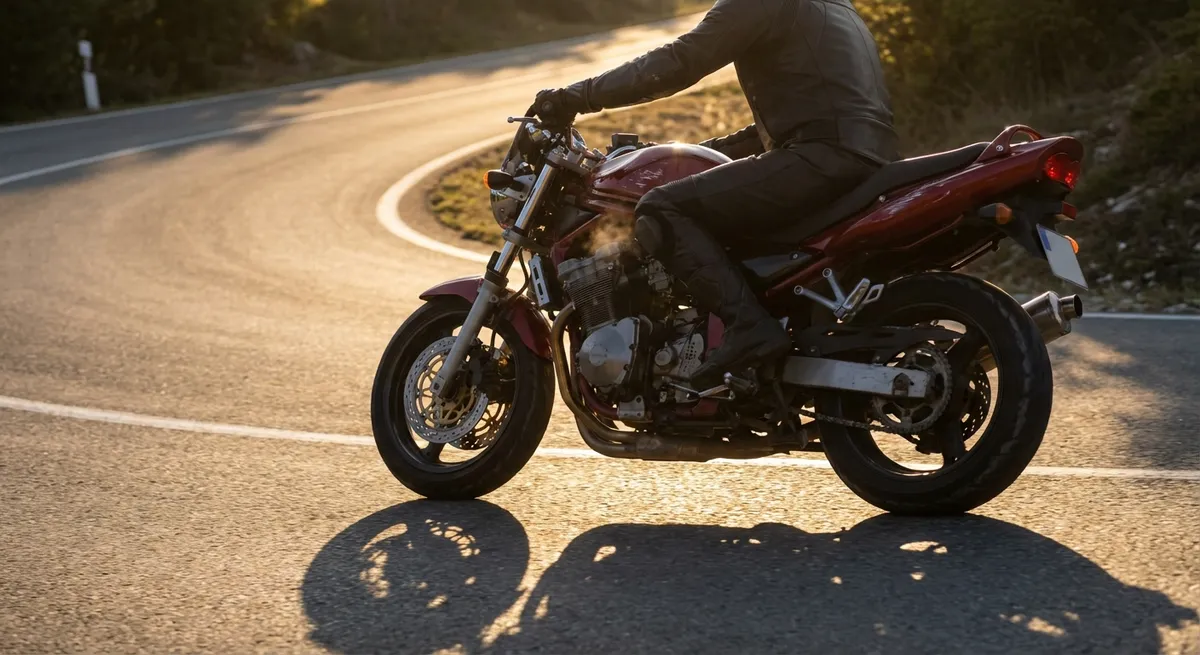
Every spec sheet shouts numbers, but the truth of a motorcycle lives in the way it moves under you at speed, loads up in a corner, and breathes when you crack the throttle. Serious riders don’t just ask, “Is it fast?” They ask, “How does it behave?” This is where proper motorcycle reviews matter—not as hype, but as a detailed report on chassis dynamics, engine character, control feel, and long-haul usability. If you know what to look for in a review, you can translate another rider’s impressions into real-world meaning for your own style and roads.
Below are five technical pillars that turn a casual opinion into a review you can actually trust with your money and your next season of riding.
1. Engine Character: Beyond Horsepower and Torque Numbers
A good review goes way deeper than “it’s got good power.” Enthusiasts should look for how the engine delivers that power across the rev range.
A technically useful review will talk about:
- Torque curve shape: Is the torque concentrated in the midrange (street-friendly, effortless roll-on) or stacked near the redline (track-focused, needs revs)? Dyno charts or precise descriptions like “strong pull from 4,000–9,000 rpm” are gold.
- Throttle response mapping: Is the initial opening snatchy or progressive? Ride-by-wire systems often have multiple modes; reviewers should identify which mode feels most natural and how the bike responds to tiny mid-corner corrections.
- Engine braking behavior: Strong engine braking can stabilize corner entry for some riders, but feel harsh for others. Reviews should say whether the bike has adjustable engine braking and how each setting changes corner approach and rear-wheel stability.
- Vibration spectrum: Not just “buzzy” or “smooth”—what rpm range? In the bars or the pegs? Inline-fours often spin smoother at high rpm; big twins may thump at low rpm but feel planted midrange. Detailed reviewers will connect this to fatigue on longer rides.
- Gear ratio usability: Do you constantly hunt between 2nd and 3rd in the twisties, or is there a “magic gear” that carries you through most backroad work? The best reviews talk about what speeds correspond to what rpm in real-world gears.
When you read a review, you want the engine described as a tool, not a number. Can you short-shift it and surf torque, or does it demand revs and aggression? That distinction is more important than peak horsepower to most real riders.
2. Chassis Dynamics: How the Frame and Geometry Talk to You
The chassis is the bike’s nervous system. A proper review doesn’t just say “it handles well,” it dissects how the bike transitions, loads, and recovers under real forces.
Key technical cues to look for:
- Stability vs. agility balance: Reviews should reference how quickly the bike tips into a corner and how locked-in it feels at high speed. Geometry (rake, trail, wheelbase) influences this, but a reviewer should connect the spec sheet to the feel: “faster turn-in but a little nervous on rough, fast sweepers” is useful; “feels sporty” is not.
- Mid-corner composure: Does the bike hold a line when you hit a bump at lean, or does it need correction? Does it stand up under braking mid-corner? Specific feedback like “stays neutral when trail-braking lightly” tells you how it will behave in your local twisties.
- Weight distribution and load transfer: Reviews that mention how the bike reacts to aggressive braking or hard acceleration out of bends give insight into chassis balance. Light front ends under power may wheelie or wander; front-heavy setups can feel planted but slower to change direction.
- Rider triangle and leverage: Where are the bars relative to the seat and pegs? A good review links this to handling: wide bars and upright posture increase steering leverage and control at low speed; low clip-ons and rearsets improve front-end feel but demand commitment.
- Feedback language: Trust reviews that talk about what they feel and where: “great tire feedback through the bars and seat” beats vague praise. Feedback is your early warning sensor for grip and limit approaches.
When evaluating a review, ask: Could I sketch a mental picture of how this bike would behave on my roads? If not, the chassis description isn’t technical enough.
3. Suspension Performance: Damping, Support, and Real Adjustability
Suspension is where many reviews either shine or fall apart. Enthusiasts need more than “firm but comfortable.” You want to know how the fork and shock manage energy.
Look for reviewers who talk about:
- Initial stroke vs. mid-stroke support: Does the fork dive excessively under braking, or does it settle quickly and stay composed? Detailed reviews describe how the front end behaves when transitioning from braking to turn-in—critical for confidence.
- Compression vs. rebound behavior: When you hit a sharp bump, does the suspension blow through travel (too-soft compression) or kick back (too-fast rebound)? Comments like “the rear packs down over successive bumps” indicate rebound that’s too slow, which can destabilize the chassis.
- *Adjustability that actually works: Many bikes advertise adjustability, but quality reviews say if the range is meaningful. Can the rider feel a click or two of rebound difference? Reviewers who note their weight, stock settings, and changes they made give you a baseline for your own tuning.
- Consistency under load: How does the suspension behave two-up, with luggage, or after 20 minutes of aggressive riding when the shock is hot? A review that mentions fade or loss of damping quality after sustained abuse tells you about long-term performance.
- Interaction with riding modes: Modern bikes often tie suspension to ride modes (semi-active systems). A solid review will outline how “Sport” vs. “Road” changes not just comfort, but chassis pitch and reaction during braking/acceleration.
Enthusiast-level takeaway: any review worth trusting should treat suspension as a dynamic system that you tune, not just a comfort setting. If the reviewer never mentions rider weight, riding pace, or road conditions, they’re not really evaluating the suspension.
4. Braking System and Control Feel: Modulation, Heat, and Real-World Stopping
Brakes are more than “strong” or “weak.” Riders need to know how the system feels at the lever and what happens when it’s pushed near its limits.
Technical elements that good reviews highlight:
- Initial bite vs. progression: Some systems (like Brembo M50/M4 calipers with performance pads) have strong initial bite, which track riders love but some street riders find abrupt. Reviews should distinguish between a linear lever feel and an aggressive, on/off sensation.
- Modulation window: This is the range from first pad contact to full braking. A review should tell you if there’s plenty of fine control for trail braking into corners or if most of the power comes in the last part of lever travel.
- Brake fade and heat management: Hard canyon runs, track days, or loaded touring will expose marginal systems. A serious review notes if the lever comes back to the bar or if feel gets spongy after repeated high-speed stops.
- ABS tuning and cornering behavior: Modern IMU-based cornering ABS systems vary widely. Reviews should say if ABS intervention feels smooth or intrusive, especially when leaned over. Does it chatter, lengthen stopping distances on rough surfaces, or stay mostly invisible?
- Rear brake usefulness: Many stock rear setups are vague or weak. A good review will say whether the rear pedal offers fine control for low-speed maneuvers, corner tightening, or stabilizing the chassis, or if it’s more of an on/off suggestion.
When reading, filter out one-dimensional comments like “great brakes” and focus on descriptions that tie braking performance to technique—trail braking, panic stops, downhill hairpins. That’s where you’ll live on real roads.
5. Electronics and Rider Aids: Integration, Latency, and Trust
Electronics can either extend your skill or fight your inputs. You want reviews that talk about behavior under load, not just feature lists.
Key aspects a technical review should cover:
- Traction control behavior: At what point does TC step in? Reviews should mention whether intervention is subtle (light trimming of wheelspin) or aggressive (visible power cuts or abrupt ignition cuts). Descriptions tied to corner exits, wet roads, or gravel-littered corners are especially valuable.
- Mode calibration differences: Many bikes have Rain/Road/Sport/Track settings. A strong review describes how each changes throttle map, power output, TC, wheelie control, and sometimes suspension. The important part: does the bike remain predictable when switching modes mid-ride?
- User interface and adjustability: Deep menus are common; good reviews tell you if you can quickly adjust TC level or ABS at a fuel stop, or if you need to dive through layers of clunky UI. Can you store custom profiles for track vs. touring?
- Latency and smoothness: Electronic intervention that arrives too late or in a stepwise, jerky manner can unsettle the chassis. Look for reviewers who have triggered systems intentionally—hard launches, wet paint lines, aggressive exits—and report on how seamless or disruptive they felt.
- Integration with physical components*: Cornering ABS and lean-sensitive TC rely on IMUs and quality sensor fusion. Reviews that tie electronics performance to tire choice, road conditions, and lean angles give you realistic expectations instead of marketing-level optimism.
Electronics are only truly valuable when you trust them. Reviews that share specific moments—“I felt the TC gently trim spin exiting a slick hairpin without upsetting the line”—are far more meaningful than screenshots of menus.
Conclusion
The difference between a throwaway motorcycle review and one a serious rider can use is technical clarity. You’re looking for a writer who connects chassis geometry to feel, translates dyno curves into ride character, and treats suspension and electronics as tuneable systems rather than buzzwords. When you scan your next review, run it through these five lenses: engine character, chassis dynamics, suspension behavior, braking performance, and electronics integration.
If the review gives you concrete, repeatable scenarios—speeds, gears, road types, rider weight, riding style—you can start mapping that experience onto your own realities: your local roads, your pace, your mission. That’s how you move from hype-driven purchases to purpose-built choices—and end up on a bike that feels engineered for the way you ride.
Sources
- Motorcycle Consumer News Archive (via Rider Magazine) - Long-form, technically oriented road tests with detailed chassis, brake, and engine evaluations
- Cycle World – Motorcycle Reviews - Comprehensive reviews including dyno runs, measured performance data, and in-depth riding impressions
- Motorcyclist Online – Tested: Bikes - Instrumented tests and technical breakdowns of handling, braking, and electronics across multiple models
- Kawasaki Motors – Technology Overview - Official explanations of modern rider aids such as KTRC traction control, KIBS ABS, and IMU-based systems
- NHTSA Motorcycle Safety Research - Government data and studies on braking, stability, and rider safety systems relevant to evaluating real-world performance
Key Takeaway
The most important thing to remember from this article is that following these steps can lead to great results.