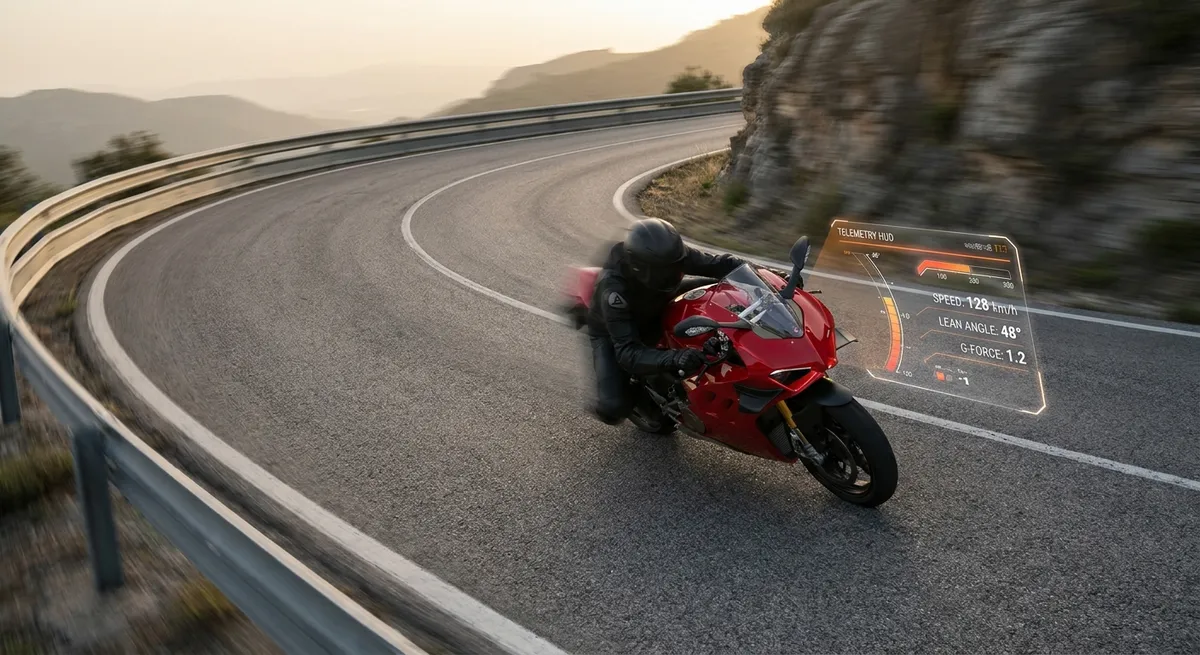
Motorcycle spec sheets are loud. Lap times, horsepower, lean-angle assist, inertial magic—every brand screams numbers. But out on real roads, the motorcycles that actually matter are the ones that carry speed cleanly: stable on the edge of grip, predictable mid-corner, and calm when you’re deep on the brakes and fully committed. This review framework isn’t about brochure bragging rights; it’s about how a bike behaves when you’re riding at the limit of your attention, not just the limit of the tire.
This is a Moto Ready lens for motorcycle reviews: judge bikes by how they manage speed through space, not just how hard they accelerate in a straight line.
1. Chassis Stability: What the Bike Does When the Road Fights Back
If you’re serious about reviewing motorcycles, chassis stability is non‑negotiable. The question isn’t “Does it feel stable at 70 mph?”—almost everything does. The real question is: What does the chassis do when you’re leaned over, the pavement is imperfect, and you’re still feeding in throttle?
A technically honest review looks at:
- Rake and trail in context: Rake (steering head angle) and trail (the distance between steering axis projection and tire contact patch) define how a bike reacts to inputs and disturbances. A sportbike with ~23–24° rake and ~95–105 mm trail will turn quickly but demands a more active rider. A bike with 26–28° rake and 110–130 mm trail resists sudden inputs and feels more “on rails,” but needs more deliberate steering.
- Wheelbase under load: Wheelbase isn’t fixed in the real world. Under acceleration, the rear shock extends; under braking, the fork compresses. A bike with a long, relaxed wheelbase can turn into a sketchy handful if the fork dives excessively and shortens the chassis too much under braking. A good review notes how the bike stays planted or gets nervous when you trail the brakes to the apex.
- Steering stability over imperfections: Mid-corner bumps are truth serum. Some bikes deflect, wobble, and demand a micro-correction for every surface change. Others just swallow the hit and hold line. This is a function of suspension geometry, steering head rigidity, and mass distribution. You’re not just asking “Is it stable?”—you’re asking “How much line correction does the bike demand as the surface degrades?”
- High-speed direction changes: On fast esses or big-radius sweepers, chassis balance shows up in how the bike transitions. A well-sorted motorcycle feels like rotating around a neutral, predictable axis. Poorly sorted bikes load the rider—forcing you to wrestle the bars or unload/reload the chassis with exaggerated body inputs.
When you review a motorcycle through this lens, you’re really asking: Does this bike let you commit earlier and carry more speed with less drama, or does it force you to ride defensively?
2. Brake System Character: Not Just Power, but Modulation and Thermal Behavior
Every modern motorcycle brochure yells “radial calipers” and “ABS.” That tells you almost nothing about how the system behaves when it actually matters—late braking, repeated heavy stops, or braking leaned over with real corner speed on the line.
A technical review digs into:
- Initial bite vs. ramp: Some systems have aggressive initial bite that feels great on a test ride but becomes too sharp when you’re trail braking on imperfect roads. Others have a more progressive ramp—less drama at the lever, but better control at the edge of grip. Evaluating this isn’t subjective fluff; it’s about how many usable “micro-steps” of braking you can access between just touching the lever and approaching ABS intervention.
- Lever ratio and feel: Master cylinder piston diameter, lever pivot ratio, and hose expansion all change how the lever feels. A good setup gives you a firm, consistent lever with a clearly readable progression as you add force. Spongy or wooden feel usually points to poor component matching or flexible hoses. A serious review comment: “This bike gives about 70–80% of usable braking force in a very narrow lever travel range—easy to overbrake in low-traction scenarios” is much more useful than “brakes are strong.”
- ABS tuning and cornering behavior: Cornering ABS isn’t binary good or bad; implementation quality matters. You want to know: Does ABS intervene smoothly or abruptly? Can you feel a sudden release, or is it a controlled pulsing that still lets you steer? On some bikes, aggressive ABS cuts pressure so harshly you overshoot apexes. On others, it’s nearly transparent until you’re well past reasonable grip demands.
- Thermal consistency: Repeated hard braking from highway speeds will expose weak links: pad fade, rotor discoloration, lever travel growth. A reviewer should note whether the lever feel changes after multiple aggressive stops or a focused canyon descent. That’s a real-world safety and performance trait, not just a track-day detail.
The real metric: Can you place the motorcycle exactly where you want, under braking, across multiple corners, without recalibrating your fingers every time the system heats up?
3. Suspension Support: How the Bike Holds Itself Up When You’re Committed
Suspension isn’t just about comfort; it’s the structural honesty of the motorcycle in motion. The key questions in a review: Does the bike hold itself together when loaded, or does it collapse into its travel and distort your geometry mid-corner?
Look for:
- Static vs. dynamic sag reality: Factory settings are often too soft for real-world spirited riding—especially for heavier riders or luggage. The important observation is how much of the fork and shock travel is being used during steady-state cornering and under hard braking. If you’re riding at pace and already 70–80% into the suspension stroke mid-corner, you’ve got no margin for bumps or corrections.
- Mid-stroke support: This is where a lot of road bikes expose their limits. On soft or underdamped setups, the bike feels fine on smooth, low-load riding, but once you lean in and pick up throttle, it settles deep into the stroke and stays there. The result: sluggish steering, vague feedback, and a front that feels light and imprecise. In a review, this sounds like: “Once loaded, the fork lives too far down in its travel, making the front vague on exit and limiting confidence to add throttle early.”
- Damping quality over sharp edges: High-speed compression damping controls how the suspension reacts to abrupt hits—potholes, expansion joints, aggressive bumps. Underdamped systems blow through travel abruptly; overdamped ones deflect and skip. A strong review comment is less about “it’s firm/soft” and more about “the fork manages high-speed hits without kicking the bars or standing the bike up mid-corner.”
- Behavior under combined load: Real riding is combined braking, cornering, and acceleration—sometimes all in the same second. In that state, does the bike stay coherent, or does the rear squat while the front stands up, forcing you to constantly chase lines and lean angles?
The question that matters: Can this suspension deliver a stable platform for cornering and braking when you’re not riding politely? That’s the difference between a bike you respect and a bike you trust.
4. Power Delivery: How the Engine Shapes Your Line, Not Just Your Speed
A motorcycle’s engine doesn’t just change how quickly you arrive at the next corner; it changes how you negotiate that corner. Power delivery is a line-control tool, and a serious review treats it that way.
Key dimensions to evaluate:
- Torque curve shape, not just peak numbers: A bike with a wide, flat torque band lets you sit in a gear and focus on chassis management. An engine with a narrow, peaky band forces more shifting and increases the chances you’ll be in the wrong gear mid-corner. Mentioning where peak torque hits (e.g., 6,000 rpm vs. 10,000 rpm) and how cleanly the bike pulls from low revs gives riders a usable picture of real-world behavior.
- Throttle mapping and response latency: Between your wrist and the rear tire, there’s a lot of code now. Ride-by-wire systems vary hugely. Some deliver crisp but predictable response; others feel delayed or inconsistent across modes. What matters is: when you feed in 5–10% more throttle mid-corner, does the bike roll on smoothly, or does it surge and upset the chassis?
- Traction control strategy: Good traction control isn’t just a safety net; it’s an enabler. Some systems cut power abruptly when they detect slip, causing chassis pitching and killing corner drive. Better systems allow controlled slip and manage torque in fine increments. In a review you might note: “The TC allows a slight, predictable rear drift under power before subtly trimming torque, which keeps the chassis settled and lets you commit earlier on exit.”
- Engine braking behavior: Modern bikes often have adjustable engine braking maps. Excessive engine braking can destabilize the rear under aggressive downshifts; too little can leave you relying heavily on the front brake. Strong reviews highlight how the bike behaves on fast corner entries with multiple downshifts: Does the rear chatter, step out, or remain stable?
- Gear ratios and real-road usability: Short gearing will make a bike feel explosive in marketing videos, but can turn highway riding into a buzzy mess and narrow your usable rev window in corners. A good review discusses where the engine feels “awake” on the road and whether you’re constantly hunting gears or able to ride fluidly with minimal shifting.
The ultimate test: Does this powertrain let you shape corner entries and exits with small, repeatable inputs, or does it always feel like more motor than the chassis—or rider—can use?
5. Rider Integration: Ergonomics, Feedback, and Fatigue at Real Pace
You don’t ride a spec sheet; you ride a contact patch through a set of controls while your body deals with load, wind, and vibration. A high-quality review treats rider integration as a performance system, not a comfort footnote.
Critical aspects:
- Riding triangle as a control interface: Peg position, bar reach, and seat height aren’t just comfort parameters—they define how you load the front tire, how easily you can move your weight, and how much leverage you have on the bars. A bike with high rearsets and low clip-ons will load your wrists and front tire more, giving sharper turn-in but higher fatigue. A more upright setup may be friendlier for long rides but may reduce your precision at very high pace.
- Seat and tank shape for lower-body anchoring: The most precise bikes let you lock in with your legs, not your arms. A well-designed tank and seat profile lets you grip with your knees under braking and cornering, freeing your hands to steer instead of hold on. In a review, it’s powerful to say: “The tank shape allows secure knee lock under heavy braking, keeping bar input clean even when decelerating hard from highway speeds.”
- Wind management at speed: Aerodynamics are a control issue as much as a comfort one. Turbulent airflow around the helmet increases fatigue and reduces your ability to stay visually sharp. Clean, laminar airflow—whether that’s full wind protection or consistent, non-buffeting wind blast—matters for riders who sit at elevated pace for long durations.
- Vibration spectra: Not all vibration is equal. High-frequency buzz through bars or pegs is neurologically fatiguing; low-frequency pulses are often more tolerable. Reviewers should note where vibrations peak (rpm range, speed) and through which contact points they’re most noticeable. This directly impacts how long a bike can be ridden at pace without degrading rider precision.
- Information bandwidth from the bike: Some motorcycles talk to you clearly through the bars, pegs, and seat—small grip changes, surface transitions, and load shifts are all detectable early. Others feel numb until things go wrong. That’s partly tire choice and suspension, but also frame stiffness and ergonomic layout. A detailed review should highlight whether the bike’s feedback comes early and interpretable, or late and cryptic.
Rider integration is where a bike proves whether it’s a short-blast toy or a machine you can run hard for hours without your technique decaying.
Conclusion
Reviewing motorcycles purely by numbers misses the entire point of riding them hard and well. A serious Moto Ready review framework isn’t about isolated features; it’s about systems—how chassis stability, braking character, suspension support, power delivery, and rider integration work together to let you carry speed with confidence and repeatability.
The bikes that deserve attention aren’t just the ones with the highest top speed or longest electronics menu. They’re the ones that remain coherent when you’re deep into the throttle, committed on the brakes, and leaned into imperfect pavement—bikes that don’t just accelerate fast, but help you move through space with precision and calm.
If you start evaluating motorcycles this way, spec sheets become context, not gospel—and your next purchase is far more likely to be a true flow-state machine, not just another fast number on paper.
Sources
- Motorcycle Chassis Design: Rake, Trail, and Wheelbase - Cycle World explainer on how geometry affects handling and stability
- NHTSA Motorcycle Safety: Braking and Stability - U.S. National Highway Traffic Safety Administration overview of motorcycle dynamics and braking considerations
- Öhlins Suspension Technical Information - Technical FAQs on suspension behavior, damping, and setup from a leading suspension manufacturer
- Bosch Motorcycle Stability Control Overview - Details on how modern ABS and traction control systems manage braking and traction
- SAE Technical Paper: “Motorcycle Handling and Chassis Design” - Research-based discussion of motorcycle dynamics and chassis parameters (Society of Automotive Engineers)
Key Takeaway
The most important thing to remember from this article is that this information can change how you think about Motorcycle Reviews.