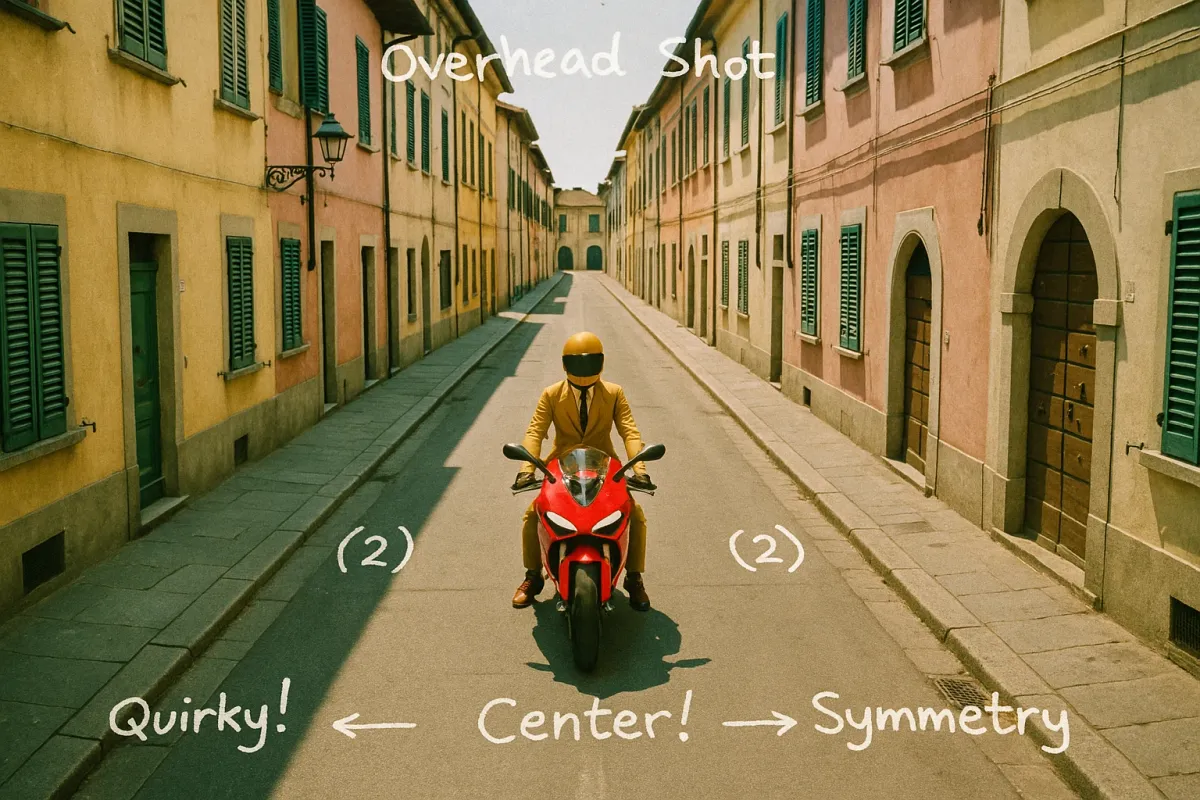
What if you looked at a motorcycle the way a director like Wes Anderson or David Lynch looks at a frame? Budget Direct just went viral with 3D renders of home offices styled after iconic movie directors, and the internet loved how each workspace felt instantly recognizable. That’s exactly how the best modern bikes work: they’re not just spec sheets, they’re rolling “directorial styles” from Ducati, Yamaha, KTM, and the rest.
Right now, every major manufacturer is in a knife‑fight to give their machines a distinctive, cinematic “signature.” Ducati’s hyper‑precise electronics, KTM’s aggressive chassis geometry, Yamaha’s crossplane soundtrack—these are visual motifs turned into ride characteristics. So instead of doing another boring “Top 10 New Bikes,” let’s steal a page from those director‑inspired offices and look at how to review a modern motorcycle like you’re dissecting a film: obsessing over the technical decisions that create the “vibe.”
Below are five brutally specific angles you should be using whenever you evaluate—or argue about—your next bike, whether it’s the 2025 middleweight adventure wave, the latest electric naked, or a used supersport with more track days than oil changes.
1. Chassis as Cinematography: Geometry, Flex, and Why Your Line Feels “Wrong” or “Right”
In movies, lens choice and framing dictate how a scene feels. On a bike, that role belongs to the chassis. When you’re test‑riding anything—from a Yamaha MT‑09 to a Ducati Panigale V4—you should be reading the geometry like a cinematographer:
- Rake and trail:
- Less rake (steeper fork angle) and shorter trail = quicker turn‑in, more nervous mid‑corner. Think KTM 890 Duke R.
- More rake and longer trail = slower initial turn, rock‑solid stability. Think big‑mileage ADV rigs like the BMW R 1300 GS.
- When you review: don’t just say “handles well.” Say “the 24.5° rake and ~100 mm trail give it super‑eager turn‑in, but it wanders slightly on mid‑corner bumps at speed.”
- Wheelbase:
- Short wheelbase = playful, supermoto‑like reactions, but less stability during hard braking and at autobahn speeds.
- Long wheelbase = planted, great for high‑speed sweepers and loaded touring, but you’ll feel the extra length in hairpins.
- Chassis flex:
- Modern frames (like Ducati’s aluminum monocoque or Yamaha’s Deltabox) are tuned to flex a little. Too stiff and the bike skates on bumps; too soft and your line smears all over the corner.
- On test rides, pay attention to how the bike reacts when the surface gets ugly mid‑corner. Does it chatter the bars? Walk wide? Or breathe and settle?
- Steering feedback:
- Wide bars on nakeds and ADV bikes = leverage and immediacy.
- Low clip‑ons on supersports = precision but less brute correction power.
- Note how much bar input you need to initiate a turn. If it “falls in,” that’s geometry and tire profile talking.
When you describe handling, talk like a DP: “fast, reactive front end with a touch of nervous energy,” or “long‑lens stability that asks for commitment but rewards smooth inputs.”
2. Engine Character as Color Grading: Mapping, Crank Layout, and Real‑World Thrust
Film color grading sets the emotional tone; an engine’s internal design does the same for a bike. In 2025, we’re spoiled with wildly different personalities: Ducati’s Granturismo V4, Yamaha’s crossplane inline‑four, Triumph’s triples, and the tidal wave of parallel twins from nearly everyone.
Instead of just quoting horsepower, dissect the “grading” of the engine:
- Crank layout and firing order
- Inline‑4 (screamer): Even firing, loves revs, smoother, classic supersport soundtrack (think older R6/R1 screamers, CBR600RR).
- Crossplane inline‑4 (Yamaha R1/MT‑10): Uneven firing for V4‑like traction feel, huge midrange drive, deep exhaust note.
- V‑twin / 90° V‑twin (Ducati’s older L‑twin, Aprilia RSV Mille): Punchy low‑to‑mid torque, strong engine braking, distinctive off‑beat pulse.
- V4 (Ducati Panigale V4, Aprilia RSV4): Compact, revvy, blends twin torque with four‑cylinder top end; thrilling on track.
- Parallel twin with 270° crank (Yamaha MT‑07, Aprilia RS 660, a ton of 2025 mids): L‑twin‑like feel in a cheaper, more packaging‑friendly format.
- Torque curve vs peak hp
- Look at where the torque plateau starts. A bike that hits 80% of its torque at 4,000 rpm will feel far faster in the real world than a bike with higher peak hp but a peaky delivery.
- When you ride, ask: “Can I live between 3–7k rpm and feel alive, or do I have to constantly chase the redline?”
- Throttle mapping & ride‑by‑wire
- Most 2024–2025 bikes use ride‑by‑wire. The map decides if the bike feels digital or organic.
- Test all modes: Urban/Rain/Road/Sport/Track. Note: is Rain just softer, or does it genuinely smooth out on/off transitions?
- Pay attention to low‑speed fueling—is there snatch at parking‑lot speeds or when rolling back on mid‑corner?
- Engine braking strategy
- Modern ECUs and slipper clutches tune how much the engine “drags” the rear wheel on closed throttle.
- Too much = unsettled chassis, especially downhill. Too little = vague feel entering corners.
- Check if the bike lets you adjust engine braking (Ducati, Aprilia, and high‑end Yamahas often do).
That’s how you move past “it’s fast” into why it feels cinematic, frantic, or calm.
3. Electronics as Editing: Traction, ABS, and the Invisible Hand Saving Your Ride
Budget Direct’s concept offices leaned hard into visual motifs; today’s bikes do the same with electronics. From Bosch IMUs to ride modes on everything from 125s to litre bikes, the “editing suite” under your seat can make or break the experience.
Focus on how smart the system is, not just whether it exists:
- IMU‑based vs basic ABS/TC
- IMU (Inertial Measurement Unit) tracks pitch, roll, and yaw. Cornering ABS and lean‑sensitive TC massively change aggressive riding or wet‑weather safety.
- Note whether the system is cornering‑aware (KTM’s “MSC”, Ducati’s “Cornering ABS EVO,” etc.) or just straight‑line ABS.
- Traction control granularity
- Count the levels and feel the intervention.
- Good TC adds a subtle “soft wall” when grip fades; bad TC chops power like an on/off switch.
- Test on a known slippery surface and in different modes. Can you feel the difference between, say, TC 1 and TC 5?
- Wheelie control and launch control
- On performance bikes (Panigale V4, RSV4, S1000RR, etc.), wheelie control tuning defines whether full‑throttle corner exits feel alive or neutered.
- Launch control should give clean, repeatable starts without either bogging or loop‑out drama.
- ABS behavior
- Hard straight‑line stops from ~60–70 mph: does the lever pulse? Does the rear hop?
- On corner entry, does cornering ABS let you trail brake sensibly, or does it stand the bike up and push you wide?
- User interface / tuning access
- Are adjustments buried four menus deep, or can you tweak TC/EB/wheelie control with a single button like modern KTMs and Ducatis?
- Test how fast you can change settings with gloves on. That’s the real‑world metric.
A 2025 bike without decent IMU electronics already feels old. When you review, say exactly where the tuning shines—or where it makes the bike feel like an over‑edited movie.
4. Suspension as Production Design: Stock Setup, Adjustability, and Real Tuning Potential
In Budget Direct’s director offices, set design did half the storytelling. On a motorcycle, the suspension is that set: it frames every single input, bump, and corner.
Modern reviews need to go past “suspension is comfortable”:
- Hardware basics
- Non‑adjustable: common on entry‑level bikes and some retro standards. Fine for casual riders, but a ceiling for aggressive riding or heavier/lighter riders.
- Preload‑only: you can set sag for weight/load, but can’t tune how fast the suspension moves.
- Fully adjustable (preload, rebound, compression): the minimum serious riders should demand in performance segments.
- Semi‑active electronic (Öhlins EC, Showa EERA, etc.): reads sensors and adjusts damping in real time.
- From factory settings
- Most bikes are set for a ~75–85 kg rider. If you’re outside that range, call it out when you review how it feels.
- Check static and rider sag if possible; it tells you a ton about spring rates.
- Real‑world testing
- Evaluate in three use cases:
- How adjusters actually respond
- Make a click or two of rebound/compression and ride the same section again. Good suspension offers a clear difference; bad units feel like placebo.
- On semi‑active systems, compare “Comfort,” “Road,” and “Sport/Track” on the same stretch. Do they actually change support and control, or just marketing labels?
Urban (potholes, speed bumps, low‑speed maneuvering)
Spirited twisties (quick direction changes, mid‑corner bumps)
Braking zones (fork dive, rear stability)
- Note: does the fork blow through travel on hard braking? Does the rear pogo when you hit expansion joints mid‑corner?
If you phrase your review in terms of support, control, and adjustability, you’re giving riders something they can actually use—especially in the current era where mid‑range bikes are finally getting quality suspension from the factory.
5. Ergonomics and Interface as Script: How the Bike Talks to You Hour After Hour
Those famous director‑themed home offices weren’t just pretty—they were workable spaces. Same thing with motorcycles in 2025: ergos and interface are the script that determines whether the machine is a daily collaborator or a once‑a‑month diva.
When you review, treat the rider triangle and cockpit like tools, not decorations:
- Rider triangle
- Measure/observe the relationship between bars, seat, and pegs.
- High, rearset pegs + low clip‑ons = track focus; great for control, bad for knees/back in traffic.
- Neutral pegs + mid‑height bar (many new “roadster” and ADV‑sport bikes) = all‑day rideability with enough leverage for aggressive riding.
- Seat design
- Don’t just say “comfortable.” Call out density, shape, and lock‑in:
- Flat, wide seat = great for touring, but can feel vague when hanging off in corners.
- Sculpted, supportive seat with a slight pocket = locks you under acceleration but may trap you in one position on long rides.
- Test 30–60 minutes continuously; hotspot pressure usually shows up around that mark.
- Wind management
- On nakeds and roadsters: check where the clean air hits (chest, neck, helmet) at 70–80 mph. Turbulence around the helmet is more fatiguing than pure wind pressure.
- On faired bikes and ADVs: test screens in different positions if adjustable. Note helmet buffeting with and without handguards or auxiliary deflectors.
- Controls and switchgear
- Are switches glove‑friendly? Backlit? Intuitive enough not to require eyes off the road?
- Is the quickshifter (if fitted) smooth at low rpm or only above a certain load? Does the blipper handle tight downshifts cleanly, or does it jolt the chassis?
- Dash and integration
- TFT legibility in full sun vs night.
- Ease of swapping ride modes or custom profiles (some 2025 bikes let you build deeply personalized setups—leverage that).
- Connectivity: does the official app actually add value (nav, ride logs, service reminders) or is it a buggy battery drain?
This is where a lot of current buyers decide between similar bikes—especially in crowded spaces like middleweight ADV and naked segments. Your ability to describe the human interface, not just the numbers, is what makes your review share‑worthy.
Conclusion
Right now, manufacturers are doing exactly what those viral director‑inspired home offices are doing: building machines with instantly recognizable “signatures” in their geometry, engines, electronics, suspension, and ergos. If you review a modern motorcycle without digging into those five technical layers, you’re basically describing a movie by only mentioning the runtime and poster.
Next time you throw a leg over anything—whether it’s the latest IMU‑packed Italian superbike or a deceptively simple parallel‑twin middleweight—review it like you’re breaking down an auteur film. Talk about chassis cinematography, engine color grading, electronic editing, suspension production design, and ergonomic script.
Do that, and your bike reviews won’t just be opinions—they’ll be tools other riders can actually ride better with. And that’s the kind of content the Moto Ready crowd will happily share, argue about, and keep coming back for.
Key Takeaway
The most important thing to remember from this article is that this information can change how you think about Motorcycle Reviews.