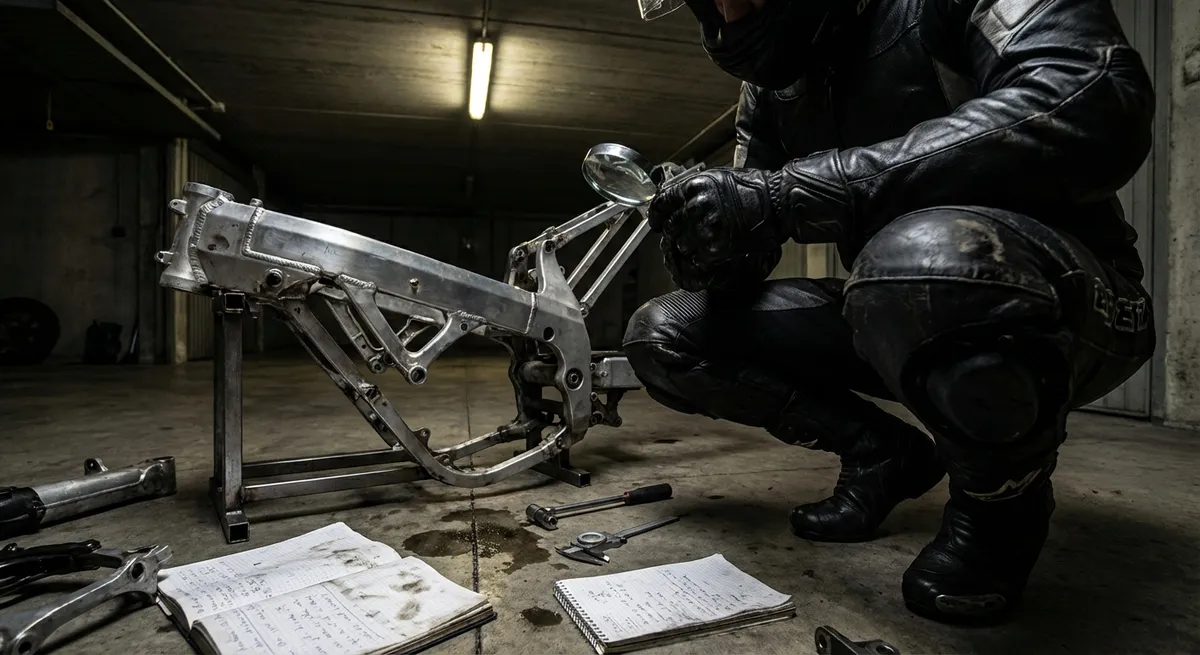
Motorcycle reviews can feel like spec-sheet bingo and marketing poetry stitched together with a lap time. But if you ride hard, ride often, or just think in torque curves instead of “feels fast,” you need more than adjectives. You need to know what’s happening in the metal, the code, and the contact patch—and how to extract that from any review you read or watch.
This isn’t about parroting dyno numbers. It’s about decoding the engineering signals buried inside every competent review so you can choose a bike that fits your riding style like a torque wrench on the right fastener.
1. Power Delivery, Not Just Peak Horsepower
Most reviews shout about peak horsepower and 0–60 times. For riders, those numbers are the trailer, not the movie. What matters is how the engine delivers torque across the rev range and how that maps to real roads.
Look for reviewers who talk about usable torque—where in the rev range the engine wakes up, and how linear or punchy it feels. A spec sheet that says “82 hp at 10,500 rpm” means nothing if you spend 90% of your time between 3,000–7,000 rpm and the bike is soft there. Reviews that mention “strong midrange,” “flat torque curve,” or “needs to be revved” are pointing directly at ride character.
Technically minded reviewers may reference crank vs. wheel horsepower, dyno curves, and gear ratios. That’s gold. A bike with shorter gearing and a modest torque number can feel more alive than a high-hp machine geared tall and tuned for emissions over excitement. Also pay attention to throttle translation: comments like “snatchy at low rpm,” “rubber-band throttle,” or “perfectly metered” describe the ECU mapping—critical for low-speed control, especially in the wet.
The key: ignore peak bragging rights unless the review connects them to how the bike accelerates off corners, in roll-on passes, and during everyday commuting. Power isn’t a number—it’s a relationship between torque, gearing, and throttle mapping.
2. Chassis Feedback: What the Reviewer Feels Through the Pegs and Bars
When a review mentions “confidence-inspiring” handling, you want to know why. That’s chassis dynamics. The frame, swingarm, steering geometry, and weight distribution all control how the bike talks to you.
Seek out comments on steering geometry behavior: “quick turn-in but stable mid-corner,” “relaxed front end,” or “needs a deliberate input” are all clues. Technically, this is rake, trail, and wheelbase at work. Steeper rake and shorter trail give agile steering; longer wheelbase and more trail give stability. The right balance depends on your riding: tight backroads and track days vs. 80-mph interstate and loaded touring.
Reviews that detail feedback through the bars, seat, and pegs are especially useful. Phrases like “can feel the front tire working,” “rear communicates grip loss progressively,” or “vague on initial lean” indicate how much information the chassis transfers. This is critical for pushing near your limit—your brain can only ride what your body can feel.
Also note comments about weight distribution and mass centralization: a bike can be objectively heavy but feel light if mass is carried low and centralized. If a reviewer talks about “hides its weight once moving” or “top-heavy at low speed,” that’s telling you where the mass sits and how it affects low-speed maneuvers, lane splitting, and U-turns.
3. Suspension: Damping Language That Actually Means Something
Suspension is where a review either becomes engineering or stays entertainment. Ignore “plush” and “firm” unless the reviewer anchors those words in specific behavior: braking dive, mid-corner composure, and bump absorption under load.
Technical points to watch for in a review:
- Compression vs. rebound behavior
“Pogoing after big bumps” = not enough rebound damping.
“Harsh over sharp edges” = too much low-speed compression or inadequate spring preload for rider weight.
- Support under braking and acceleration
Comments like “dives too much under hard braking” or “squats and runs wide on corner exit” point to front and rear support balance. This directly affects geometry and therefore steering precision.
- Adjustability and usable range
A review that notes “clickers actually make a noticeable difference” or “ran out of preload for my weight” is gold. That tells you whether the stock setup accommodates real riders—or only the 160 lb test rider.
- Static vs. dynamic performance
“Great on smooth roads, overwhelmed on broken pavement” describes the valving compromise. If you ride on rough, real-world roads, prioritize reviews that test outside perfect racetrack tarmac.
A good technical review will mention spring rates, whether the fork is cartridge or basic damper-rod, and if the rear shock is rebuildable or non-serviceable. Even a quick note like “non-adjustable fork but well-damped from the factory” is more useful than three paragraphs of non-technical feel.
4. Braking Systems and Real Stopping Performance
Brakes are more than just “strong” or “weak.” You want to know modulation, thermal performance, and how the ABS and electronics intervene. This is where technically detailed reviews stand apart.
Pay attention to:
- Initial bite vs. progression
“Sharp initial bite, then linear” vs. “wooden feel” are clues about pad compound, master cylinder ratio, and caliper stiffness. Track riders often like a strong initial bite; street riders may prefer more progressive feel for low-speed control.
- Fade resistance
If a reviewer notes “no fade after repeated hard stops” or “lever came back to the bar on the third stop,” that’s telling you about rotor size, material, and caliper design—plus how well the system manages heat. Crucial for mountain riding and track days.
- ABS calibration
“Intrusive ABS off smooth surfaces” or “ABS stays in the background unless you really ask for it” gives a direct read on cornering ABS tuning and wheel speed sensing. If you ride in rain, gravel, or on patchy surfaces, this matters more than raw braking distance.
- Ergonomics of control
Reach adjusters, lever feel, and pedal placement affect how confidently you can use full braking potential. Reviews that mention “easy one-finger braking” or “awkward rear pedal angle for standing” are speaking directly to real-world usability.
When you see specifics about caliper type (radial vs. axial), rotor diameter, and braided vs. rubber lines—combined with subjective impressions tied to actual riding scenarios—that’s a review written for riders who care about braking as a system, not a spec box.
5. Electronics as a Dynamic System, Not Gadgets
Modern motorcycles are rolling software platforms, but not all electronics packages are equal—nor are all reviews. You want to know how the code interacts with the crank, brakes, and tires, not just that the bike has “modes.”
Look for reviews that stress-test electronics:
- Traction control logic
Does the reviewer describe “smooth intervention at lean” vs. “abrupt power cuts mid-corner”? That’s traction control strategy in action—how the ECU blends ignition timing, fuel, and throttle to manage slip. The best systems feel like a gentle hand; the worst feel like hitting a wall.
- Ride modes that actually change behavior
“Rain mode softens throttle and ramps up traction control,” “Sport mode sharpens response and relaxes intervention” are real, technical distinctions. If a review brushes modes off as “gimmicky,” you’re missing a lot of data about how the bike’s brain behaves.
- Cornering ABS and IMU behavior
Mention of a 6-axis IMU and “cornering ABS that lets you brake deeper while leaned over” is crucial if you push on twisties. Reviews that test panic stops in corners or over bumps reveal how stable and predictable the system is when you’re most vulnerable.
- Integration, not just features
Does the quickshifter stay smooth near redline? Does the auto-blipper upset the chassis on downshifts? How does cruise control behave on grades? Technical reviewers talk about system integration—how the electronics harmonize with the mechanical package.
Treat electronic features like you would suspension: the presence of adjusters (modes) is useless unless someone tested their effective range and behavior under real riding loads.
Conclusion
The best motorcycle reviews aren’t just entertainment; they’re translated engineering. When you learn to listen for how a reviewer describes power delivery, chassis feedback, suspension dynamics, braking performance, and electronic behavior, you stop shopping for a motorcycle the way you shop for a laptop—and start choosing a machine that will actually sync with your riding style.
Specs get you in the ballpark. Technical reading of real-world impressions gets you to the right seat, on the right bike, at the right pace. The next time you read or watch a review, hunt for these five technical signals. You’ll immediately separate the brochure reciters from the riders who are actually talking to the machine—and telling you what it’s really saying back.
Sources
- Motorcycle Consumer News – Understanding Motorcycle Chassis Geometry – In-depth explanation of rake, trail, wheelbase, and how they affect handling
- Yamaha Motor – Technology: YRC, IMU & Rider Aids – Official overview of modern electronic rider aids and control systems
- Kawasaki – ABS & KIBS Technical Overview – Details on Kawasaki’s braking electronics and how they interact with the chassis
- SAE International – Motorcycle Braking Performance Study – Research paper on motorcycle braking behavior and factors influencing stopping distance
- MSF (Motorcycle Safety Foundation) – Advanced Riding Strategies – Explains practical implications of braking, traction, and control from a rider-safety perspective
Key Takeaway
The most important thing to remember from this article is that this information can change how you think about Motorcycle Reviews.