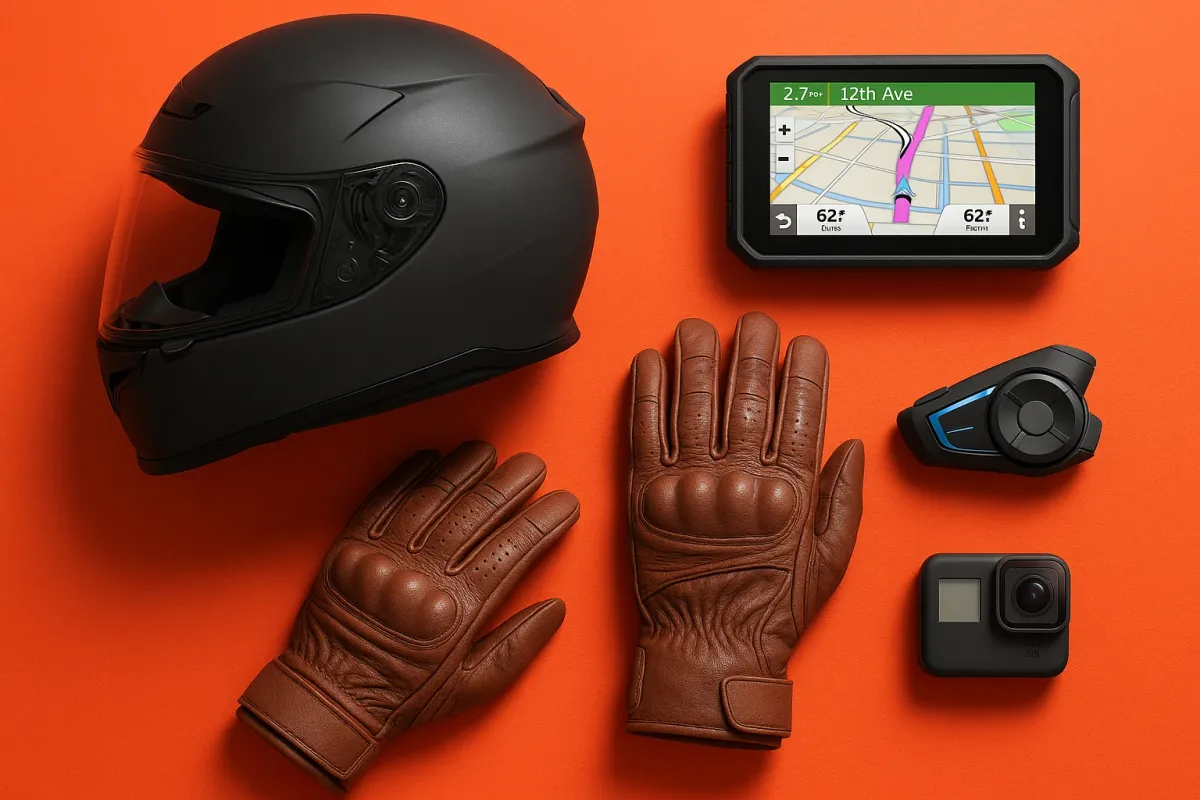
The same way everyone is refreshing carts for Cyber Week, riders are refreshing their kit lists—because moto gear tech is evolving fast. We’re seeing smarter materials, race-derived protection, and integrated electronics finally hitting realistic price points, and it’s changing what “essential gear” means for everyday riders.
If you’re still riding in a decade‑old jacket and “good enough” gloves, you’re leaving a lot of performance and safety on the table. Let’s break down five technical trends reshaping motorcycle gear right now—and how to choose the right upgrade instead of just chasing hype.
1. Impact Armor Has Gone From Brick Hard To Nearly Invisible
The biggest quiet revolution is in impact protection. Old-school CE armor felt like strapping cutting boards to your joints; new-gen armor feels closer to a thick shirt insert—until you hit the pavement.
Modern limb and back protectors are using:
- Viscoelastic foams (think D3O, SAS-TEC, Seesoft-style materials): soft and flexible at rest, molecules “lock” under impact to disperse energy.
- Multi-density layering: softer comfort layer against the body, firmer outer layers to manage big hits.
- Pre-curved, articulated shaping: armor now follows the natural bend of your elbows, shoulders, and knees instead of fighting it.
What to look for technically
- Certification level
- EN 1621-1 for limbs, EN 1621-2 for back, EN 1621-3 for chest.
- Level 1 = lighter, more flexible, lower impact attenuation.
- Level 2 = thicker, more protective, slightly bulkier.
- Coverage area
- Full-width back protectors (not those tiny “postage stamp” pads that ship in many jackets).
- Over-the-elbow and over-the-knee profiles that extend past the joint center.
- Thermal stability
- Some foams stiffen in cold weather—check spec sheets for operating temperature ranges if you ride year-round.
Pro move: If you’re bargain-hunting during sales, prioritize armor upgrades over cosmetic features. A mid-range jacket with top-tier level 2 armor is a far better technical package than a premium shell with flimsy stock pads.
2. Airbag Vests Are Officially Out Of The “Only For Racers” Era
Automotive safety went from no airbags to multi-stage airbag systems everywhere. Motorcycles are following that trajectory—fast. Track pros have been using airbags for years, but price, bulk, and complexity kept them away from daily riders. That barrier is fading.
Modern standalone airbag vests and integrated suits now offer:
- Inertial Measurement Units (IMUs): accelerometers + gyros tracking pitch, roll, and yaw hundreds of times per second.
- Algorithm-based deployment: comparing your movement to huge crash data sets, triggering in tens of milliseconds.
- Thorax, spine, neck, and sometimes hip coverage: far beyond a simple back protector.
Key technical specs to compare
- Activation threshold and deployment time
- Look for total detection + inflation under ~80 ms for high-speed road use.
- Protection volume and zones
- More liters of gas doesn’t automatically mean better coverage—study the coverage diagrams, not just the marketing claims.
- Tethered vs. electronic
- Tethered: cheaper, mechanical trigger when you separate from the bike, but won’t help in some low-side entanglement scenarios.
- Electronic: more expensive but can detect many crash types (rear-end, high-side, some impacts while still on the bike).
- Rechargeability
- Some require sending the unit in after a deployment; others just need a new gas canister and a system reset.
If you’re the kind of rider who geeks out over tire compounds and suspension curves, airbag data is exactly your tempo. It’s the most meaningful safety leap since proper full-face helmets.
3. Shell Fabrics Have Quietly Leveled Up—Beyond Just “Leather Or Textile”
The old binary—“leather is safe, textile is comfy”—is obsolete. Material science has delivered textiles and hybrids that seriously challenge traditional leather in abrasion resistance while adding weather versatility.
What’s happening under the surface
- High-tenacity nylons and poly-fibers: 500D–1000D weaves with ripstop patterns to prevent blowouts.
- UHMWPE fibers (e.g., Dyneema-style, Armalith-type): ultra-high-molecular-weight polyethylene blended with denim or textiles, offering leather-like abrasion resistance at much lower weight.
- Strategic reinforcement zones: double- and triple-layers at impact points (shoulders, elbows, hips, knees, seat) instead of uniform thickness everywhere.
- Laminated waterproofing: membranes (think Gore-Tex Pro–type or equivalent) bonded directly to the outer shell to prevent “wet-out,” keeping you lighter and drier.
How to evaluate gear beyond marketing buzzwords
- Abrasion test ratings
- EN 17092 is the current standard for road garments.
- AA is solid for spirited street riding; AAA is what you want for aggressive or high-speed work—but it may sacrifice a bit of comfort and airflow.
- Seam strength
- Safety isn’t just fabric; check for safety stitching (double or triple seams) in critical zones.
- Panel design
- Fewer, larger panels in impact zones mean fewer seams that can burst.
For commuters chasing Black Friday or Cyber Week deals, a modern AA-rated textile suit often gives a better real-world package—weather protection, comfort, and serious abrasion performance—than a cheap, fashion-focused leather jacket.
4. Smart Helmets Are Evolving Fast, But The Shell Still Comes First
The helmet space is having its “smartphone moment”: integrated Bluetooth comms, HUD experiments, rear-facing cameras, and more. It’s tempting to chase features like you’re speccing a new phone, but the physics of impact don’t care how good your built-in speakers sound.
Core safety tech you should prioritize
- Modern shell construction
- Composite fiber blends (fiberglass, carbon, Kevlar) or advanced polycarbs with optimized layups.
- Multiple shell sizes across the size range (not just different EPS thickness on one shell).
- Multi-density EPS
- Different foam densities in zones to manage both low-speed and high-energy impacts.
- Rotational impact mitigation
- Systems similar to MIPS, fluid cells, or slip-plane tech are designed to reduce rotational brain injuries during angled impacts.
Tech features worth caring about (after safety)
- Integrated comms channels or mounts
- Recessed speaker pockets, flat mounting zones, wiring channels—so you don’t compromise shell integrity by hacking it up.
- Ventilation engineering
- Look at CFD-derived vent layouts, not just how many scoops are on the shell. Smooth, quiet airflow and real extraction vents at the rear matter on long rides.
- Optics
- Pinlock-ready visors, wide horizontal and vertical field of view, solid detents for city riding with partial opening.
If you’re comparing deals: a “dumb” but high-spec ECE 22.06 or FIM-homologated helmet plus a quality standalone comm unit is often a better technical package than a mediocre shell with flashy integrated electronics.
5. Fit, Layering, And Thermal Management Are Becoming A Science, Not A Guess
The latest wave of riders is treating gear the way performance cyclists and mountaineers treat their kits: as a system. That mindset is finally breaking through in moto, and it transforms how your gear performs in real riding conditions—not just on paper.
The technical layering approach
- Base layer
- Synthetic or merino, moisture-wicking, snug fit. Keep sweat off your skin so you don’t freeze the second you hit highway speed.
- Mid layer
- Insulating layer (fleece, technical softshell, or compact down/synthetic puff) for colder rides. Ideally thin and compressible so it doesn’t distort armor placement.
- Shell layer
- Abrasion + armor + weather management. Either perforated (pair with rain gear) or laminated waterproof, depending on your climate and priorities.
Why fit is a critical safety spec, not a comfort tweak
- Armor stability
- If your shoulder or knee armor shifts more than 1–2 cm off-center when you move, it may not be where you need it during a slide.
- No “parachute” effect
- Oversized jackets or pants can catch wind, balloon, and twist, increasing the chance of seams bursting in a crash.
- Boot and glove interface
- Gauntlet gloves should overlap sleeves; boots should overlap pants or vice versa in a planned way to prevent exposed skin in a slide.
Advanced brands are now publishing thermal comfort ranges, venting flow rates (CFM), and ergonomic data. Use that information. Match your kit to your actual use case: 20-minute city hops, multi-state touring, or trackdays all stress your gear differently.
Conclusion
While the rest of the internet is chasing discount sweaters, riders who care about performance and safety have a rare opportunity: modern moto gear technology is finally trickling down into everyday price brackets.
If you want the smartest possible upgrade path, think like an engineer, not a fashion shopper:
- Prioritize impact systems (armor + airbags).
- Demand real test data on shells and seams, not just buzzwords.
- Treat your helmet shell and EPS as the non-negotiable core, with electronics as a bonus.
- Build a layered system that keeps your armor locked in place and your body in its ideal temperature window.
The tech is here. The deals are here. The only question left is whether your next season’s ride will be limited by your bike—or by the gear you’re wearing.
Key Takeaway
The most important thing to remember from this article is that this information can change how you think about Gear & Equipment.