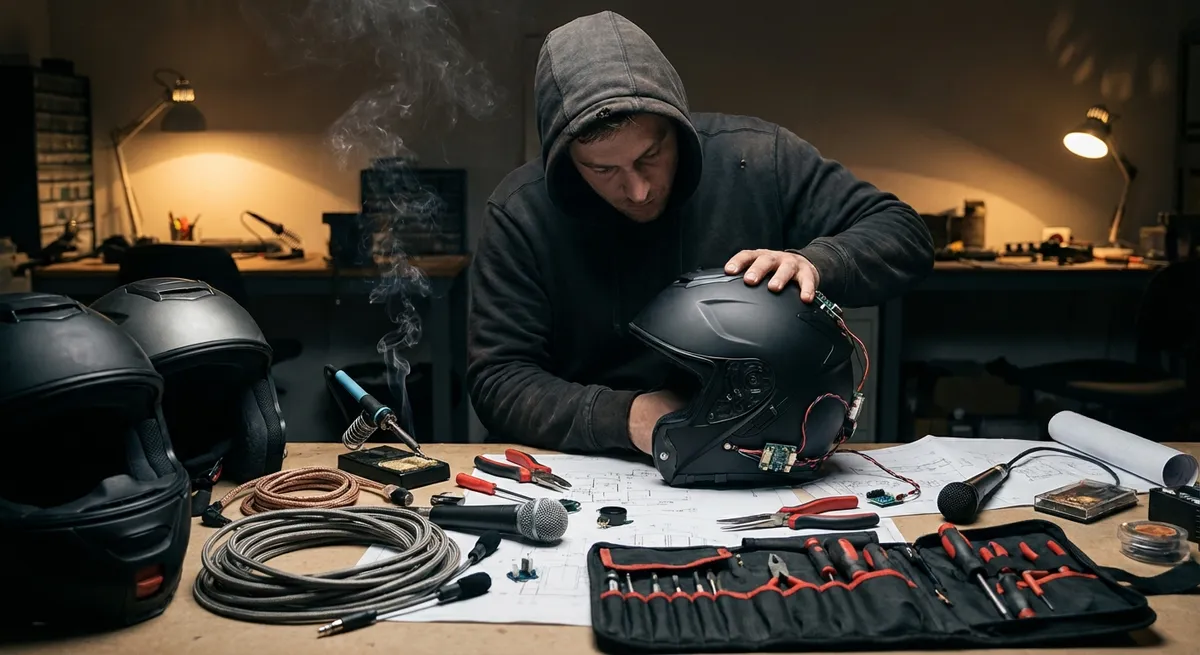
Most riders obsess over power, exhaust tone, and suspension—but the most important component in your entire system is also the one that’s easiest to neglect: your helmet. Not just the shell itself, but the entire helmet ecosystem—shield, liner, mounting hardware, audio, and airflow—functions as a tightly integrated piece of riding equipment. Done right, your helmet becomes a low-drag, high‑data cockpit that protects, informs, and reduces fatigue at speed.
This isn’t another “buy a good helmet and replace it every five years” article. This is about engineering a system on your head: optimizing safety, acoustics, optics, and ergonomics with deliberate technical choices. Below are five key technical dimensions to dial in if you want your helmet setup to perform as hard as you ride.
1. Impact Management: EPS Density, Shell Architecture, and Rotational Energy
A helmet isn’t just “good” or “bad”—it’s a calibrated impact-management device designed to control how energy moves into your skull and brain.
Modern helmets manipulate three main variables:
Shell architecture (outer structure)
- Common materials: polycarbonate, fiberglass composite, carbon fiber, or hybrid blends. - Polycarbonate: good impact distribution, heavier, usually thicker to meet standards. - Fiberglass / composites: better energy dispersion per gram, often lighter but costlier. - Carbon fiber: highest stiffness‑to‑weight, but real-world performance depends on layup design and liner pairing, not just the material label. - Shell shape matters aerodynamically and for real‑world crash kinematics—rounded, smooth contours tend to slide rather than catch on surfaces.
EPS liner (energy-absorbing core)
- Expanded Polystyrene (EPS) is the crush zone. Density and zoning are everything. - Dual- or multi‑density EPS allows progressive energy absorption—softer zones for low‑speed hits, denser zones for high‑speed impacts. - Some premium helmets use multi‑layer or channeled EPS to manage both airflow and impact distribution.
Rotational energy mitigation
Linear impact is only part of the story; rotational acceleration is a huge factor in brain injury. - Systems like MIPS, MIPS Integra, and similar slip‑plane technologies allow the helmet shell to rotate a few millimeters relative to your head, reducing rotational forces. - Some brands use their own rotational energy systems (e.g., low‑friction inner coatings, floating liners, or “omni-directional” layer designs).
Technical takeaway:
When you evaluate helmets, don’t just chase “Snell/DOT/ECE” labels. Look for:
- Multi‑density or zoned EPS liner
- Evidence of rotational impact technology
- A shell size that matches your headform shape (intermediate oval, long oval, etc.) to keep the liner in its intended position during a crash
If the helmet doesn’t manage both linear and rotational energy, it’s already behind current engineering practice.
2. Aerodynamic Stability and Neck Load at Speed
Aerodynamics isn’t just track‑day vanity; a helmet that moves cleanly through air will reduce neck fatigue, wind noise, and rider micro‑corrections at highway speeds.
Key aerodynamic variables:
Shell profile and rear wake
- A well‑designed helmet uses subtle contours and a tapered tail to reduce turbulent wake behind your head. - Track‑oriented helmets often feature a rear spoiler to stabilize the boundary layer and reduce buffeting at high yaw (head turned slightly at speed).
Lift and pitch control
- Poor designs develop lift at speed, trying to pull your head upwards, forcing your neck muscles to fight continuously. - Vent inlets and spoilers are tuned in the wind tunnel to keep the helmet neutral relative to your typical riding posture. - Sportbikes (tucked position) vs. ADV / touring (upright) demand different aerodynamics; match your helmet category to your riding posture.
Crosswind and head-check behavior
- Smooth lateral surfaces reduce “sail effect” when you shoulder-check at 70+ mph. - Helmets with large external protrusions (cameras, big com units) can create asymmetric drag; at high speeds this becomes very noticeable.
Practical engineering moves:
- If you ride mostly above 60 mph, prioritize wind-tunnel‑tested designs or helmets used in racing homologation programs.
- Keep external attachments (cameras, comms) inside the natural boundary of the shell when possible; mount them tight and aerodynamic.
- Evaluate fit at speed: a helmet that feels fine at 30 mph but lifts or chatters at 90 is aerodynamically mismatched to your use case.
3. Acoustic Engineering: Managing Wind Noise Without Killing Ventilation
Helmet noise is not just comfort—long‑term exposure to high dB levels is a hearing‑damage problem. Wind noise is essentially unwanted turbulence and vibration transmitted to your ears.
Core noise factors:
Seal interfaces
- Visor gasket quality and uniform pressure are major contributors to noise. A properly adjusted shield should compress the gasket evenly all the way around. - A loose chin curtain or open neck roll is a giant noise leak; air turbulence around your jaw and throat generates broadband noise.
Shell and liner resonance
- Some helmets add strategic stiffening ribs or alter shell thickness to shift resonance frequencies away from the most damaging audio bands. - Multi‑layer comfort liners help dampen high‑frequency noise, reducing perceived harshness.
Vent geometry
- Poorly shaped vents can generate whistling or harmonic tones at specific speeds. - Better designs use recessed channels, carefully radiused edges, and internal ducting to separate flow from vibration.
Neck roll volume
- A tighter neck roll with a good chin curtain dramatically reduces upward airflow and noise intrusion—but also impacts cooling and ease of putting the helmet on.
Technical action plan:
- Always ride with proper ear protection (foam or filtered plugs), even with a quiet helmet. Many tests show typical helmets exceed safe exposure levels at highway speed.
- Tune your helmet noise by:
- Adding or properly installing the chin curtain
- Ensuring cheek pads snugly contact your jawline
- Slightly adjusting windshield height/angle on faired bikes to move turbulent air away from your helmet zone
- If a helmet is loud, it’s often the interface (windscreen + helmet + rider posture), not just the lid itself—treat the entire system.
4. Optical Performance: Visor Quality, Distortion, and Light Management
Your visor is your primary sensor window. Optical quality directly influences reaction time, eye fatigue, and low‑light performance.
Critical technical aspects:
Optical class and distortion
- Some premium visors are designated as “optically correct” or “Class 1,” indicating minimal distortion across the viewing area. - Distortion manifests as lines or objects that appear slightly bent or wavy as you scan across your field of view; at speed, this can subtly degrade your line-judgment.
Anti-fog and condensation control
- Pinlock systems use a double‑pane approach with a moisture‑absorbing inner insert that creates an insulating air gap. This is vastly more effective than basic anti‑fog coatings. - Proper Pinlock installation (full perimeter seal, no warping) is essential; a poor install introduces optical distortion.
UV filtering and eye health
- Quality clear visors often still block 95–99% of UVA/UVB, protecting your eyes over long years of riding. Check the UV rating, not just the tint.
Photochromic and tinted shields
- Photochromic shields adjust tint with UV intensity—useful for variable conditions, but check transition time; they don’t switch instantly from dark to clear. - Dark or mirrored shields should meet local regulations and retain clear visual contrast in shadows. Over‑tinting reduces your ability to read surface texture and mid‑tone detail.
Field of view and frame intrusion
- Vertical field matters when you’re tucked in; horizontal when you’re scanning intersections. Race‑derived helmets usually maximize vertical view in a tuck. - Thick visor frames or internal sun visors can obstruct peripheral cues; evaluate with your head on a bike, not just in a shop mirror.
Engineering your optic stack:
- For all‑weather riders: clear outer visor + Pinlock + quality riding glasses (if compatible) is a robust, all‑condition combo.
- For track / aggressive street: choose an optically-correct visor with high contrast (light smoke or race‑legal tints), and avoid cheap aftermarket visors that introduce warping.
- Regularly replace scratched visors—not just for aesthetics. Micro-scratches scatter light at night and in low sun, dramatically increasing glare.
5. Integrated Systems: Comms, Cameras, and Weight Distribution
Modern helmets are turning into compact data hubs—Bluetooth comms, mesh intercom, cameras, speakers, and microphones. But every gram and every protrusion alters the dynamics and safety envelope of your helmet.
Key integration considerations:
Weight and center of gravity (CoG)
- A few extra grams doesn’t just add static weight; it changes the rotational inertia of your head/helmet system. - Heavier add‑ons positioned far from your neck pivot (e.g., top‑mounted cameras) increase fatigue and can worsen whiplash dynamics in a crash. - Low‑profile, side-mounted systems that keep mass close to the shell minimize CoG shift.
Shell integrity and mounting methods
- Avoid drilling or modifying the shell—this can compromise its designed energy path. - Use adhesive mounts in low‑stress areas and avoid edges where the shell transitions or flexes during impact. - Whenever possible, use helmets with integrated comms cutouts or proprietary ports designed to preserve shell integrity and aerodynamics.
Acoustic and mic placement
- Speaker pockets should align with your ear canal, not just “somewhere near your ear.” Misalignment reduces perceived volume and frequency clarity. - Microphones benefit from isolation: foam covers, placement out of direct airflow, and support from the helmet’s chin curtain to reduce wind invasion.
Cable routing and snag points
- Internal cable routing through liner cutouts is preferable to external wiring, which can create snag points during a crash. - Any external wire should be as short and flush as possible.
System testing at real-world speeds
- Many setups seem fine in the garage but become unstable or noisy above 70 mph. Always test communication clarity, mounting stability, and wind behavior at your actual cruise speeds and riding posture.
Optimization strategy:
- Prioritize integrated or helmet‑specific communication systems whenever they’re available—they’re designed to minimize aerodynamic penalty and installation compromises.
- Keep your helmet as close to stock weight and silhouette as possible; if you add a camera, choose the smallest, most aerodynamic unit you can.
- Re‑weigh your helmet with all gear installed and check neck fatigue over a long ride; if you feel a significant difference, reassess mounting choices.
Conclusion
Your helmet is not just a passive shell—it’s an engineered platform that manages impact energy, airflow, acoustics, optics, and data. Most riders leave at least half of that performance on the table by treating it like a simple safety checkbox instead of a tunable system.
When you approach your helmet like you would suspension or braking—understanding EPS zoning, aerodynamic stability, acoustic control, optical clarity, and integrated electronics—you transform it from a generic piece of gear into a precision instrument. The payoff is clear: lower fatigue, better information, sharper reactions, and a safer margin when things go wrong.
Upgrade your lid thoughtfully, not just expensively. Engineer the system that sits on your shoulders to perform as hard as the machine beneath you.
Sources
- [Snell Memorial Foundation – Helmet Standards and Testing](https://smf.org/stds) – Detailed information on helmet impact testing protocols and certification standards.
- [NHTSA Motorcycle Helmet Use and Head Injury Data](https://www.nhtsa.gov/road-safety/motorcycle-safety) – U.S. government data on motorcycle helmet effectiveness, safety research, and best practices.
- [SHARP Helmet Safety Scheme (UK Gov)](https://sharp.dft.gov.uk/) – Independent UK government testing and comparative safety ratings, including impact performance maps for many helmets.
- [Shoei Helmets – Technical Features](https://www.shoei-helmets.com/technology/) – Manufacturer‑level insights into shell construction, EPS design, aerodynamics, and noise reduction engineering.
- [AGV Technical Overview](https://www.agv.com/us_en/technology/) – Descriptions of EPS zoning, shell materials, rotational energy management concepts, and wind‑tunnel development for modern helmets.
Key Takeaway
The most important thing to remember from this article is that this information can change how you think about Gear & Equipment.