Every motorcycle you’ve ever loved is quietly keeping score. Not in miles, but in cycles: heat up, cool down, load, unload, stretch, compress. The difference between a bike that feels “tired” at 20,000 miles and one that feels dialed at 60,000 isn’t luck—it’s the discipline and precision of its maintenance. Think of maintenance not as chores, but as a torque chain: a linked system of small, deliberate actions that preserve structural integrity, throttle response, and rider confidence. Get that chain right, and your bike stops being a consumable and starts feeling like a trusted instrument.
This isn’t about “change your oil” level basics. These are five technical maintenance points that serious riders can use to keep a street bike feeling like it just rolled out of a well-run race shop.
1. Fastener Integrity: Managing Preload, Not Just “Tightness”
Most riders think in binary: a bolt is either tight or loose. The bike doesn’t. It cares about preload—the stretch in a bolt that clamps components together. Too little, and parts move, fretting and ovalizing holes over time. Too much, and you’re plastically deforming threads, quietly destroying the fastener’s ability to hold.
Key technical considerations:
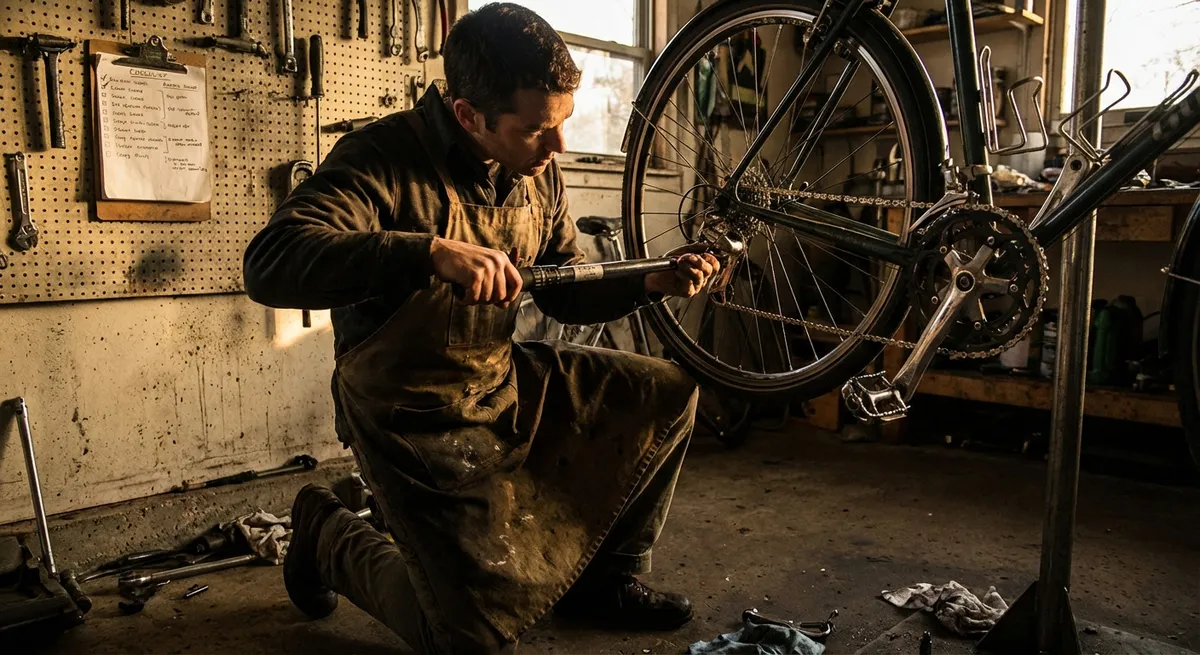
- Use a torque wrench where it matters. Critical areas include brake caliper bolts, axle pinch bolts, triple clamp pinch bolts, handlebar clamps, brake disc (rotor) bolts, and engine mount bolts. These locations directly influence structural stiffness and safety.
- Understand dry vs. lubricated torque. Most torque specs assume clean, lightly oiled threads or specified threadlocker. Adding oil or anti-seize where it’s not intended can reduce friction and result in higher clamp load at the same torque value. Conversely, dirty or corroded threads can give a false sense of “tight” long before proper preload is reached.
- Replace stretch-critical fasteners when specified. Some manufacturers specify single-use bolts (often engine internals, sometimes chassis). If the manual says, “Always replace,” treat that as a structural requirement, not a suggestion.
- Marking for movement. Use a fine paint pen (witness marks) from fastener head to surrounding surface. If the mark misaligns, you know the joint has relaxed or moved. This is especially useful on rearset hardware, caliper bolts, and sprocket carrier nuts.
- Respect clamp hierarchies. On triple clamps, torque sequence and values matter. Unequal clamping can slightly distort fork tubes, increasing stiction and ruining front-end feel.
The goal isn’t simply “nothing fell off.” It’s predictable joint behavior under load, ride after ride.
2. Chain and Sprocket System: Tension, Alignment, and Contact Mechanics
Chain maintenance is usually reduced to “clean and lube,” but the real performance lies in tension, alignment, and load distribution. A chain drive is an open, high-load mechanical system; treat it with the same respect you’d give a timing system or gearbox.
Key technical points:
- Correct slack is dynamic, not cosmetic. Chain slack must account for swingarm arc. As the suspension compresses, the distance between countershaft and rear axle often increases to its maximum when countershaft, swingarm pivot, and axle are roughly in line. Check slack with a rider or equivalent load if you ride aggressively or fully loaded. Too tight at full compression means constant overload on output shaft bearings and countershaft seals.
- Alignment is more than snail marks. Swingarm adjustment marks are often approximate. Use a straight edge or laser alignment tool to confirm that rear sprocket is truly in-plane with the front sprocket. Misalignment increases friction, accelerates wear, and can cause high-frequency vibration at speed.
- Inspect contact surfaces, not just rollers. Look for hooking of the rear sprocket teeth (curved, sharp leading edges) and cupping or step wear on the chain side plates. These indicate load imbalance or overdue replacement.
- Clean with purpose, not aggression. O‑ring and X‑ring chains rely on internal grease seals. Avoid harsh solvents that can swell or crack seals, and avoid steel wire brushes. Use a soft brush and chain-specific cleaner or a mild petroleum distillate that’s compatible with sealed chains, then apply quality chain lube designed for O‑ring chains.
- Sprocket pairing discipline. Replace chain and sprockets as a set. A new chain on worn sprockets (or vice versa) forces mismatched pitch engagement, overloading certain rollers and links, shortening the life of the entire system.
A correctly set-up chain drive doesn’t just last longer; it changes the way throttle feels at corner exit—clean, linear, and predictable.
3. Brake System Fidelity: Thermal Management and Fluid Health
Brakes are a thermal machine as much as a mechanical one. Every pull of the lever is converting kinetic energy into heat at the pad-disc interface and distributing it through calipers, fluid, and surrounding air. Ignoring this system’s thermal reality leads directly to spongy feel, warped rotors, and premature component fatigue.
Key technical dimensions:
- Fluid is a consumable, not a background item. Brake fluid absorbs moisture over time (hygroscopic behavior), lowering its boiling point and encouraging internal corrosion. Even with light mileage, annual fluid changes are a rational baseline for spirited street riding.
- Choose fluid based on use, not marketing. DOT 4 performance fluids typically offer higher dry and wet boiling points than older DOT 3, but DOT 5.1, while higher performance, is thinner (lower viscosity) and can be overkill or unnecessary for many riders. Always match fluid type to manufacturer spec and avoid DOT 5 (silicone-based) unless specifically called for.
- Pad compound and rotor condition are a coupling. Aggressive sintered pads on thin or heavily grooved rotors create hotspots and thermal gradients that can lead to judder and disc distortion. Measure rotor thickness with a micrometer at several points and compare to minimum spec (stamped on the disc). Replace when at or near minimum—don’t “stretch” them.
- Caliper maintenance affects lever feel. Clean pad slides and caliper pistons periodically. Contamination and brake dust buildup can prevent even piston retraction, leading to drag, overheating, and inconsistent bite. For multi-piston calipers, uneven piston motion can be felt as pulsing or vague initial bite.
- Torque and sequence on disc bolts matter. Uneven clamping creates local stresses and can cause disc runout. Always clean threads, use appropriate threadlocker if specified, and tighten in a criss-cross pattern to the recommended torque.
Quality brake maintenance isn’t just about stopping distance numbers—it’s about repeatability, predictability, and controlled deceleration in the real world.
4. Suspension Service: Oil, Bushings, and Friction Management
Many riders obsess over clicker settings but ignore the medium that makes those adjustments meaningful: suspension oil condition and internal friction surfaces. Over time, fork and shock oil shear, aerate, and contaminate, changing damping characteristics long before you see an external leak.
Key technical insights:
- Fork oil is a timed component. As fork oil breaks down, its viscosity drops and its damping behavior shifts. This often shows up as excessive dive, vague mid-corner support, or a “chattery” ride over small bumps. Follow the service interval in the manual, and shorten it if you ride hard, commute daily, or see a lot of dirty conditions.
- Oil level sets more than damping. In conventional telescopic forks, oil height affects the air spring effect at the end of travel. Higher oil levels increase resistance near full compression, reducing bottoming but potentially making the fork harsh. Proper measurement during service is critical—don’t guess.
- Inspect bushings and seals, not just replace on leak. Worn fork bushings increase stiction and internal play, which you can sometimes feel as a “notchy” response to small bumps. When servicing forks, check bushing wear surfaces and replace if scored or heavily polished through their coating.
- Shock refresh is not optional for performance riding. Rear shocks fade with time—internal seals wear, nitrogen charge can drop, and oil degrades. This shows up as poor traction, wallow, or a bike that feels unsettled under acceleration and braking transitions. Many OEM shocks benefit from a professional rebuild or replacement well before the bike “looks” old.
- Torque at suspension pivots controls bind. Over-torquing linkage or swingarm pivot bolts can increase static friction, defeating the purpose of a carefully tuned shock. Use a torque wrench and ensure that all needle or plain bearings are properly greased and free-moving before tightening to spec.
If you treat suspension service with the same seriousness as engine oil changes, your bike stops feeling tired and starts feeling connected—like someone dialed up the resolution between tire and rider.
5. Thermal Behavior: Cooling System, Heat Cycles, and Material Fatigue
A modern motorcycle is a heat management device wrapped around an engine. Every ride cycles aluminum, steel, gaskets, hoses, and fluids through expansion and contraction. Proper thermal maintenance is about respecting those cycles.
Key areas to focus on:
- Coolant is a corrosion and boiling-point system, not colored water. Coolant degrades chemically over time, reducing anti-corrosion properties and lowering effective boiling point. Old or improper coolant can attack aluminum surfaces and clog narrow passages in radiators and water jackets. Follow factory intervals and use manufacturer-specified or equivalent coolant.
- Radiator fin health matters. Bent or clogged fins reduce heat rejection efficiency. Regularly inspect the radiator and gently straighten minor bent fins with a thin tool, and flush bugs and debris with low-pressure water from the rear side outwards. Avoid high-pressure washers that can fold fins or force water where it doesn’t belong.
- Thermostat and fan switch are sanity checks. If the bike is slow to warm or runs unusually cool on the highway, a stuck-open thermostat might be the culprit. If it runs abnormally hot in traffic, verify fan operation and temperature sensor integrity rather than assuming “these bikes just run hot.”
- Exhaust sealing protects more than sound. Leaks at header gaskets or joints can cause localized overheating of nearby components and skew O2 sensor readings (on fuel-injected bikes), leading to incorrect fueling. Check for sooting or discoloration around joints and address promptly with new gaskets and correctly torqued fasteners.
- Heat cycles and torque retention. Components that see repeated thermal cycles—exhaust manifold bolts, head bolts (where serviceable), and some engine covers—are prime candidates for periodic recheck within spec, especially after a major service. Thermal movement can relax joint preload over time.
A bike with a well-maintained cooling and exhaust system runs more consistent combustion temps, holds oil quality longer, and gives the rider a stable operating window—hot enough to be efficient, never so hot that it feels stressed.
Conclusion
Maintenance isn’t about keeping the bike “not broken.” It’s about controlling variables in a machine that lives its entire life under load, heat, and vibration. When you treat torque values as structural decisions, chains as dynamic load paths, brakes as thermal machines, suspension as a friction-managed system, and cooling as a chemical-thermal ecosystem, your motorcycle stops feeling like a disposable toy and starts riding like a precision instrument that actually wants to go the distance with you.
Build your own torque chain—your repeatable, disciplined maintenance rhythm—and your bike will pay you back in the currency that matters most on two wheels: trust.
Sources
- Motorcycle Owner’s Manual Library – Kawasaki – Official service intervals, torque specs, and maintenance procedures for Kawasaki models
- Yamaha Motors – Motorcycle Maintenance Tips – OEM guidance on lubrication, fasteners, and general upkeep practices
- Honda Powersports – Service & Maintenance Information – Factory recommendations for fluid changes, brake care, and inspection schedules
- NHTSA Motorcycle Safety – Vehicle Maintenance – U.S. government information on motorcycle condition and safety-critical systems
- SAE International – Brake Fluid and Performance Standards – Technical standards governing brake fluid specifications and performance characteristics
Key Takeaway
The most important thing to remember from this article is that this information can change how you think about Maintenance.