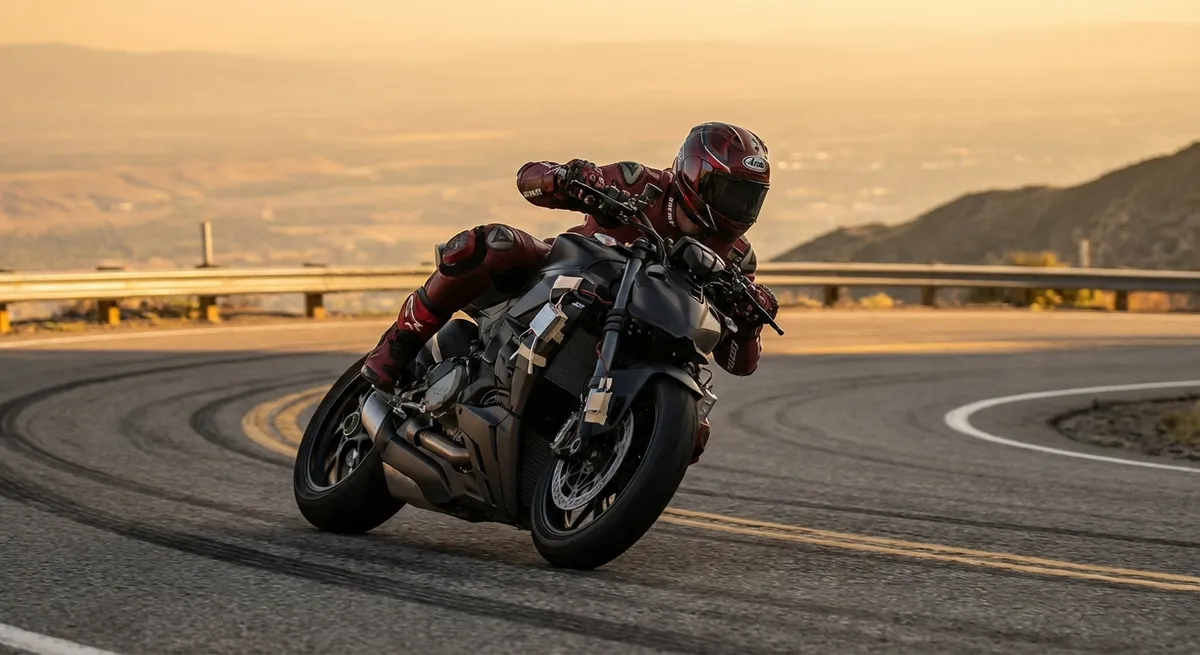
Most motorcycle reviews sound the same: “plenty of power, confidence-inspiring brakes, neutral handling.” That’s brochure-speak, not rider intelligence. For Moto Ready riders, a bike isn’t just a lifestyle object—it’s a dynamic system of torque curves, chassis geometry, and real-world compromises that either support your riding style… or fight it.
This review framework isn’t about telling you what to buy. It’s about giving you a technical lens you can use on any review—magazine, YouTube, or your own test ride—and instantly separate marketing fluff from mechanical truth.
Below are five technical pillars that actually define how a motorcycle behaves on real roads, with the kind of depth you can feel in your hands, feet, and inner ear.
1. Power Delivery Isn’t “Horsepower”; It’s Where the Torque Lives
Most reviews lead with peak horsepower. For street riders, that’s almost useless without context. What matters is how the engine makes torque through the rev range, and whether that matches where you actually ride.
A few critical aspects to decode:
- Torque curve shape: A flat, broad torque curve (common on twin and triple engines) means strong, predictable drive from midrange rpm—perfect for canyon carving and fast commuting. A peaky inline-four that makes torque up high may feel lazy below 7–8k but explosive after, rewarding aggressive, high-rpm riding.
- Usable rpm band: Look at where 80–90% of peak torque happens. If peak torque is at 10,500 rpm but the engine doesn’t really wake up until 7,500, you’ll constantly be downshifting to stay in the “fun zone” on the street.
- Gearing vs engine character: Owners often complain a bike feels “boggy” or “busy.” Check final drive and gear ratios:
- Short gearing (higher numerical final ratio) = sharp response, higher cruise rpm, more buzz.
- Tall gearing (lower numerical ratio) = relaxed cruising, but may blunt throttle snap out of corners.
- Throttle mapping and ride modes: The same engine can feel like three different bikes depending on mapping.
- “Rain” or “Low” modes often soften throttle response and cap torque.
- “Sport” may be too abrupt for bumpy roads if the fueling is aggressive off-idle.
A good review should describe how each mode feels at small and mid throttle, not just list the mode names.
- Vibration signatures: A 270° parallel twin, a 90° V-twin, and a crossplane four can have similar power but radically different tactile feedback. Reviews should identify:
- Where vibration peaks in the rev range
- Whether it’s a low-frequency throb (often pleasant) or high-frequency buzz (often fatiguing)
- Which contact points are affected (bars, pegs, seat)
If a review only says “strong midrange” without explaining where and how that torque shows up, it’s incomplete. Demand dyno curves when possible, but more importantly, look for descriptions tied to actual rpm and real road speeds.
2. Chassis Geometry: Why Some Bikes Carve and Others Fight You
When riders say a bike “falls into corners” or “needs a firm hand,” they’re feeling geometry—rake, trail, wheelbase, and weight distribution—translated into muscle input.
Key elements that should appear in a serious review:
- Rake and trail in context:
- Steeper rake & shorter trail → quicker turn-in, but potentially less stability at high speeds or on rough surfaces.
- Slacker rake & longer trail → rock-solid at speed, but may feel reluctant on tight, technical roads.
Numbers alone aren’t enough; geometry must be read alongside weight distribution, tire profile, and bar leverage.
- Wheelbase and weight bias:
- A longer wheelbase and rearward weight bias tend to favor stability and traction on hard acceleration, good for fast sweepers or track use.
- A shorter wheelbase and more neutral or forward bias make for agile turn-in but can be more wheelie-prone and sensitive to throttle changes mid-corner.
- Ergonomics as steering leverage:
- Wide, upright bars multiply your steering torque—ideal for quick direction changes.
- Low, narrow clip-ons reduce leverage, demanding more deliberate body input at the same geometry.
- Chassis feedback vs. outright stability:
- How clearly the bike tells you about front tire grip
- Whether it tolerates mid-corner corrections
- How it reacts when you brake deep into the corner (stand-up tendency vs. neutral)
Bar width, height, and sweep dramatically change how geometry feels:
“Stable” and “dead” can look the same on paper. Reviews should describe:
If a review calls handling “neutral” but doesn’t mention geometry, bar setup, or how the bike behaves in rapid transitions, it’s not telling you why the bike feels the way it does—or whether it’ll fit your roads.
3. Suspension Is a System: Damping, Support, and Real-World Compliance
“Firm but compliant” is one of the most overused phrases in motorcycle journalism. It means nothing without context. Suspension is where engineering, road surface, and rider weight collide.
Technical elements you should look for in a review:
- Spring rate vs damping:
- Stiff springs with soft damping can feel harsh yet vague.
- Softer springs with strong damping support can feel controlled and comfortable.
A thoughtful review mentions whether the bike dives too much on braking, wallows on quick direction changes, or tops out over crests.
- *Damping adjustability that actually matters:
- Does it offer rebound and compression adjustment front and rear, or just preload?
- Do 3–4 clicks produce a noticeable difference in behavior, or is the adjustment range mostly cosmetic?
- Are there separate high- and low-speed compression circuits (more common on higher-end or track-focused bikes)?
- Rider weight and intended use:
- Light riders (~60–70 kg) may find stock springs too stiff.
- Heavier riders (~85–100+ kg) often bottom out stock suspension or sit too deep in the stroke, compromising geometry and feedback.
Reviews should state the tester’s weight and how the suspension behaved:
Without that reference, “too soft” or “too stiff” is meaningless.
- Surface sensitivity:
- Composed on smooth track tarmac
- Harsh and skittish on broken city pavement
The same suspension can feel:
A high-quality review will describe how the suspension behaves on expansion joints, mid-corner bumps, and braking over imperfect surfaces.
- Dynamic pitch control:
- How much the bike dives under hard braking
- Whether it squats excessively on acceleration, unloading the front
- How flat it stays through quick S-bends
Watch for comments on:
If a review only says “good for sporty riding and commuting,” it’s skipping the engineering. You want to know whether the stock suspension gives you support and feedback at the speeds you actually ride, with your weight and gear.
4. Brakes and Electronics: Deceleration as a Performance Metric
Acceleration is fun, but deceleration is survival. Brakes and electronics define how deeply you can trust the bike when everything goes wrong—or when you’re pushing on a twisty road.
Here’s what a technical review should break down:
- Initial bite vs controllability:
- Strong initial bite can feel “racey” but may be intimidating in the city or in the wet.
- Softer initial engagement with strong progression allows precise trail braking and better modulation.
Look for comments tied to one- and two-finger braking, not vague praise.
- Fade resistance and heat management:
- Does lever travel increase after repeated hard stops?
- Do the brakes maintain feel on a long downhill or spirited mountain run?
Reviews that test this will often mention pad material, rotor size, and caliper design (monoblock vs two-piece, radial vs axial mount).
- ABS behavior:
- Early, intrusive ABS can lengthen stopping distances on bumpy roads.
- Cornering ABS (IMU-based) can let you brake harder with lean, but calibration matters—too conservative and it cuts in before you need it.
Not all ABS is equal.
Strong reviews distinguish between straight-line and cornering performance, and note whether ABS feels like a safety net or a limiter.
- Traction control and wheelie control:
- How many levels are there?
- Are they genuinely different in intervention threshold?
- Can they be disabled independently?
Advanced systems reference wheel speed, throttle, gear, and lean angle; good reviews will note whether TC intervenes abruptly or with a smooth, torque-reducing feel.
- Integration with ride modes:
- Identify the mode that best supports fast, clean road riding
- Call out if the “track” mode is unusable on the street due to harsh throttle or minimal intervention
Some bikes tie ABS, TC, throttle maps, and power levels into fixed “modes.” Others allow custom setups. A meaningful test will:
You’re not just buying brakes and electronics; you’re buying confidence. A serious review tells you where that confidence runs out.
5. Real-World Fit: Ergonomics, Aerodynamics, and Thermal Management
You don’t ride a spec sheet. You ride a triangle of contact points, wrapped in airflow, with an engine radiating heat into your legs and core. A technically aware review treats comfort as a performance parameter, not an afterthought.
Key factors that separate a casual impression from a serious evaluation:
- Rider triangle (bars–seat–pegs):
- Bar reach and height affect chest angle, wrist load, and steering leverage.
- Peg position defines knee angle, ground clearance, and hip comfort.
- Seat-to-peg distance often dictates how long you can ride before your knees start protesting.
Reviews should specify rider height and inseam when commenting on comfort and control.
- Static vs dynamic comfort:
- At 110–130 km/h highway speeds, how much weight shifts onto your wrists or lower back?
- Does wind pressure at the chest help support you, or buffet your helmet and strain your neck?
- Aerodynamic cleanliness:
- Is the windscreen adjustable, and does each position meaningfully change airflow?
- Are there low-frequency helmet shakes (dirty air) or just clean, steady pressure?
- Do mirrors introduce turbulence around your shoulders or head?
A bike that feels okay in the showroom can be punishing at speed.
Subtle aero issues can be more fatiguing than vibration over a long day.
- Heat management:
- Does the bike cook your right thigh in traffic?
- Do the fans blast hot air straight at your ankles?
- Is the heat tolerable in hot climates with gear on?
Reviews that never mention engine and exhaust heat are ignoring a huge real-world factor.
- Fuel range and logistics:
- True range is not “tank size × brochure mpg.” You want spirited riding fuel consumption, not lab numbers.
- A bike that needs fuel every 180 km vs every 280+ km rides like a different tool on long trips or in rural areas.
A precise review reports the observed consumption and states the realistic reserve margin.
If a review just says “comfortable for longer rides” without numbers (rider height, hours in the saddle, speeds, temperature), it’s not offering the engineering-grade insight Moto Ready riders deserve.
Conclusion
Most mainstream reviews flatten motorcycles into lifestyle accessories and star ratings. For riders who think in lines, forces, and feedback loops, that’s not enough. A bike is a dynamic system: torque curve, geometry, suspension, braking electronics, and human factors all interacting at 30, 80, or 160 km/h.
When you read—or create—your next motorcycle review, run it through these five technical filters:
How and where does the engine deliver usable torque?
What does the chassis geometry feel* like in real corners?
Does the suspension provide support, control, and compliance for your weight and roads?
Do the brakes and electronics expand your usable envelope, or just tick spec-sheet boxes?
Does the bike truly fit your body, your air, your climate, and your range needs?
Answer those with precision, and you’re not just consuming reviews—you’re decoding motorcycles at the level that actually matters on the road.
Sources
- Motorcycle Consumer News – Understanding Motorcycle Performance – Technical deep dive into how power, torque, and gearing affect real-world performance
- Öhlins Motorcycle Suspension Technical Info – Details on damping, spring rates, and adjustability from a leading suspension manufacturer
- Kawasaki Motors – KIBS & KTRC Technical Overview – Official explanation of advanced ABS and traction control behavior
- Honda Powersports – IMU-Based Rider Aids – Overview of cornering ABS, wheelie control, and integrated rider-assist systems
- National Highway Traffic Safety Administration (NHTSA) – Motorcycle Safety Info – Data-driven perspective on braking, control, and safety systems for motorcycles
Key Takeaway
The most important thing to remember from this article is that this information can change how you think about Motorcycle Reviews.