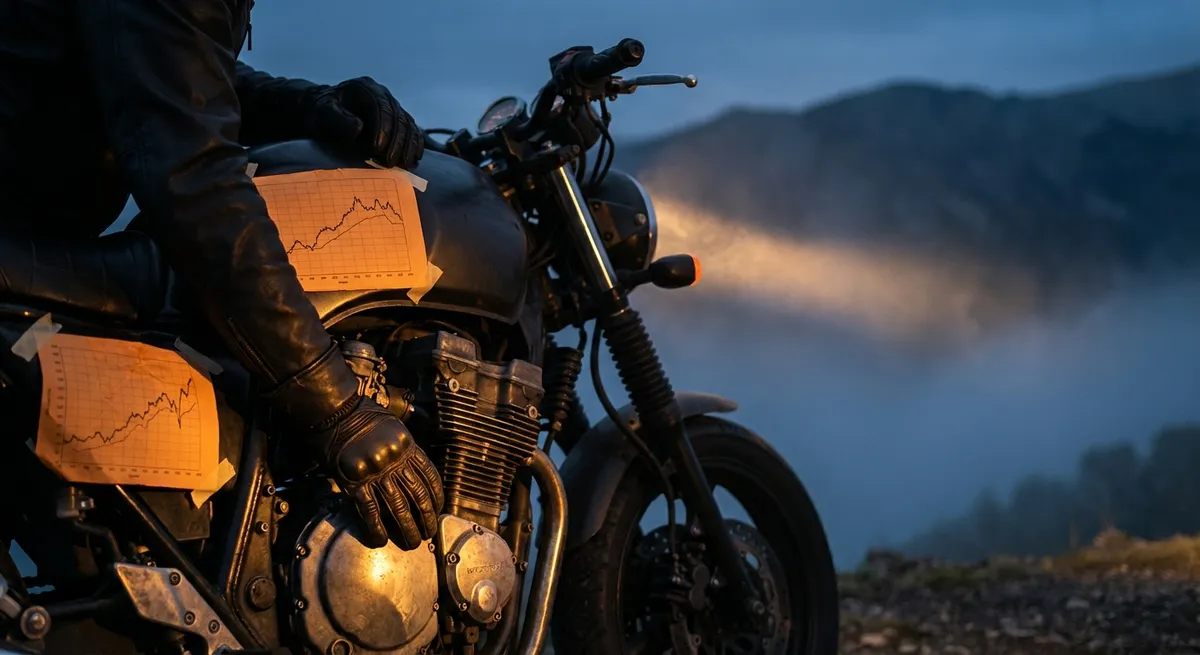
A spec sheet can tell you peak horsepower, curb weight, and maybe a 0–60 time, but it can’t tell you how a bike actually feels when you roll on from 3,000 rpm in third to overtake a truck, or when you’re holding a throttle hairline through a bumpy sweeper. Moto Ready reviews are built around that gap: translating hard data into real riding behavior. To do that, you need to understand not just what a motorcycle makes on paper, but how it delivers that performance in the real world.
This guide breaks down five technical pillars we use when reviewing motorcycles—metrics and behaviors that cut through marketing and get straight to how a machine behaves under a rider. If you’re the kind of person who looks at dyno charts, brake rotor sizes, and geometry tables for fun, this is for you.
1. Torque Curve Shape and “Usable Band”
Most reviews mention peak horsepower; most riders live in the torque curve. The shape of that curve—how early torque arrives, how flat it stays, and how smoothly it tapers—dictates the bike’s on-road attitude.
On a dyno chart, a broad, flat torque curve means the bike will respond predictably in a wide rpm range. Instead of a single “hit” at high rpm, you get a continuous shove any time you crack the throttle. That’s what makes many modern middleweight twins feel so effortless in daily riding: decent torque from low rpm, no big holes in the midrange, and a soft taper near redline.
We look at three key aspects:
- Torque onset: At what rpm does at least ~80% of peak torque become available? Earlier means stronger roll-on in everyday revs.
- Midrange plateau: How wide is the band where torque stays within ~5–10% of its peak? This “usable band” is where you’ll spend most of your time when riding aggressively but legally.
- Taper behavior: Does torque fall off a cliff at the top, or taper smoothly? A cliff encourages short-shifting; a smooth taper makes the engine feel willing to rev out.
Character matters, too. An inline-four with a rising, top-end-biased curve invites you to chase revs. A big twin with an early, fat torque wave encourages lazy shifting and throttle surfing. In our reviews, we map these shapes directly to riding scenarios: city sprints, two-up touring, canyon runs. The same peak torque numbers can ride completely differently depending on curve shape.
2. Rotational Inertia and Engine Response
Two engines can make the same power but feel utterly different when you snap the throttle. The difference often comes down to rotational inertia—the resistance of the rotating mass (crankshaft, flywheel, clutch, etc.) to changes in speed.
A low-inertia engine spins up and down fast. Blip the throttle in neutral and the revs zing up and knife back down. On the road, this yields:
- Quick transition from closed to partial throttle
- Sharper engine braking when you roll off
- Immediate response to small throttle corrections mid-corner
That’s intoxicating for aggressive riders but can be fatiguing in traffic if fueling is even slightly abrupt. In reviews, we correlate this with how “digital” or “analog” the engine feels during low-speed work and tight switchbacks.
A higher-inertia engine revs more slowly and resists rapid speed changes. That pays dividends in:
- Smoother low-speed throttle control
- More stable drive on corner exit over bumps
- A calmer, “big flywheel” feel at steady cruise
We evaluate inertia both subjectively (how the engine responds to rapid roll-on/roll-off in various gears) and indirectly through behavior: does the bike stay composed over mid-corner bumps when partly on the throttle? Does it feel jittery or planted when you gently modulate speed without using the brakes?
Modern electronics can mask some traits, but inertia still sets the engine’s fundamental “rhythm.” Our reviews always connect engine response to setup: shorter gearing, lighter wheels, or different fueling maps can emphasize or soften these traits.
3. Chassis Geometry in Motion, Not Just on Paper
Rake, trail, and wheelbase numbers are a starting point, not the full story. A bike’s dynamic geometry—how those angles change under braking, acceleration, and cornering load—is what you actually ride.
On paper:
- Rake: The angle of the steering head from vertical. Steeper (smaller number) generally means quicker steering.
- Trail: Distance between where the steering axis hits the ground and where the front tire actually contacts. More trail usually gives better stability but slower turn-in.
- Wheelbase: Distance between axles; longer tends to be more stable, shorter more agile.
In practice, we look at how suspension travel, spring rates, and weight transfer modify these numbers when you’re riding hard. A soft, long-travel fork with aggressive weight transfer under braking can steepen rake and reduce trail significantly, making the bike turn sharper mid-corner than its static geometry suggests. Conversely, a very stiff rear shock can prevent natural squat on throttle, keeping the bike feeling “tall” and reluctant to dig into the drive on corner exit.
Our road tests include:
- Steady-state lean tests: Long sweepers at a constant throttle to feel how the bike “settles” once it’s on its side.
- Brake-release timing: How the bike reacts in the handoff from hard braking to initial turn-in—does it flop in, or roll in predictably?
- Mid-corner corrections: Small line changes to see if the bike resists or welcomes adjustments once loaded up.
We then tie those impressions back to geometry and suspension spec so riders can predict how the bike will react if they change preload, fork height, or ride height. Reviews that only say “handles well” are throwing away half the story.
4. Brake System Behavior Under Real Thermal Load
Brake specs—radial calipers, disc diameters, ABS acronyms—look impressive, but we care more about how the system behaves after repeated abuse. Modern bikes rarely lack initial power; the real differentiators are modulation, consistency, and fade resistance.
When evaluating brakes, we focus on:
- Initial bite vs. progression: Some systems have a very sharp initial bite that feels great in a test ride but makes precise low-speed braking hard. Others ramp up more gradually, allowing fine control. We note which camp a bike falls into and who it suits.
- Thermal stability: After several hard stops from highway speed or a serious mountain descent, does lever travel increase? Does modulation degrade? This is critical for heavier bikes or riders who push hard downhill.
- ABS calibration: Good ABS should intervene late and smoothly. We test on mixed surfaces—patchy pavement, paint stripes, slightly dirty tarmac—to see if ABS steps in too early or pulses harshly enough to upset the chassis.
- Rear brake usability: A strong, controllable rear brake is invaluable for low-speed maneuvers and mid-corner speed trimming on the street. Too weak and it’s useless; too grabby and it’s dangerous in panic use.
We also pay attention to component choices: steel-braided lines (from factory or not), pad compounds, and disc mounting all feed into feel. A bike with modest hardware but excellent tuning can outperform a spec monster with poor calibration. Our reviews explicitly separate feel (subjective) from fade behavior (testable) so riders know what will matter on their roads.
5. Vibration, NVH, and Real-World Fatigue
Noise, vibration, and harshness (NVH) aren’t just comfort metrics—they’re performance factors. A bike that buzzes your hands numb at 75 mph might be fine for short blasts but miserable for a full-day ride or track sessions with long straights.
Different engine layouts create distinct vibration patterns:
- 90° V-twins and some 270° parallel twins often have a pleasing, low-frequency pulse with good primary balance.
- Inline-fours tend to be smoother but can transmit high-frequency buzz at specific rpm if not well isolated.
- Singles almost always have noticeable pulses; the trick is whether they’re well damped and at tolerable frequencies.
In reviews, we break NVH down by rpm band and contact point:
- Handlebars: Critical for feel and precision; numb hands kill confidence.
- Footpegs: Long-term leg fatigue and perceived “smoothness” on tour.
- Seat: Overall comfort and ability to ride long distances without feeling beaten up.
We test sustained cruising at typical highway speeds in top gear and note exact rpm where vibration peaks. A bike that’s glassy up to 70 mph but gets harsh just above that might be ideal in regions with lower speed limits but awkward elsewhere.
We also connect NVH to perceived build quality: panel resonance, fairing buzz, and exhaust drone at consistent speeds speak volumes about how seriously the manufacturer treated real-world refinement. Performance isn’t just lap times—it’s how fresh you feel after using the bike the way you actually ride.
Conclusion
Meaningful motorcycle reviews should bridge the gap between spec sheets and seat-of-the-pants reality. Peak numbers, flashy electronics, and marketing adjectives don’t tell you how a bike breathes through its torque curve, how its geometry morphs under load, or how its brakes and vibration levels will feel after hours in the saddle.
At Moto Ready, we focus on technical traits that translate directly into rider experience: torque delivery, rotational inertia, dynamic chassis behavior, brake system integrity under heat, and NVH-driven fatigue. When you start reading bikes through these lenses, their personalities become obvious—and it becomes much easier to choose a machine that matches how and where you ride, not just what looks good in a showroom.
Sources
- SAE International – Motorcycle Dynamics Technical Papers - Engineering publications on motorcycle handling, braking, and chassis behavior
- Kawasaki Motors – Understanding Motorcycle ABS - Manufacturer explanation of ABS function and calibration considerations
- BMW Motorrad – Engine Technology Overview - Insight into modern engine design, balance, and performance characteristics
- U.S. Department of Transportation – Motorcycle Safety Research - Data and analysis on real-world riding conditions and braking safety
- MIT OpenCourseWare – Vehicle Dynamics Lectures - While focused on vehicles broadly, includes foundational concepts applicable to motorcycle dynamics and heat-related performance
Key Takeaway
The most important thing to remember from this article is that this information can change how you think about Motorcycle Reviews.