Most riders think “advanced technique” lives on the racetrack. In reality, it’s the opposite: the deeper you go into the technical side of riding, the calmer and safer the street becomes. Precision isn’t just about speed; it’s about building a bike–rider system that reacts instantly and predictably when the road throws chaos at you.
This isn’t a beginner basics checklist. This is about sharpening the connection between your eyes, hands, and chassis so every corner, every brake input, and every throttle roll-on feels deliberate instead of lucky.
Visual Timing: Training Your Eyes to Run Ahead of the Bike
Your front tire is always late to the party; your vision should be early. Instead of “looking through the turn” in a vague way, think in terms of visual timing and focal zones. As you approach a corner, your primary focus should live at the vanishing point—where the road disappears from view. If that point moves closer, the corner is tightening; if it drifts away, the corner is opening. This gives you real-time data to adjust entry speed, lean angle, and throttle.
Layer in secondary scans: quick, micro-checks of surface texture, manhole covers, oil stains, gravel seams, and the crown of the road. You’re not staring at them; you’re sampling them with fast peripheral sweeps. The trick is to avoid “visual fixation lag,” where your eyes lag behind your bike’s progress. A simple drill: on a familiar road, consciously move your primary focus point one telephone pole or one signpost further ahead than feels natural, and maintain it. You’ll notice your inputs get smoother because you’re no longer reacting at the last moment—you’re predicting. Over time, this visual headroom translates directly into more stable corner entries and fewer mid-corner surprises.
Brake Pressure Shaping: Building a Predictable Deceleration Curve
Braking isn’t just “hard” or “soft.” Think of it as pressure shaping: you’re sculpting a deceleration curve that your tires and suspension can handle without protest. When you snap the lever abruptly, the fork is forced to compress too quickly, reducing contact patch stability and making the bike feel nervous. Instead, aim for a progressive squeeze—roughly 0.3–0.5 seconds from initial touch to peak pressure. That short delay is long enough to load the front tire cleanly and increase available grip.
On a quiet straight, pick a marker and practice: light initial bite, then a controlled ramp to firmer pressure, feeling the fork compress smoothly. Pay attention to chassis feedback—if the fork bottoms harshly or the rear gets too light, you’ve passed the sweet spot. Refine the release as well: don’t just “let go” of the brake. Bleed off pressure proportionally as speed drops, so the fork extends gradually instead of springing back. This smooth release is what makes transitions into turns stable and confidence-inspiring. You’re teaching your bike predictability under load, and that predictability is your safety margin in emergency stops.
Throttle as Chassis Control: Stabilizing the Bike Through the Turn
Most riders think of throttle as a speed control. Advanced riders treat it as chassis control first, speed control second. Once you’ve set your entry speed and lean angle, the goal is to get to a neutral-to-slightly-opening throttle as early as you safely can. This tiny roll-on shifts weight gently rearward, lengthens the wheelbase a touch, and calms the bike mid-corner. A totally closed throttle at lean keeps weight on the front, making the bike feel twitchy and more vulnerable to mid-corner bumps.
Focus on micro-angles of throttle rather than big wrist movements. On fuel-injected bikes, especially with sensitive ride-by-wire systems, this might be just a few degrees of twist. Pick a flowing corner and work on this sequence: brake → off-brake → tip-in → settle → tiny roll-on that you hold steady until you see your exit expanding, then progressively open more. If the bike feels like it “floats” and tracks cleanly, you’re in the right zone. If it stands up or runs wide abruptly when you add throttle, you’re either rolling on too aggressively or entering too hot. Over time, this habit creates a smooth, predictable arc instead of a corner that feels like three separate events.
Body Position Micro-Adjustments: Steering With Mass, Not Just Bars
You don’t need full race-track hanging off on the street, but micro-adjustments in body position dramatically affect how your bike initiates and holds a line. Think of your body as a movable weight that can help the bike lean with less bar input. Keep your upper body relaxed, elbows slightly bent, and your outside knee locking lightly into the tank. The goal is to anchor your lower body so your hands aren’t holding you up; they’re free to deliver precise steering inputs instead of fighting your own weight.
For street corners, try a subtle “inside bias”: shift your upper body a few centimeters toward the inside of the turn and slightly forward, while keeping your head level with the horizon and your eyes up. Your hips stay roughly centered, but your ribcage and shoulders lead the turn. This reduces the lean angle needed for a given corner speed, increasing your margin before tire grip becomes a concern. A simple check: mid-corner, you should be able to briefly open and close your fingers on the bars without losing stability. If you can’t, you’re using the bars as a crutch instead of letting the chassis and your lower body do the heavy lifting.
Reading Grip in Real Time: Surface, Temperature, and Feedback Loops
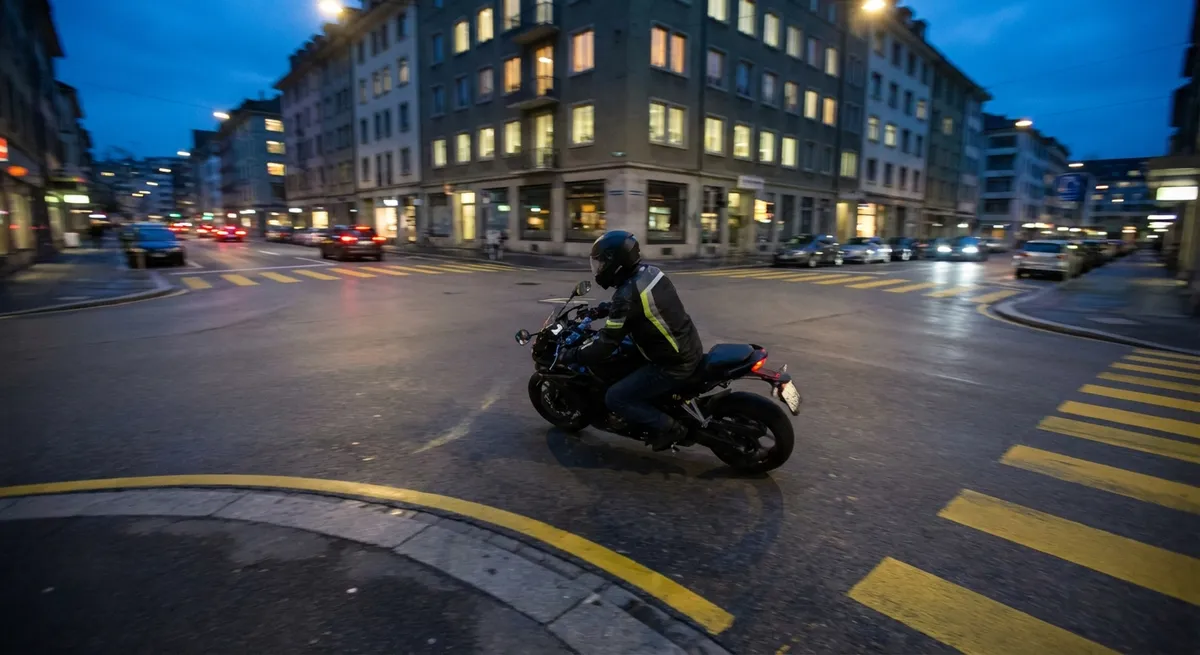
Grip isn’t a fixed value; it’s a live, changing variable that you can learn to read. Start with surface texture: darker, shiny patches on dry pavement often signal polished or contaminated areas with reduced friction; coarse, matte asphalt usually offers better bite. Painted lines, thermoplastic markings, and metal (bridge grates, manhole covers) demand either a straight-up approach or very gentle inputs if you’re leaned over. Treat them as “low-friction islands” and plan your line to cross them as upright as possible.
Temperature matters too. Cold tires on a cold road have dramatically less usable grip in the first 10–15 minutes of riding. Instead of trusting “they’ll warm up,” actively adapt: reduce lean angle, extend braking zones, and delay hard throttle until you’ve put some load/heat cycles into the rubber. While moving, listen for the feedback loop: a light, slightly vague feeling from the bars or seat under load can be the first whisper of reduced traction. If you feel a tiny slide, treat it as data, not a panic signal. Smoothly stop increasing your input (brake, lean, or throttle) and let the tire recover before adding anything more. Over time, this sensitivity to micro-slips and subtle texture changes lets you live closer to the safe edge without stepping over it.
Conclusion
High-level riding on the street isn’t about heroics; it’s about precision. You’re tuning your vision, braking, throttle, body position, and surface reading into a single, integrated system that keeps the bike composed even when conditions aren’t. Work on one technique at a time, on familiar roads, with a clear margin for error. The payoff is enormous: fewer “close calls,” more deliberate control, and that rare feeling when every corner links together like you and the bike share the same nervous system.
Key Takeaway
The most important thing to remember from this article is that this information can change how you think about Riding Tips.