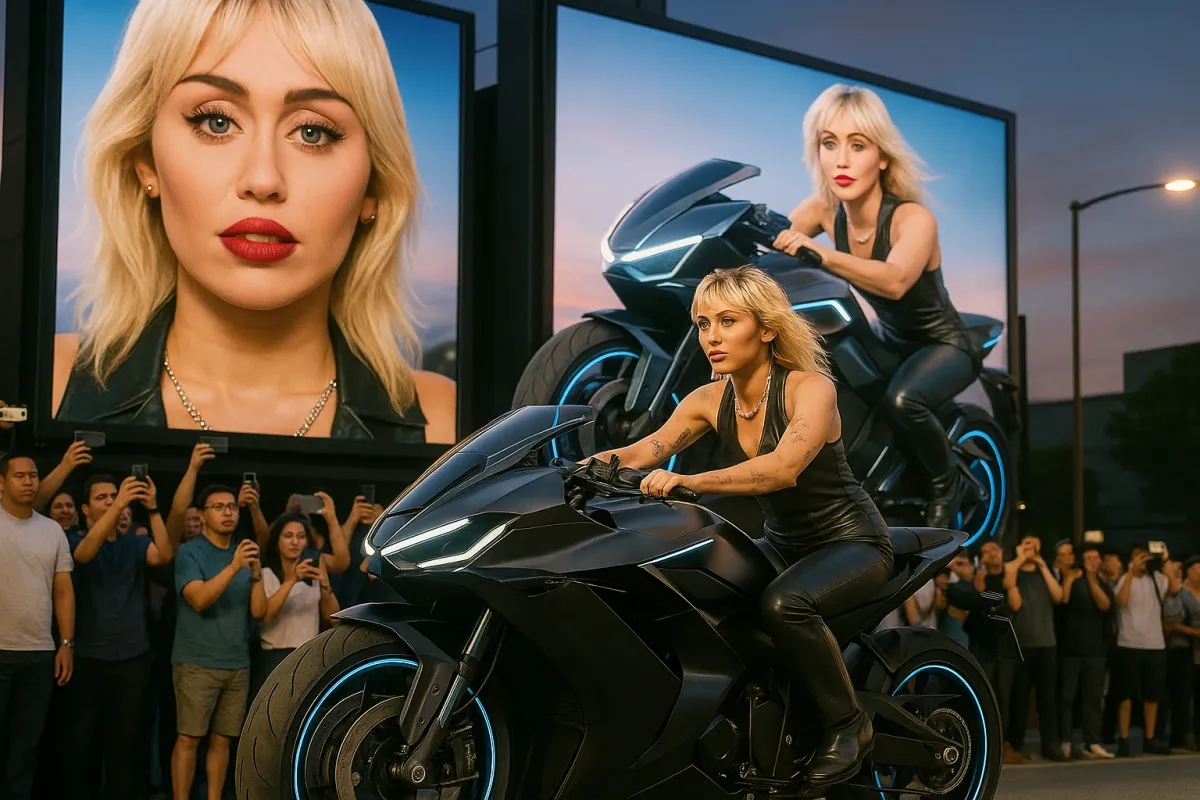
Miley Cyrus’s new smile is blowing up feeds right now, with fans saying she finally “looks like herself again.” Strip away the celebrity gloss and that conversation is the same one engineers and riders are having about modern motorcycles: veneers vs. bone structure. Is your bike genuinely re-engineered from the frame up, or is it a cosmetic refresh on the same tired platform?
In an era when brands push facelifts as “all-new,” riders are getting better at seeing through the veneers. Just like fans spotting the difference between subtle dental work and a total rebuild, enthusiasts can feel when a motorcycle’s core geometry, electronics, and engine character have actually evolved. Today we’re using that same “new smile vs. real self” debate to break down how to review 2024–2025 motorcycles with a sharper, more technical eye.
Below are five technical checkpoints that separate a bike with a fresh coat of lipstick from one that genuinely “looks like itself again” on the road.
1. Chassis Geometry: The “Jawline” You Actually Feel
Manufacturers love to talk about new bodywork, but if you want to know whether a platform has really evolved, go straight to the chassis numbers—the motorcycle equivalent of bone structure under a new smile.
Key specs to scrutinize in current reviews:
- Rake and Trail
- Rake (head angle) around 23–24° with shorter trail (~96–102 mm) usually signals a sharper, more aggressive steering bike (think supersport or hyper-naked: Yamaha MT‑09, KTM 990 Duke).
- Rake around 25–27° with longer trail (~105–115 mm) signals more stability for touring and everyday use (Yamaha Tracer, BMW R 1300 GS).
- Wheelbase
- Sub‑1430 mm: quick direction change, less high-speed stability.
- 1450–1520 mm: neutral, real‑world stability with acceptable agility.
- Over 1520 mm: planted for touring, can feel lazy in tight switchbacks.
- Weight Distribution & CG (Center of Gravity)
Look for reviewers mentioning engine position (tilted back, lowered in frame), fuel tank placement, and how easily the bike initiates lean. The more you see terms like “falls into corners naturally” or “needs a firm push at the bar,” the more you’re reading about the real geometry, not the cosmetics.
When a “new” model keeps the same wheelbase, rake, and trail, but gets slightly revised plastics and LED DRLs, that’s a veneer job. When you see a 2024–2025 revision with even a 0.5–1° rake change and a new swingarm length, that’s someone reshaping the jawline—not just whitening the teeth.
2. Engine Mapping and Ride Modes: Personality vs. Filters
Miley’s fans didn’t just notice whiter teeth; they noticed that her expression felt more like “old Miley.” That’s how ride modes and throttle mapping work on modern motorcycles: they decide how the engine’s true personality comes through.
When you read or watch reviews of current models, focus on:
- Throttle Connection
- “Rubber band,” “laggy off idle,” “light-switch response” = poor mapping.
- “Linear from closed to half throttle,” “predictable,” “no on/off snatch” = good calibration.
- Distinct Ride Modes (Not Just Labels)
- Does Rain mode significantly soften initial throttle and reduce torque?
- Does Sport/Track actually sharpen response and allow more rear slip?
- Or do modes feel identical except for a traction-control light blinking sooner?
- Torque Curve vs. Peak Power
- Broad, flat torque from 3,000–8,000 rpm on middleweights (Yamaha MT‑09, Honda CB750 Hornet) = usable road power.
- A peaky hit after 9,000 rpm may be thrilling but tiring on the street.
- Engine Character
- 270° parallel twins (Yamaha, Honda, Aprilia) mimic V‑twin pulse, more traction feel.
- 90° V‑twins and 75°–90° V‑4s have strong midrange and natural primary balance.
- High‑revving inline‑fours (GSX‑R, CBR‑RR) give top‑end rush but like to live high in the revs.
On current bikes (Ducati, KTM, BMW, Triumph), ask:
Reviewers today often get dyno charts; look for:
The real test: if reviewers say “I left it in one mode all day and forgot about it,” that bike has a cohesive identity. If they report “I kept toggling, trying to find one that felt right,” you’re dealing with filters trying to disguise a confused base tune.
3. Electronics Packages: Safety Nets vs. Gimmicks
Miley’s fans are calling her new look “more natural,” even though it’s the product of serious dental work. That’s what great rider aids should feel like: advanced, invisible, and confidence‑building, not a nanny slapping your wrist.
When reading 2024–2025 motorcycle reviews, dig into how smart the electronics are, not just whether they exist:
- IMU‑Based vs. Basic Systems
- IMU‑based ABS/TC (Bosch 6‑axis, Continental, etc.) measures pitch, roll, and yaw. That means cornering ABS, lean‑sensitive traction control, and wheelie control that modulates rather than brutally cutting power.
- Non‑IMU systems are lean‑blind; they’re cheaper, but you lose finesse when leaned over.
- Intervention Quality
- “You feel it gently trim power,” “barely perceptible,” “transparent safety net” = good.
- “It chops power mid‑corner,” “kicks back,” “feels intrusive” = poor calibration.
- User Tuning Depth
- TC levels (0–8, for example),
- Wheelie control,
- Engine braking,
- Throttle response,
Look for phrases like:
Better current bikes let you independently tweak:
and then store it as a custom map.
If a 2024 bike offers only “Road / Sport / Rain” with no deeper control, it’s aimed at set‑and‑forget riders, not tinkerers.
- Cruise, QS, and Connectivity
- Up/down quickshifters with auto‑blip are now nearly standard on mid‑ to high‑end bikes; check if reviewers note false neutrals, harsh engagement, or sweet, clutchless perfection.
- Cruise control is becoming normal even in middleweights—real touring riders should treat this as almost mandatory now.
- TFT + phone integration: good systems (BMW, Triumph, some KTMs) don’t bury navigation and data behind laggy menus. Bad ones are exactly that—cosmetic “veneer” tech.
If a review spends more time praising the splash screen animation than explaining cornering ABS behavior, you’re looking at a bike that’s been styled for the showroom, not the braking zone.
4. Suspension and Brakes: Where the Marketing Hype Dies
Teeth can be perfectly white and still bite horribly. Same with a motorcycle: Brembo logos and gold fork tubes mean nothing if the setup is wrong for real roads.
Here’s how to read between the lines when reviewers tackle suspension and braking on this year’s bikes:
- Fully Adjustable vs. “Sticker Adjustable”
- Forks and shocks with separate adjusters for rebound, compression, and preload are meaningful only if the internal valving isn’t junk.
- Pay attention when testers say “small changes in clickers actually made a difference.” That means the bike isn’t just spec’d to look good on a sales sheet.
- Spring Rates and Real‑World Ride
- Sport‑naked and supersport reviews should mention front support under hard braking and stability mid‑corner.
- Adventure and sport‑tourer reviews should talk about stroke usage—do they bottom out on big hits? Are you riding on the top third of the stroke all day (too stiff)?
- Electronic Suspension (Semi‑Active)
- “It smoothed out broken pavement at speed,”
- “Stayed composed in fast, bumpy corners.”
On many 2024+ premium models, semi‑active systems continuously adjust damping. That’s great—if reviewers say:
If instead they report “nervous,” “didn’t trust it mid‑corner,” there’s a mismatch in algorithms and hardware.
- Brakes: Hardware vs. Heat Management
- Brembo Stylema / M4 calipers, 320–330 mm discs = strong initial promise.
- The real test is fade: does performance drop after repeated 100–0 mph tests or big mountain descents?
- ABS behavior: is there a pulsing lever, or can you brake deep into a corner with confidence?
In 2025‑era reviews, any test that contains “we couldn’t find the limits on the road” for brakes and suspension is high praise. When the wording is “fine for commuting, might struggle on track,” that’s code for “budget components matched to a premium price.”
5. Ergonomics and Human Factors: When a Bike Finally “Looks Like You”
Miley’s fanbase is celebrating that she “finally looks like herself again” because expression, proportion, and confidence all lined up. On a motorcycle, that same alignment is ergonomics: how the machine’s touch points match your body and intent.
Current reviews that matter go beyond “it’s comfortable” and talk specifics:
- Rider Triangle (Bars–Seat–Pegs)
- Sportbikes: more weight on wrists, higher rearsets; ask whether the bike remains tolerable after 1–2 hours or only works in 20‑minute canyon hits.
- Adventure / sport‑tourers: neutral bar height, relaxed knee angle—check for comments about pressure points on inner thighs, knees, and tailbone.
- Seat Design
- Width at the front affects flat‑footing at stops; a low spec seat can still feel tall if it’s wide.
- Firmness over time: the best seats feel firm initially but don’t create hot spots at 200 km. If testers say “fine for 45 minutes, then pain,” you have your answer.
- Wind Management
- On naked bikes, reviewers should address chest vs. helmet turbulence at highway speeds.
- On faired bikes and ADV tourers, look for comments about buffeting, not just “good wind protection.” Aero shape and screen turbulence define fatigue.
- Heat and Vibration
- Modern emissions rules mean hotter engines and tighter packaging.
- Pay attention when testers mention cooking right leg in traffic, hot air from under the seat, or “vibes at 5–6k rpm through pegs and bars.” Those things decide whether you keep or sell the bike.
A motorcycle that truly “looks like you” isn’t about paint schemes and winglets. It’s one whose geometry, controls, heat management, and ride position line up so well with your intent that you forget about the machine and just ride. That’s the moto equivalent of a celebrity walking into a room and everyone saying: “Yeah, that’s them.”
Conclusion
The internet is obsessing over whether Miley Cyrus’s new smile is a glow‑up or just good dentistry, but riders have been having that argument for years—over every “all‑new” model that hits the showroom. Is this a deep structural transformation, or just another veneer?
The next time you scroll past a 2024–2025 bike review, read it like a fan dissecting a red‑carpet photo. Ignore the gloss and zero in on the bones: chassis geometry, engine mapping, electronics behavior, suspension/brake performance, and rider ergonomics. That’s where you’ll find out whether a motorcycle is genuinely rediscovering its true character—or just getting its teeth whitened for Instagram.
On Moto Ready, we’re here for the bikes that ride like themselves again. Not just the ones that photograph well.
Key Takeaway
The most important thing to remember from this article is that this information can change how you think about Motorcycle Reviews.