Scrolling through that “Mildly Interesting” viral thread that’s blowing up right now, you see it: people obsessing over tiny details—patterns in ice, unusual wear on a floor tile, a shadow that lines up perfectly with a sign. It’s fun… but on a bike, that same level of attention isn’t just quirky. It’s survival tech.
If over 100k people can geek out over a scuff mark on a wall, riders can absolutely train themselves to notice the micro‑cues that predict crashes before they happen. Consider this your “Very Moto Problems” edition of that trending “mildly interesting” craze: the barely noticeable clues that separate a smooth, fast, safe ride from a hospital bracelet.
Below are five highly technical, detail‑driven riding disciplines you can start applying on your very next ride—no new gear, no new bike, just a sharper brain.
Reading Tire Noise and Feedback Like a Telemetry Stream
Most riders wait until tires visibly step out before they react. Advanced riders treat tire noise, vibration, and steering feel like live telemetry.
Here’s what to dial into:
- Audible grip threshold: At low‑to‑medium lean, a sport tire on decent asphalt will be nearly silent. As you push lateral load, you’ll often hear a faint, high‑frequency “hiss” or whisper. That isn’t automatically danger—that’s the rubber working. A sudden change (hiss drops off or becomes a harsher scrubbing sound) is your cue that surface friction just changed: dust, tar snakes, painted line, or micro‑gravel.
- Micro-squirm through the bars: On modern radial tires, when the front is right at its grip window you’ll feel a very slight, rapid “shimmer” through the bars under trail braking. It’s normal at the edge, but if that shimmer becomes a distinct, slower push or vague wandering, you’re overloading the front (too much brake + lean) or hitting a camber change.
- Rear-drive “lag”: On corner exit, if you’re smooth with throttle and notice the rear taking an extra heartbeat to “hook up” (a very slight delay before acceleration feels clean), that’s the tire flexing and searching for grip. In the dry, that tells you you’re flirting with the edge of your tire’s temperature/compound sweet spot. In the wet, that lag is your early warning to roll back 10–20% on drive.
- Temperature by hand (done carefully): After a spirited ride, with the bike safely parked and off, touch the tire tread with the back of your fingers. Warm and slightly tacky = good working range. Cool and glassy = you’re over‑riding cold tires. Blistered or very hot edges with a cooler center = pressures may be off, or you’re spending too much time at big lean with low straight‑line load.
Train yourself to correlate sound + feel + temperature. Track riders pay big money for data loggers; you’ve already got a free sensor suite in your hands, feet, and ears.
Turning “Hidden Dog” Vision Into Hazard Radar
That viral “hidden dogs” photo trend is fun because it forces your brain to find shapes that don’t pop at first glance. Street survival riding is exactly that—spotting the “hidden threat” in a busy visual field.
Convert that mental game into a riding system:
- Scan in layers, not lines: Instead of staring at the bumper ahead, sweep your vision in three bands:
- Near field: 0–30 m (surface grip, oil, potholes, manhole covers, paint, gravel).
- Mid field: 30–100 m (vehicles drifting in lane, brake lights, pedestrians, parked cars with drivers inside).
- Far field: 100 m+ (traffic light phases, bunching traffic, road camber, escape routes).
- Look for the “out‑of‑pattern” object: Just like you’d look for a dog that doesn’t match the background, deliberately scan for:
- One vehicle out of sync with others (slightly faster, weaving, or hugging the center line).
- A car with front wheels already angled toward your lane.
- A pedestrian not facing traffic (likely to step out unexpectedly).
- Wheel-watching as early warning radar: The first motion you’ll see in a car about to pull out is in the front wheel, not the body. At intersections, pin your attention to the nearest conflict vehicle’s front wheel. If that circle starts to rotate—however slightly—you’re on the clock.
- Shadow and reflection intelligence: On urban roads, treat reflections in shop windows, buses, and even polished cars as wide‑angle mirrors. You’ll often see a cyclist, scooter, or car in your blind spot in reflection 0.5–1.0 seconds before you’d catch them in your mirrors. Same with shadows: a long, suddenly growing shadow creeping toward your lane can signal an overtaking vehicle before you see it.
Practice this by making a game of it: On every ride, consciously “spot” three threats before they become obvious. Over a few weeks, this stops being a game and becomes reflex.
Precision Braking: Building a Repeatable, Measurable Stop
Everyone thinks they can brake hard. Very few can reproduce a max‑effort stop within a consistent distance on command. That consistency is what keeps you out of the back of a car when a lane suddenly goes to zero.
Build a technical braking profile:
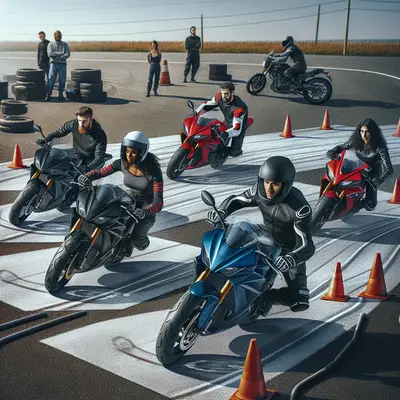
- Pick a test environment: Empty, straight, dry road or a safe training lot. Mark a start cone and a braking marker. Use a GPS app or measured distance markers if possible.
- Establish a baseline: From an indicated 50 km/h (30 mph), do a normal “oh, there’s the light” stop using both brakes. Measure the distance. That’s your real casual‑reaction stopping distance, not the fantasy one in your head.
- Progressive squeeze protocol: Repeat the run, but this time:
- Initial front brake input: 10–15% of full force for the first 0.2–0.3 seconds to let the fork compress and load the tire.
- Then ramp to 70–90% quickly, feeling for the point where the rear tire gets light but not fully airborne.
- Maintain a light but steady rear brake—just enough to stabilize, not enough to lock.
- ABS calibration (if equipped): Deliberately trigger ABS a few times. Memorize:
- How the lever pulsing feels.
- How much extra pressure was required to get there.
- How the bike behaves (pitch, rear lift, steering stability).
Your goal in the real world is to brake just under that threshold most of the time, and be entirely unpanicked if you cross it.
- Dry/wet profile offset: Once you’re consistent in the dry, repeat on a wet surface at a lower entry speed (e.g., 40 km/h / 25 mph). Note how much earlier you need to start braking to hit the same stop point. That offset—often 30–70% longer—is what you must mentally overlay on every wet ride.
The objective isn’t just “stop shorter”; it’s to create a known, repeatable envelope. When something explodes into your lane, your muscle memory will be calibrated instead of guessing.
Throttle, Engine Braking, and Chassis Stability in Real‑World Traffic
Modern engines—especially with ride‑by‑wire, slipper clutches, and different modes—can dramatically change how your bike loads the chassis under decel and acceleration. Understanding how that works is the difference between a composed bike and a nervous one mid‑corner or in traffic.
Here’s how to tune your bike, in your environment:
- Engine‑braking mapping: If your bike has adjustable engine braking or riding modes (Yamaha, Ducati, KTM, BMW, etc.), experiment deliberately:
- Strong engine braking (low gear, closed throttle) pitches weight forward aggressively, which helps the front bite—but can destabilize the rear on sketchy surfaces.
- Reduced engine braking lets the bike stay more neutral, but you’ll depend more on actual brake input for the same decel.
- Neutral-chassis decel practice: On a clear road, at 60 km/h (40 mph) in 3rd or 4th gear, roll off to half throttle instead of snapping shut. Feel how the bike settles, compared to a full chop. Your goal in the twisties and in town is to use micro‑throttle adjustments to maintain chassis stability, avoiding the on/off “rocking horse” effect.
- Corner entry blend: Instead of rolling off fully then braking, try:
- Slight roll‑off → fork loads lightly.
- Add front brake while still maintaining a whiff of throttle (on some ride‑by‑wire bikes this is essentially neutral torque).
- Then fully release throttle as brake force builds.
This blend keeps the suspension in a tighter, better‑controlled window and reduces abrupt geometry shifts.
- Exit drive control: On exit, pick a reference lean angle where you never abruptly whack open the throttle. Use a linear roll: imagine you’re turning a volume knob from 0 to 10 as the bike stands up. Combine this with feeling for that earlier “rear‑tire lag”; in low‑grip conditions, your roll‑on should end just before that lag appears.
The takeaway: Modern powertrains are incredibly capable, but they’ll punish binary inputs. Your job is to use the engine as a precise chassis tool, not just a noise generator.
Micro‑Positioning: 10 cm That Can Save Your Life
You’ve seen photos where a few centimeters of camera angle transforms the entire image—that’s “mildly interesting” online. On the road, that same tiny shift in lane position can completely change your sight lines, grip, and survival options.
Refine your lane strategy with engineer‑level precision:
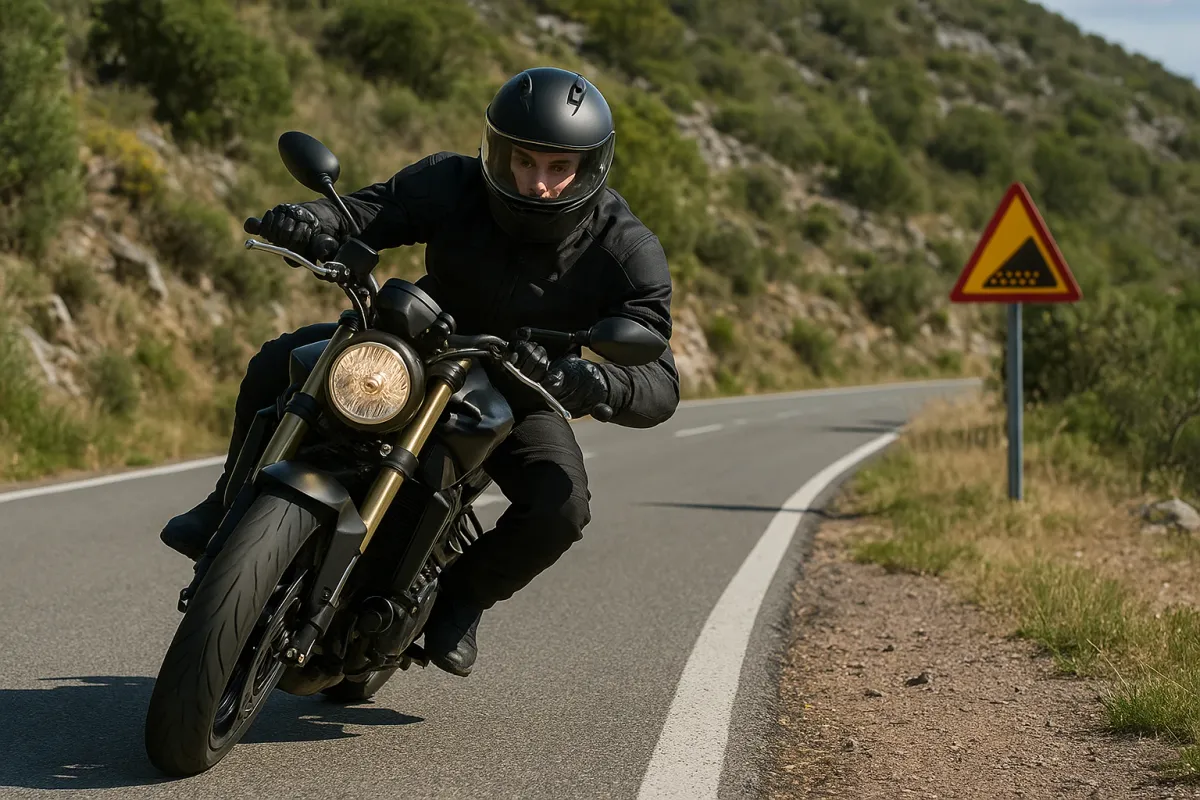
- Sight‑line optimization: On left-hand corners (for right‑side traffic), a position closer to the right of your lane often opens your view deeper into the bend, letting you see hazards, exit, and oncoming vehicles earlier. On right‑handers, moving slightly left does the same. The key word is slightly—always keep a buffer from the actual lane edge.
- Camber and crown awareness: Most roads are crowned for drainage. The highest grip and least standing water usually sit just off the crown, not in the gutter and not on the paint. In rain, bias your line toward the high, clean sections of the lane, away from the black, polished car‑wheel tracks where oil and diesel collect.
- Reference to escape routes: At any moment, ask yourself: If this lane blocks, where do I put the bike? Your position should favor the clearest escape path (shoulder, gap between cars, centerline opening). That might mean sacrificing the “textbook” position for a dynamically safer one, especially in multi‑lane traffic.
- Buffer from blind zones: Next to trucks, buses, or tall SUVs, your best friend is offset. Rather than sitting dead parallel next to a vehicle, drop back or move forward so you’re either in their mirrors or out of their side‑swipe arc. A 1–2 bike‑length fore‑aft change is often enough to move you from invisible to obvious.
- Surface micro‑selection: On broken or patched asphalt, pick your exact wheel tracks. In many countries, the left wheel track of cars (for right‑side traffic) tends to be cleaner than the right track near the gutter. In urban cores with manholes and paint, aim your wheels so they cross these at as close to 90° as possible, reducing slip risk.
Treat lane position not as a static “ride in the left/right/center” rule, but as a constantly updated solution to a moving problem.
Conclusion
The internet is currently obsessed with the “mildly interesting”—little details that most people miss. On a motorcycle, those details are anything but mild. They’re your data stream.
When you:
- Listen to tires like telemetry,
- See hazards like a #HiddenDog challenge,
- Brake with measured repeatability,
- Use your engine as a chassis control tool, and
- Treat lane position as a precision instrument,
you elevate riding from “getting from A to B” to a technical craft.
Next time your feed serves up another thread about tiny, curious details, let it be a reminder: the same brain that finds a cat hidden in the curtains can absolutely be trained to find the car about to ruin your day—three seconds before it happens.
Take that curiosity, put it on the road, and make it your advantage.
Key Takeaway
The most important thing to remember from this article is that this information can change how you think about Riding Tips.