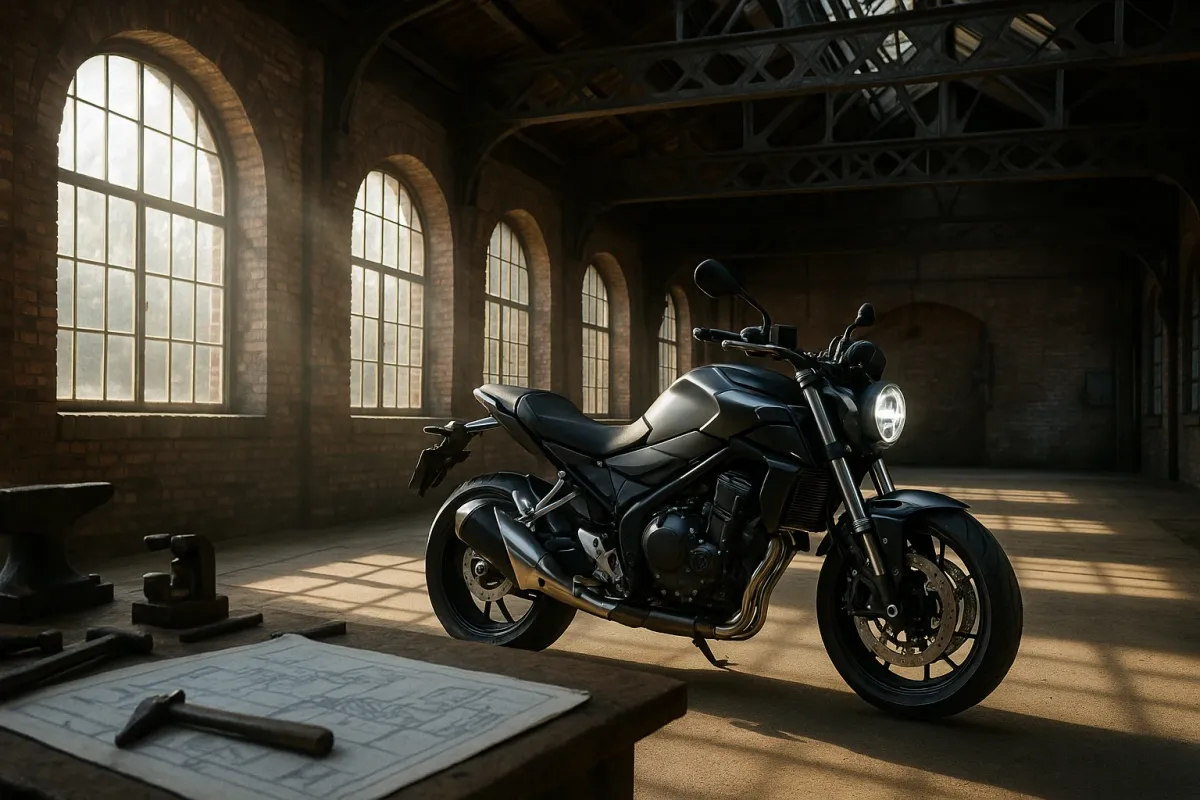
Motorcyclists are obsessed with feel. The way a chassis talks back mid-corner, the way a motor builds torque, the way the whole machine ages over 20,000 hard miles. That obsession is exactly why today’s wave of neo‑retro and heritage machines—from Yamaha’s XSR range to Triumph’s Speed 400 and Honda’s CB series—is dominating review headlines right now. And it mirrors a very different trend that’s blowing up online today: people swooning over beautifully preserved old houses, celebrating craftsmanship that’s survived a century of rain, wind, and neglect.
Those “beautiful old houses” going viral aren’t just nostalgia content—they’re a live case study in how good design ages. If you’re trying to decide between a tech‑packed 2025 bike and a mechanically honest, retro‑styled machine, there’s a lot to learn from how architecture survives time and use. Let’s break down how that “old house” mentality applies directly to the motorcycles reviewers are riding and ranking right now.
1. Frame Craftsmanship: Why Welds Matter More Than Winglets
Look at any photo set of century‑old houses: what you’re really seeing is structure that hasn’t given up. Joists that haven’t sagged, beams that still carry load. On a motorcycle, that conversation starts and ends with the frame.
Modern reviews keep hammering the same point: the bikes that feel “timeless” on the road are the ones with predictable, well‑tuned chassis rather than the flashiest electronics package. When you’re comparing models:
- Exposed welds tell a real story. On naked and retro‑styled bikes (think Honda CB650R, Yamaha XSR900), you can often see the welds around the headstock, subframe, and swingarm pivot. Consistent ripples, no undercut, no porous pits—that’s the moto equivalent of tight joinery in a period house.
- Steel vs. aluminum frames age differently. High‑tensile steel tubular frames (Triumph Bonneville family, Royal Enfield 650s) tend to flex in a more progressive, “talkative” way. They might not slice a racetrack apex like a cast‑aluminum superbike frame, but their character changes more slowly over years of street abuse. That’s why reviewers still praise decade‑old “simple” frames for real‑world riding feel.
- Geometry outlasts gadgets. Rake, trail, and wheelbase don’t get firmware updates. When reading or watching a review, zero in on how testers describe mid‑corner stability vs. agility, not just the spec sheet numbers. The bikes that get compared to a well‑built old house—“planted,” “solid,” “unflappable”—usually have conservative geometry that won’t feel sketchy when the latest IMU and cornering ABS are old news.
Before you fall in love with TFT dashboards and launch control, treat the frame like the foundation of a house: if it’s right, everything else can be upgraded later; if it’s wrong, no bolt‑on will save it.
2. Suspension Tuning: The Ride Quality Equivalent of Old Timber Floors
Walk into a 100‑year‑old house with solid hardwood floors, and you can feel the quality underfoot—no hollow spots, no cheap flex. Modern motorcycle reviews are going through the same reckoning: riders are getting fed up with harsh, underdamped suspension paired with headline‑grabbing engine specs.
Here’s how that translates into what you should look for in 2025 bikes:
- Spring rate vs. damping balance. Many budget and mid‑range models run springs that are too soft with damping that’s too aggressive, to keep costs down. Reviewers will describe this as “crashy,” “choppy,” or “pogo‑stick” behavior over broken pavement. Properly matched springs and damping give that old‑house floor feeling: controlled movement, no sharp impacts.
- Adjusters that actually do something. On paper, “fully adjustable suspension” sounds premium. In practice, some OEM units have so little usable range that owners wind up swapping them out anyway. Look in current tests for phrases like “each click made a noticeable difference” or “we could dial it in quickly for different riders.” That’s your indicator of real tuning headroom.
- Static sag and rider weight assumptions. Stock setups are often sprung for a 70–75 kg rider with occasional luggage. If you’re heavier, lighter, or carry a passenger, pay attention to whether reviewers mention riding two‑up or loaded. Bikes getting praised for composure under those conditions—like recent positive takes on adventure‑tourers and middleweight nakeds—are basically the “over‑engineered beam” houses of the moto world.
- Long‑term consistency. Cheap fork oil shears down, bushings wear, seals weep. A lot of early‑impression tests gloss over this, but long‑term reviews (10,000–20,000 km updates) will tell you whether the suspension still feels tight. That’s the difference between laminate flooring and century‑old oak.
If you want a bike that still feels sorted five years from now, prioritize suspension quality in reviews exactly the way an architect obsesses over structure and materials.
3. Engine Character: Torque Curves Are the New Floorplans
Those trending photos of old houses show something important: the layout was designed for how people actually lived, not just for curb‑appeal photos. Modern motorcycles are rediscovering that same principle—usable torque beats brochure horsepower.
Current reviews across the board—from middleweight twins to new‑generation singles—keep coming back to these technical points:
- Area under the torque curve, not peak power. A big, smooth plateau from 3,000–8,000 rpm is what makes a street bike addictive. You’ll see testers rave about motors where you “pick any gear and go” far more than ones with a sky‑high redline and nothing below it. This is why bikes like KTM’s 790/890 twins and Yamaha’s CP3 triple keep winning real‑world comparison tests.
- Combustion feel vs. numbers. Bore/stroke ratio, compression, and crank design dictate how a motor feels. Long‑stroke engines with moderate compression often get described as “tractable,” “grunty,” or “classic” in behavior—very in line with today’s heritage‑styled machines. Oversquare, high‑compression sport mills love revs but can feel dead below midrange. Decide which “floorplan” matches how you actually ride.
- Mapping and ride‑by‑wire refinement. Modern ECUs can ruin or rescue a good mechanical design. Watch for repeated reviewer comments on throttle response: “snatchy off idle,” “abrupt at low speed,” or, ideally, “buttery smooth on partial throttle.” It’s the digital equivalent of door placement in a house; you feel it every single time you move through the space.
- Heat management and real‑world packaging. A beautifully tuned engine that cooks your inner thighs at city speeds is like a house with giant south‑facing windows and no shading—great in theory, miserable to live with. Current tests of faired bikes and compact nakeds often mention localized heat. Pay attention. That’s a hard problem to fix once you’ve bought the bike.
Think of the engine as your living space layout: the dyno graph is the blueprint; the torque curve’s shape tells you whether you’re buying a glass‑box showpiece or something you’ll actually want to live in at 4,000 rpm, day after day.
4. Materials, Finishes, and Fasteners: Where Patina Beats Plastic
Those viral photos of old houses are full of details: hand‑cut trim, solid doors, hardware that still works decades later. Motorcycles have a direct analog: the small bits that almost never make the brochure, but dominate long‑term ownership.
When scanning fresh reviews and walkaround videos, zoom in on:
- Fastener quality. Zinc‑plated, shallow‑head JIS screws and cheap hex bolts will round and rust faster than you think. Higher‑end bikes—especially from European brands and the premium Japanese lines—often use stainless or better‑coated hardware with deeper heads. Commenters and reviewers will notice and mention it when a bike feels “easy to work on” or “built like a tank.”
- Paint thickness and clearcoat. Matte finishes look great in a studio; they show every scuff in real life. Thick, glossy clearcoat on tanks and panels is the moto version of good exterior paintwork: it buys you years of good looks. Press photos don’t show this—look for long‑term test notes and owner feedback from markets that see real weather.
- Subframe construction. Bolt‑on subframes are like modular extensions to a historic house—you can damage or modify them without touching the core structure. Welded‑on subframes are lighter and cheaper but harder to repair after a crash. Reviewers often praise adventure and touring bikes for their “repairability” on this exact basis.
- Metal vs. plastic touchpoints. Switchgear, rearsets, lever perches, and even mirror stalks tell you how serious a manufacturer is about longevity. Bikes that get described as having “surprisingly premium details for the price” almost always use more metal where cheaper competitors use brittle plastic.
A motorcycle that ages gracefully—developing patina instead of feeling worn out—is usually the one where reviewers keep coming back to words like “solid,” “overbuilt,” or “no creaks or rattles even after abuse.” That’s old‑house DNA in a modern machine.
5. Electronics as Renovations, Not Foundations
Old houses survive because their fundamentals are sound, but many have been retrofitted with modern wiring, insulation, and heating. That’s exactly how you should think about motorcycle electronics in 2025: essential upgrades to good bones, not the core value of the property.
Current review cycles on new launches are very revealing here:
- Electronics tiers vs. chassis quality. You’ll often see the same bike offered in “base” and “up‑spec” trims—one with basic ABS and conventional suspension, the other with cornering ABS, IMU‑based traction, and semi‑active forks. Pay attention to whether reviewers actually feel a chassis difference, or just enjoy the extra menus. If the base bike already draws praise for feedback and grip, the tech is a renovation, not a crutch.
- User interface and failure modes. A gorgeous TFT that’s unreadable in sun or laggy on start‑up is like a smart thermostat that randomly resets—annoying every single day. Watch for testers mentioning boot times, menu depth, and whether controls can be operated with winter gloves. Also note any mention of limp‑home behavior when sensors fail.
- Software tuning of safety systems. Cornering ABS and lean‑sensitive traction can save your ride, but they need intelligent calibration. Current reviews of sport and adventure bikes often note whether the ABS “cuts in too early” on rough surfaces or allows realistic trail braking. Think of this like updated wiring in an old house: done right, you forget it exists; done wrong, you’re resetting breakers every weekend.
- Futureproofing and updates. Some manufacturers (especially in the EU market) are starting to push firmware updates and new ride modes over time. That’s the heat‑pump retrofit to your vintage home—a serious plus if the underlying hardware is solid. Check whether reviewers mention ongoing software support, not just launch‑day features.
Approach electronics like you would modern appliances in a period home: wonderful to have, but only after you’re sure the walls aren’t cracking and the roof doesn’t leak.
Conclusion
The internet’s current obsession with beautifully preserved old houses isn’t just feel‑good nostalgia; it’s a live demonstration of what happens when design, materials, and craftsmanship are aimed at decades of use, not just launch‑day photos. Modern motorcycle reviews are quietly doing the same filtering for us: beneath all the social‑media flash, testers keep praising the same traits—honest frames, sorted suspension, usable torque, durable materials, and electronics that enhance rather than compensate.
If you’re shopping for your next bike in this flood of 2025 launches and viral “first ride” clips, read and watch reviews like a builder inspecting a historic home. Look past the decor and into the structure. The machines that get described as “instant classics” are rarely the ones with the wildest spec sheet—they’re the ones built with the same mentality as those century‑old houses that are breaking the internet right now: engineered to be lived with, not just looked at.
And in a decade, when the current tech trends are yesterday’s news, those are the bikes that will still feel right every time you swing a leg over.
Key Takeaway
The most important thing to remember from this article is that this information can change how you think about Motorcycle Reviews.