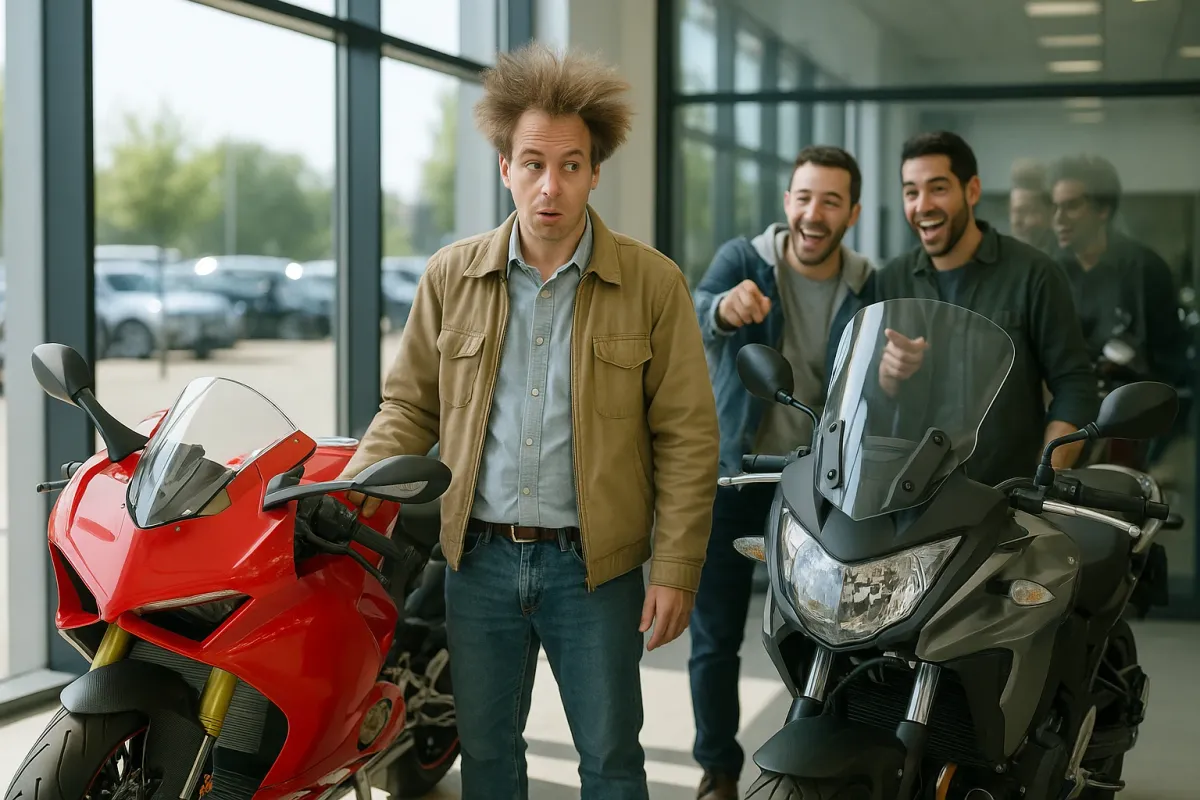
Everyone’s doom‑scrolling those “no words” hair accident posts right now—fried ends, crooked fades, dye jobs gone nuclear. It’s hilarious until you realize the same exact logic trainwreck happens in the moto world every day: people buy bikes the way those folks got haircuts—chasing hype, ignoring fundamentals, and trusting the wrong “expert” with the tools.
That trending “50 Hilariously Tragic Hair Accidents” gallery is basically a cautionary tale for riders. Swap scissors for torque wrenches and bleach for bargain‑bin plastics, and you’re staring at the Craigslist pages of tomorrow. Let’s turn that viral chaos into something useful: 5 technical checks that will keep your next motorcycle from becoming the two‑wheeled equivalent of a botched bleach job.
Below, I’ll walk through how to “review” a motorcycle the way a top stylist should review a head: structure first, then function, then finish. No fluff—just the core engineering and ride dynamics that actually matter once the memes die down.
1. Chassis Geometry: Don’t Let the “Cut” Ruin the Whole Head
Bad haircuts usually fail at the shape level, not the color. Same with motorcycles: if the chassis geometry is wrong for your riding, nothing else can fix it.
When you test or research a bike, dig into:
- Rake (head angle):
- Steeper (e.g., 23–24°) = quicker steering, more nervous at high speed. Common on supersports and hypernakeds.
- Slacker (26–29°) = slower turn‑in, more stability. Think cruisers and big ADV touring rigs.
- Trail:
- 95–105 mm is lively but still usable for road.
- 110–120+ mm is more planted and slower to flop into a corner.
- Wheelbase:
- Short (1,390–1,430 mm) = agile but twitchier.
- Long (1,500–1,600+ mm) = stable highway mile‑eater, sluggish in tight stuff.
How to apply this in a real‑world review:
- Stand back and look at the bike side‑on. Is the front end slammed and tucked (track bias) or raked out with long fork tubes (cruise bias)?
- On a test ride, do quick transitions—S‑bends, lane changes at 60–70 mph.
- If the bike “falls” into turns with minimal input, geometry is more aggressive.
- If you really have to push the bars, it’s on the lazy, stable side.
Never “cut” your riding life around the wrong geometry. Know the numbers, then confirm the feel.
2. Suspension: The Difference Between Precision and a Home‑Bleach Job
Those viral hair fails often come from cheap dye kits and zero understanding of hair texture. On a bike, that’s stock suspension with no adjustability trying to handle real‑world loads and roads.
When reviewing a motorcycle, treat the suspension like a pro colorist would treat bleach: understand the base material first.
Key technical points:
- Adjustability
- Preload only (often rear shock on budget bikes): You can set ride height for your weight, but that’s it.
- Preload + rebound: Now you can control how fast the bike recovers from bumps.
- Preload + rebound + compression: Full control. You can tune for braking support, mid‑corner stability, and bump absorption.
- Spring rates vs. rider weight
- Many mid‑range bikes are sprung for ~70–80 kg riders.
- If you’re significantly heavier or carry a passenger/luggage, note if the bike sags deep into its travel just sitting on it—instant clue the spring is too soft.
- Real‑ride test
- Braking stability: Grab a firm front brake from 40–50 mph.
- Excessive dive + wallow = soft fork springs or too little compression damping.
- Mid‑corner bumps: Find a rough corner.
- If the bike kicks you out of the saddle, rebound is probably too fast (packing and then releasing violently).
- Highway float: At 70–80 mph, does the front feel vague over long undulations? That’s often under‑damped forks.
In your mental review, don’t just say “suspension is soft/firm.” Pin it down: “Fork lacks rebound control on fast bumps” or “rear shock overdamped in compression, transmits sharp hits.” That’s the difference between meme‑tier guesswork and a real technical assessment.
3. Engine Character: Power Curves, Not Just Peak Numbers
In those hair fail photos you can almost hear the conversation: “The box said platinum blonde!” Peak claims mean nothing if the underlying material isn’t suited. Same for engines—brochure horsepower is the box; the dyno curve and fueling are the actual hair.
When you evaluate a bike, think in terms of how it makes power, not just how much.
Focus on:
- Torque curve shape
- Flat, thick midrange (3,000–8,000 rpm): Great for street and ADV. The bike pulls cleanly without constant downshifts.
- Peaky top‑end (9,000+ rpm): Track and aggressive sport use. Feels lazy below the powerband, explosive above.
- Throttle response & fueling
- Ride at 3,000–4,000 rpm in a high gear, then crack the throttle 5–10%.
- If the bike surges, lurches, or hesitates, the fueling map is off—often emissions‑driven lean spots.
- In first gear, low‑speed parking lot maneuvers should feel controllable, not snatchy.
- Gearing
- Check if first gear is too tall—does the clutch get a workout in city traffic?
- On the highway, is the engine spinning uncomfortably high at your cruising speed? A bike revving at 6,000 rpm at 75 mph will feel very different from one at 4,000 rpm, even if power is similar.
Call it like it rides: “Strong 4–8k midrange, slight lean surge at constant throttle around 4,000 rpm, tall first gear” is a precise, technical verdict. That’s what helps a rider avoid the mechanical equivalent of realizing their “ash blonde” is actually high‑viz orange.
4. Brakes & Heat Management: Where Cheap Choices Show First
In the hair disasters, you can spot the cheap clippers and bargain dye from a mile away. On motorcycles, cost‑cutting screams through two systems: brakes and heat management.
When you’re reviewing, don’t just grab the lever once and shrug. Break it down.
Brakes
- Hardware
- Dual front discs with radial‑mount calipers are becoming standard even in the mid‑range, but piston size, master cylinder ratio, and pad compound matter more than the spec sheet buzzwords.
- Look for braided steel lines on sport‑oriented models; rubber lines can feel mushy, especially when hot.
- Performance checks
- Initial bite: From 30–40 mph, one‑finger squeeze. Does it respond sharply or feel wooden for the first few millimeters?
- Progression: As you add pressure, does braking force build linearly, or does it suddenly clamp?
- Fade: Do 4–5 hard stops back‑to‑back. If lever travel increases or feel fades, that’s heat saturation—cheap fluid, pads, or undersized discs.
Heat Management
- Engine heat at the knees & thighs:
- After 20–30 minutes of city riding, feel for hot air dumping onto your legs. High‑compression engines and big parallel twins can cook you in traffic if airflow design is lazy.
- Radiator and fan behavior:
- Does the fan kick in constantly in moderate temps? That’s a clue the cooling system is marginal for real‑world stop‑and‑go use.
- Exhaust routing:
- Check where the cat sits. Big catalytic converters under the rider often equal toasted feet and roasted shock oil.
In a technical review, spell it out: “Strong braking with no noticeable fade over repeated hard stops; moderate engine heat directed away from rider, fan cycles briefly even in traffic.” That’s the level of detail that separates a safe choice from a future “why is my right leg medium‑rare?” complaint.
5. Ergonomics & Controls: The Daily‑Wear Reality Check
Those “no words” haircuts all share one problem: nobody considered how that style would behave in real life—sleeping, showering, working. With bikes, you need the same daily‑wear mindset.
Technical riders evaluate ergonomics and controls like this:
- Triangle: bars, seat, pegs
- Sit in attack position and in relaxed cruising position.
- Sporty setups push weight onto wrists and fold knees tight; fine for 20‑minute blasts, brutal over 200 miles if you’re not built for it.
- ADV and standards keep a slight forward lean with open knee angle—best all‑rounder for most riders.
- Levers & pedal feel
- Check if clutch and brake lever span is adjustable. For smaller hands, non‑adjustable “one‑size‑fits‑none” is a genuine safety issue.
- Shift pedal throw should be short and positive; vague “mushy” shifts usually mean sloppy linkage or poor factory adjustment.
- Dashboard & electronics logic
- TFT screens are everywhere now, but the real test is sunlight readability and menu logic.
- See how many steps it takes to:
- Change ride modes
- Turn off/on traction control
- Adjust ABS (if allowed)
- If you need a manual just to disable a rain mode, that’s bad UX.
- Low‑speed behavior
- A short urban loop tells you more about a bike than any spec sheet.
- Check clutch take‑up point consistency, fueling smoothness below 3,000 rpm, steering lock angle for U‑turns.
When you wrap up your own “review,” think like a stylist explaining upkeep: “This ergos package suits riders who prioritize aggressive weekend riding over long‑distance comfort” is honest and technical. The right bike on the wrong body is still a bad cut.
Conclusion
Those viral “no words” hair disasters are funny because they’re preventable. Bad tools, blind trust, zero understanding of structure—same recipe that leaves riders stuck with bikes they quietly hate six months in.
A meaningful motorcycle review isn’t just vibes and aesthetics; it’s:
Geometry that matches how you actually ride
Suspension that’s tunable for your weight and roads
An engine that delivers usable power where you live on the tach
Brakes and cooling that hold up when pushed
Ergos and controls that work in the real world, not just in the showroom
Scroll the memes, laugh at the bleach jobs—but when it comes to your next machine, be the rider who knows exactly what they’re asking for and why. That’s how you roll out of the shop with a bike that feels tailored, not trending.
Key Takeaway
The most important thing to remember from this article is that this information can change how you think about Motorcycle Reviews.