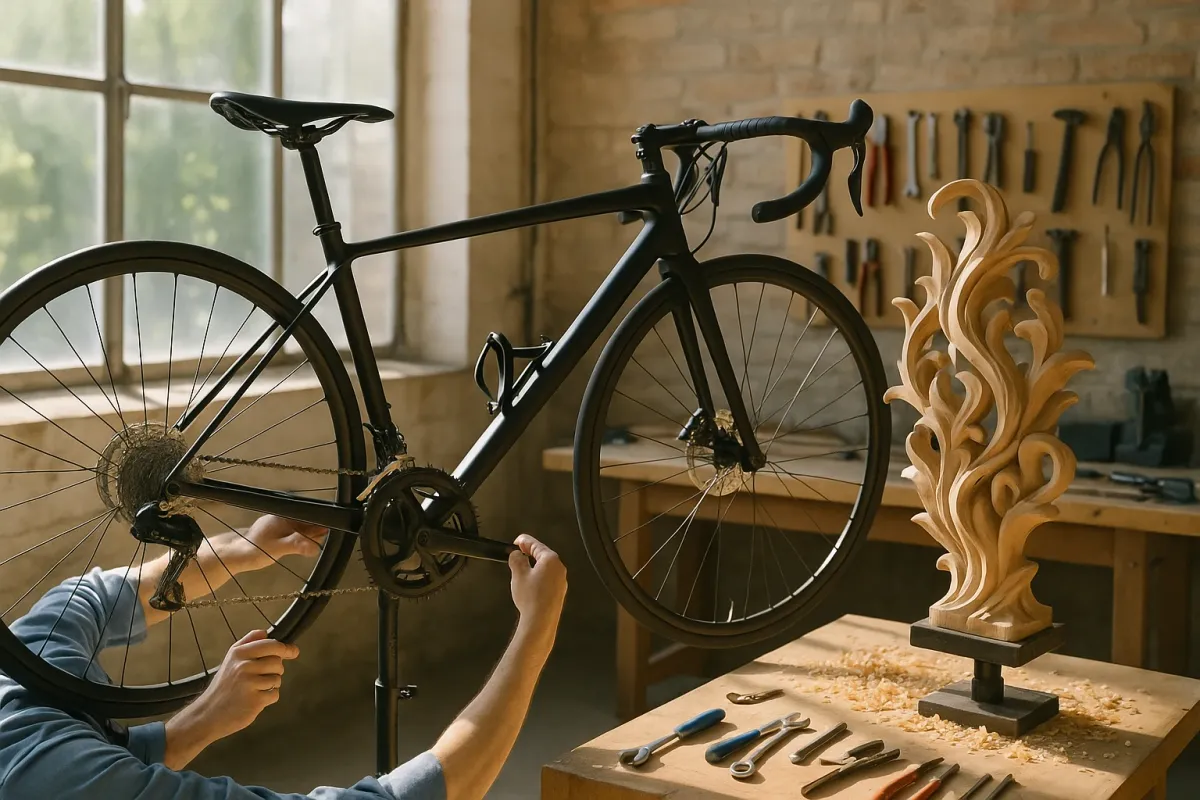
Motorcyclists and master woodworkers are obsessed with the same thing: tolerances. This week’s viral feature “50 Times People Made Something Amazing Out Of Wood” is blowing up timelines for a reason—watching raw timber become precision‑built objects is deeply satisfying. Every joint is intentional, every surface finished, every hidden fastener doing critical work you’ll never see.
That’s exactly how a truly sorted motorcycle feels.
Where a nature photographer waits for the perfect beam of light, a serious rider waits for the perfect feedback at the lever. Where a wood artist spends hours finish‑sanding a surface you’ll only touch for a second, a meticulous owner spends an evening blueprinting a brake system that might only “matter” in one panic stop. Both are acts of craft.
So let’s steal some mindset from those woodcraft masters going viral right now—and apply it directly to how you maintain your bike. Not “wash and lube” basics, but the type of precision work that makes your machine feel custom‑built for you.
Below are five technical maintenance disciplines that turn your motorcycle from “functional” into “crafted.”
Tolerance Is Everything: Fastener Torque as Structural Wood Joinery
Those sculpted wood pieces dominating your feed rely on invisible joinery—mortise and tenon, dovetails, perfectly fitted dowels. Too loose and the joint creaks apart, too tight and the wood splits. Your bike’s fasteners live in that same tightrope world.
On a modern motorcycle, torque values are not suggestions; they’re engineering decisions. Over‑torque a triple clamp pinch bolt and you can distort fork tubes, leading to harsh, vague front‑end feedback. Under‑torque a caliper bolt and you’re gambling with shear loads under maximum braking. The service manual’s torque chart is essentially a joinery map: different materials, diameters, and thread pitches demand specific clamping forces. For critical hardware—axles, calipers, bar clamps, engine mounts—use a calibrated torque wrench, clean threads, and the correct threadlocker (blue 243 for serviceable joints, high‑temp or red only where specified). Treat each connection like a fitted joint in a showpiece table: the right grip, no more, no less. The result is a chassis that feels like one solid piece instead of a box of parts bolted together.
Surface Prep Is Performance: Brake Systems and the “Finish Sanding” Mindset
The woodworking pieces trending right now look flawless because of one thing: obsessive surface prep before the final finish. Your braking system deserves the same level of obsession, not the usual “pads look thick enough, send it” attitude.
Think of your discs as precision surfaces, not just “round metal things.” Glazed rotors (mirror‑shiny with visible pad deposits) reduce initial bite and consistency, much like trying to stain wood without proper sanding. A proper brake service is layered: clean the caliper externals first, then pull the pads and de‑glaze their faces with a fine abrasive on a flat surface. Inspect pad edges for crumbling, taper wear, and backing plate corrosion. Then focus on the rotor surface—clean with a dedicated brake cleaner and a clean, lint‑free cloth until it stops turning dark; if you still feel pulsing or fade, a light scuff with a Scotch‑Brite pad in a cross‑hatch pattern can help remove stubborn pad transfer (always following manufacturer guidance).
Crucially, treat caliper pistons like delicate inlays: extend slightly, clean their exposed circumference thoroughly, and lubricate the seals with the manufacturer‑specified fluid when reassembling. A well‑blueprinted brake system delivers a lever feel as refined as a perfectly finished hardwood rail—zero grittiness, predictable bite, and linear pressure build. You’ll notice it the first time you trail the front brake into a decreasing‑radius corner.
Grain Direction and Flex: Suspension Setup Like Reading Timber
Woodworkers study grain direction to understand how a piece will flex, twist, and bear load. Riders should treat their suspension with the same structural respect instead of just twirling clickers blindly. Modern forks and shocks are designed with a very specific “flex profile”—how they bend, compress, and recover under load.
Start at the foundation: sag. Static and rider sag are your “grain direction” measurements; they tell you whether your spring rates are in the ballpark for your weight and riding style. If your rear sag is excessive (say, more than ~35% of total travel on a sport/road bike), you’re effectively riding a bowed beam—too much squat, vague front‑end feedback, and poor drive out of corners. Too little sag and the bike rides “on top of the stroke,” skipping over imperfections with reduced traction. Once spring preload sets your ride height correctly, compression and rebound become your equivalent of planing and sanding for feel. Rebound too slow and the suspension “packs down,” like stacking unrelieved layers of wood that eventually buckle; too fast and it feels like a poorly braced panel, bouncing and chattering.
Instead of copying a random “Internet setup,” document changes the way a craftsman keeps a build log. One change at a time, in click counts and millimeters. Ride a known stretch of road, log impressions: brake dive, mid‑corner compliance, exit traction. What you’re doing is sculpting the bike’s flex behavior around your inputs, just as a wood artist sculpts a board around its natural grain.
Small Edges, Huge Payoff: Chain Alignment as Fine Joinery Fitment
In those viral wood builds, the difference between “nice” and “jaw‑dropping” is often a less‑than‑millimeter panel gap or a perfectly flush joint. Your final drive is exactly that sensitive to detail. Chain maintenance isn’t just about lube—it’s about micro‑alignment.
Most riders trust swingarm hash marks for alignment, but manufacturing tolerances and previous damage can make them misleading. Treat alignment like a cabinetmaker checks square: measure. Use a chain alignment tool or measure from the swingarm pivot to each axle end with a precise tape or caliper. That gets your rear wheel truly in plane with the front, minimizing scrub and weird turn‑in characteristics. A misaligned rear wheel adds side‑loading to your chain and sprockets, creating uneven wear patterns similar to an out‑of‑square frame rack twisting mortise joints apart.
Once aligned, check chain tension in multiple wheel positions; if tight spots vary significantly, your “material” (the chain itself) is already compromised. Tension it at the tightest point to spec—not what “looks right”—accounting for your specific swingarm geometry and typical load. Finish with a high‑quality lube chosen for your environment: dry film or ceramic‑based for dusty conditions, a more tenacious synthetic for wet commuting. That level of care transforms driveline feel: smoother throttle transitions, less lash, and a rear end that tracks with the precision of a well‑hung door in a perfectly square frame.
Hidden Structure, Visible Confidence: Corrosion Control as Internal Bracing
The most impressive wooden pieces trending online are often the ones where you don’t see the strength—hidden splines, biscuits, internal frames. Motorcycles have the same duality: what keeps you safe is often out of sight, slowly attacked by time and environment.
Corrosion isn’t just cosmetic. Under‑chassis hardware, brake lines, subframe mounts, and wire harness connectors are all structural or mission‑critical. Start with an underbody inspection on a well‑lit stand or lift. Look for white, powdery oxidation on aluminum, red bloom on steel, and green on copper or brass terminals. Pay particular attention to areas where dissimilar metals meet—steel fasteners in aluminum castings are galvanic corrosion hotspots, just like mixing incompatible woods and finishes can cause long‑term warping. Remove vulnerable hardware one at a time, clean threads with a brass brush, and reassemble with the correct anti‑seize or threadlocker as specified.
Electrical connectors deserve the same hidden‑structure respect. Separate key plugs (ECU, sensor clusters, bar‑switch looms), inspect pins for dulling or greenish corrosion, clean with contact cleaner, then apply a tiny amount of dielectric grease around (not on) the mating surfaces to keep moisture out. This sort of invisible maintenance is like installing internal bracing in a complex wooden sculpture: nobody will ever see it, but every smooth start, every error‑free ride in the rain is proof you did it right.
Conclusion
The reason “50 Times People Made Something Amazing Out Of Wood” is exploding across social right now is simple: we’re wired to respect craft. We know, instinctively, when someone went beyond “good enough” and into “this was built to last.”
Your motorcycle deserves that level of attention.
Treat torque specs like joinery plans, brakes like fine finishing, suspension like grain you have to read, chain alignment like cabinet gaps, and corrosion control like internal bracing. None of this is glamorous Instagram content—just like sanding for hours or cutting a perfect dovetail isn’t. But the payoff is a machine that feels carved to fit you: precise, communicative, and trustworthy at the edge of the tire.
In a world scrolling past disposable everything, a well‑maintained bike is your rolling piece of functional art—and you’re the craftsperson behind it.
Key Takeaway
The most important thing to remember from this article is that this information can change how you think about Maintenance.