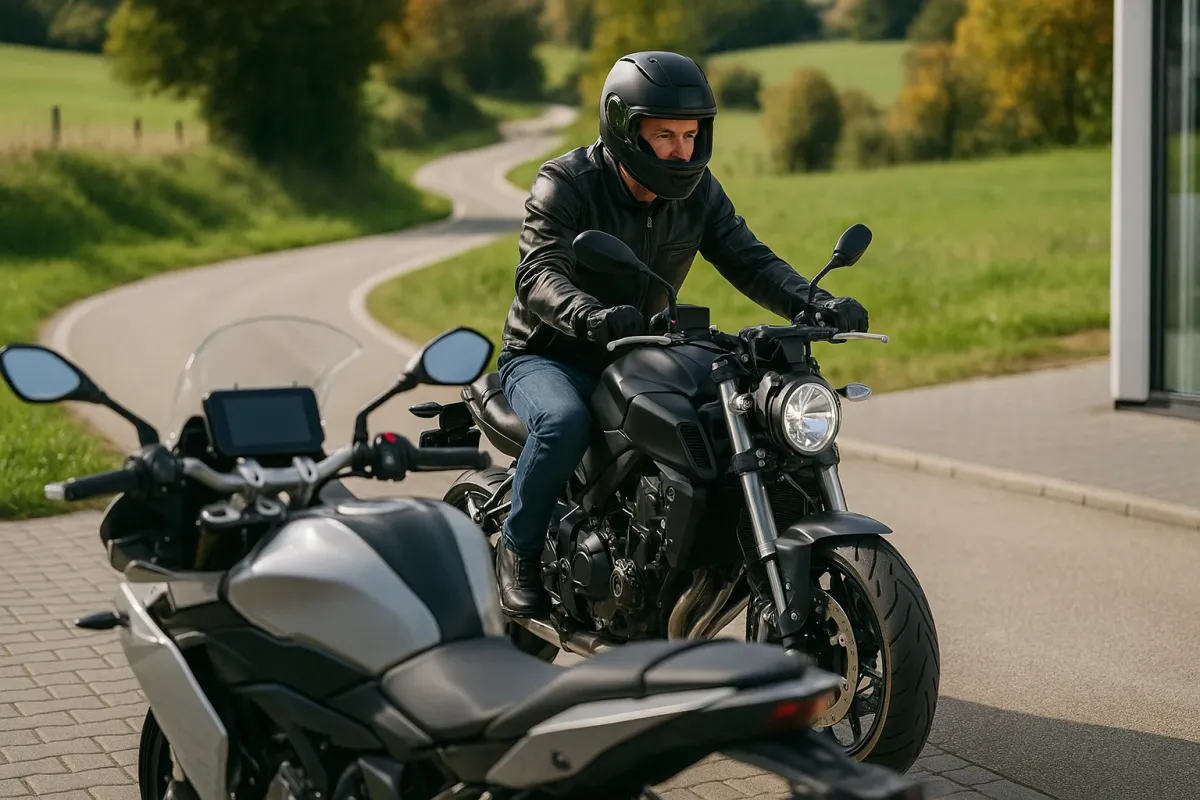
Motorcycling media loves to chase young guns and spec-sheet wars, but look around at any bike night or dealer demo day in 2025: the core buyers signing paperwork are 40+. That demographic shift isn’t just a fun fact—it's quietly reshaping how bikes are designed, how brands like BMW, Triumph, and Harley-Davidson tune their machines, and how we should be reviewing motorcycles right now.
Today’s real-world spark? A viral conversation doing the rounds on social media and discussion boards: people over 40 sharing their late-blooming or second‑chapter success stories—new careers, new businesses, and yes, finally buying the dream bike. That energy is all over the moto world too. Dealers are reporting more “first big-bike” buyers in their 40s and 50s than ever, and brands are clearly listening: more low‑end torque, more comfort, and electronics that help instead of hinder.
So let’s review modern motorcycles the way a serious 40+ rider actually rides and buys them: no marketing haze, just hard technical criteria that matter on a real road, with a real spine, and a real bank account.
Below are five technical pillars I now use when evaluating a bike for this new generation of riders.
1. Engine Character: Real-World Torque Beats Spec-Sheet Peak Power
Manufacturers still brag about peak horsepower at 10,000+ rpm, but riders 40+ are increasingly voting with their wallets for usable torque and tractable power delivery. Look at Yamaha’s CP2 engine in the MT‑07 and Ténéré 700, or BMW’s 1250 ShiftCam boxers—they’re not chasing hypersport numbers, they’re delivering meat in the middle.
When I review a bike for this crowd, I’m less interested in how it feels pinned in 3rd on a track, and more in how it pulls in 3rd at 3,000 rpm out of a lazy corner or through traffic. A good review in 2025 should talk about:
- Torque curve shape, not just peak: Is it flat and broad like a big twin, or peaky like an old supersport?
- Throttle response mapping: Is “Road” mode genuinely rideable in the wet, or is it a barely detuned “Sport” mode?
- Low‑rpm manners: Does it chug and jerk at 2–3k rpm, or glide cleanly? This is where long‑term comfort and fatigue live.
- Engine braking tuning: Critical for riders who don’t want to work the brakes hard every corner.
- Vibration profile: High‑frequency buzz at 5–6k makes sustained highway work brutal on hands and shoulders.
The current market proves the point: bikes like the Triumph Tiger 900, Ducati Multistrada V2, and Harley-Davidson Pan America 1250 all lean hard into usable midrange and sophisticated mapping. Any review that doesn’t quantify how a motor behaves at 2–6k rpm is missing what 40+ riders actually feel every commute and weekend blast.
2. Chassis and Suspension: Tuning for Joints, Not Juniors
Once you’ve done a few hundred thousand kilometers—or just lived long enough to collect some injuries—suspension goes from “nice to have” to non‑negotiable. What’s fascinating right now is how brands are rapidly pivoting from track‑stiff setups to road‑reality damping driven by this older, more discerning customer base.
When I test a bike with 40+ riders in mind, I deep‑dive into:
- Initial stroke sensitivity: Can the fork deal with sharp‑edged hits—potholes, expansion joints—without punching your wrists?
- Mid‑stroke support: Does the bike sit “in” the stroke in fast sweepers, or wallow and see‑saw?
- Spring rate vs. adjustability: Is preload actually usable for a 75–110 kg rider range, plus luggage/passenger?
- Static and rider sag readouts: Proper reviews should measure and state sag numbers; they reveal if the bike is realistically sprung.
- High‑speed vs. low‑speed damping behavior: Many current “comfort” modes simply add mush; good systems (like BMW ESA, KTM’s semi‑active WP, and Ducati Skyhook) distinguish chassis pitch control from bump absorption.
In 2025, mid‑to‑premium ADV and sport‑touring bikes are leading the way here. KTM’s 1290 Super Adventure, Ducati Multistrada V4, and BMW’s R 1300 GS are all leaning on semi‑active systems that let a rider soften things up for their back without turning the bike into a pogo stick. A worthwhile review must capture how well those modes are calibrated, not just whether they exist.
3. Ergonomics and Contact Points: Fitment Is Now a Performance Metric
For a 22‑year‑old, ergos can be an afterthought. For a 45‑year‑old with a history of desk work, shoulder surgery, or a tricky knee, bad ergonomics can end a riding day in an hour. That’s why manufacturers are going hard on adjustability in 2025—and why any serious review should treat fitment as a performance spec, not a footnote.
Here’s what I look at and what reviews should spell out:
- Bar position range: Are risers reversible? Is there meaningful sweep adjustment? How does it affect wrist angle and shoulder spread?
- Seat geometry, not just height: Width at the front, padding density, and tilt dramatically change pressure points and lower‑back load.
- Knee angle and peg position: Measured in degrees if possible. A 90–100° knee bend is night‑and‑day more sustainable than a tight 70–80° sportbike fold.
- Weight distribution at the contact triangle (bars/seat/pegs): Does your core stack over your hips, or are you hanging off your wrists?
- Heat management: Modern high‑compression engines can roast your thighs; reviews need to talk about real measured temps around knees and calves in traffic.
This is where bikes like the Honda Africa Twin, Yamaha Tracer 9 GT+, and BMW R 18 Roctane are quietly winning. They’re not just powerful—they fit riders who refuse to sacrifice comfort for style. A 40+‑relevant review should describe how you feel after 200 km, 400 km, and 800 km, not just how the bike feels in a 30‑minute press ride loop.
4. Electronics: From Gimmick to Guardian for Long-Haul Riders
The last five years brought an explosion of rider aids: cornering ABS, IMU‑based traction control, radar-assisted cruise, blind-spot monitoring. For hard‑charging 20‑somethings, it can look like bloat. For a 50‑year‑old rider eyeing cross‑country runs and bad‑weather commuting, it’s the difference between “maybe” and “take my money.”
But not all systems are equal, and a review that just lists acronyms is worthless. What matters is calibration and integration:
- Traction control logic: Does it intervene smoothly and progressively, or does it cut power like a light switch when you hit a painted line in the wet?
- Cornering ABS feel at the lever/pedal: Some systems pulse harshly; the best feel almost transparent until they save your day.
- Ride mode mapping consistency: Is “Rain” mode just a dead throttle, or a well‑tuned combination of softer response, earlier TC intervention, and ABS behavior suited for low‑grip surfaces?
- Cruise control fidelity: Radar‑adaptive systems (like on the Ducati Multistrada V4, KTM 1290 SA, and BMW R 1300 GS) must be judged on how smoothly they adjust gap and speed—not just that they exist.
- UI and control ergonomics: Can you adjust TC or mode on the fly with winter gloves, or do you need a PhD and a stylus?
Riders 40+ are typically more tech‑literate but less tolerant of bad UX. They want tools, not toys. Reviews in 2025 must be brutally honest about which electronics genuinely reduce fatigue and risk (adaptive cruise in traffic, well‑tuned quickshifters, hill hold on heavy tourers) and which are marketing sugar that clutters the dash.
5. Long-Term Ownership Metrics: Service Intervals, Durability, and Total Cost
Success stories from people over 40 almost always contain a common theme: they learned to think long‑term. That mindset is redefining what smart buyers look for in a motorcycle. They’re less seduced by launch hype and more interested in service schedules, valve check intervals, common failure points, and depreciation curves.
A modern review tailored to this reality should treat a bike not as a weekend fling, but as a five‑to‑ten‑year project:
- Maintenance intervals and complexity
- Valve checks at 24,000+ km (or 30,000+ km for some Ducati V4s and BMW ShiftCam motors) can be a huge plus.
- Reviews should state how much bodywork must come off for basic service and how DIY‑friendly basic tasks are (oil, filters, chain, air filter).
- Real‑world fuel consumption vs. tank size
- A published 5.0 L/100 km means nothing if riders report 6.5 L/100 km at typical highway speeds.
- 40+ riders are planning longer trips; they care about true range, not brochure fantasy.
- Known weak points from early owners
- TFT screens prone to fogging, radar sensors needing recalibration, quickshifters that get clunky after 20,000 km—these are cropping up on 2021–2024 models now and should shape 2025 reviews.
- Parts ecosystem and dealer network
- It’s not just “premium vs budget.” It’s: can you get a replacement radiator, ESA shock, or switchgear module in under a month?
- European and Japanese brands differ wildly by region; reviewers should factor in local support, not global reputation alone.
- Resale resilience
- Bikes with a strong 40+ following—BMW GS line, Yamaha Ténéré 700, Honda Gold Wing, certain Triumph Tigers—hold value because they align with this mature, long‑term mindset.
- A serious review should at least nod to a model’s historical resale behavior and likely trajectory given its segment and complexity.
This is the kind of information that turns a “mid‑life dream bike” from an impulse into a calculated, sustainable win.
Conclusion
The viral wave of 40+ success stories feels oddly parallel to what’s happening in the motorcycle world right now. Riders who’ve spent decades grinding, raising families, or just surviving are finally walking into dealerships with both cash and clarity. They want motorcycles that respect their bodies, their experience, and their time.
If motorcycle reviews don’t evolve with them—if they stay obsessed with peak horsepower, lap times, and superficial gadget checklists—they’ll miss the most important story in motorcycling in 2025: the rise of the seasoned rider who demands torque, comfort, intelligent electronics, and long‑term value in one coherent package.
At Moto Ready, that’s the lens we’re dialing in. Every new bike we ride, we’ll be asking: Would a rider building their best decade yet still want to own this machine at 60,000 km?
Because for the new generation of 40+ riders, the test ride doesn’t end at the dealership door—it starts there.
Key Takeaway
The most important thing to remember from this article is that this information can change how you think about Motorcycle Reviews.